How to Win an RFP in 2026: Proven Strategies and Expert Tips
Learn how to win more RFPs with proven strategies, evaluator insights, step-by-step tactics, and real examples that increase proposal win rates.

Co-founder & CEO, AutoRFP.ai··15 min read
“How do we actually win this RFP?” is usually asked right after the document lands and long before anyone reads the fine print. Winning an RFP is not about throwing information at the evaluator; it is about making it easy for them to see why you are the safest, highest value choice. That takes more than good writing. It takes focus, strategy, and discipline.
In this article, we will explore what “winning an RFP” really means, the core principles behind high-scoring RFP responses, and practical strategies you can use on real bids. You will also see common mistakes that hurt win rates and how RFP AI tools can help you win more often without burning out your team.
What “Winning an RFP” Actually Means
Winning an RFP means you weren’t just compliant, but the easiest vendor for evaluators to score the highest and justify choosing.
Your proposal made the decision feel obvious by staying tied to the buyer’s priorities, demonstrating your ability to deliver the outcomes, and reducing risk with credible evidence, and then reinforcing that credibility in an RFP presentation, where evaluators can validate your claims live before award.
In practice, that means you qualified the right opportunity, built real customer insight before drafting, aligned the team around a few clear win themes, and ran disciplined reviews with an early Pink Team checkpoint.
The result is a final submission that is consistent, complete, and persuasive. When you win, it’s because your bid engine worked, not because you got lucky.
Core Principles Behind High-Scoring RFP Responses


Video transcript
So you've just received an RFP. Maybe it's the first time you're doing it. Potentially you're an experienced bid manager, and you wanna understand what is the RFP management process, like process, challenges, and how do you win these highly competitive and challenging bids? In this video I'm gonna show you through the exact RFP management process, challenges, share with you some data in relation to winning bid teams and how they win these complex bids that can really elevate your business. Let's jump into it So why does RFP management matter? An RFP or request for proposal is when a large organization, let's say an enterprise with 10,000 staff, or federal government body wants to procure products or services. Where RFP management matters is we surveyed with between AutoRFP.ai and Stargazy over ninety-seven bid professionals in our twenty
twenty-six proposal win rate report. You can find the link below if you wanna have a look yourself of the proposal win rate report. In this report, we found that fifty-one percent of teams without content automation sit in the low win cohort. So in our RFP management video today, we're gonna go into content automation. We're gonna talk about how ninety-four percent of high win teams use joint collaboration with their subject matter experts, not having the subject matter expert drafting. And where this all matters is the median shortlist rate. So the rate of which your RFP makes it to the next stage and isn't disqualified is sixty-three percent for high win teams versus thirty-eight percent for low win teams. So the teams that have very strong RFP management processes and structure, not only are they winning more, but they're making it through the RFP process to the next step almost double or triple the rate of other teams with content automation, joint collaboration with SMEs, and a lot of other things.
So let's jump into it. But before that, I wanted to leave you with this quote: " Most teams lose RFPs because their system is perfectly designed to produce the results they currently achieve." That was in the Proposal Win Rate report from Christina, the founder of the Stargazy community, a bid manager community, and that really stuck with me, is that if you have a poor system for your RFP management and response, you are setting yourself up to fail, which is why RFP management and systems and processes matter a lot more than heroic efforts one-off bid that you spent, hours and hours fine-tuning. But actual process and repeatable ways to win will get you and your business more revenue than just the one-off effort of trying to win a random bid. And finally, sixty-five percent of the bid teams that win the most
use AI proposal tech, which is what Audirfp.ai is and where I'm from. So what is RFP management? RFP management is how you organize everything that happens between receiving an RFP and submitting your response. Think about it could be everything from when you first discover an RFP on a public tender notice board. Let's say it was for a public tender notice board. Receiving an RFP and submitting your response. It involves people, content, and process. So what is the RFP management process? It starts off with a kickoff meeting. When you see it or you receive that private or public RFP, think about who needs to be involved. Get executive stakeholders on board quickly, especially if it's a very highly competitive and commercial bid. What is the response strategy? How are we going to make our response best fit for the evaluation criteria to win the RFP? Draft and assign. Who is doing what section?
How are we going to complete those sections? And overall, what does a great first draft look like? That is where AI can help the most. Review and submit. Who gets final say on the pricing and commercial? Who gets final say on legal? Who gets final say privacy, security, and compliance measures? Make sure that's clear from the start, and be ready when you have your first draft and everything is ready to be reviewed, that it can be submit cleanly to the right people at the right time. Audit and analyze. Something we don't do often enough in bid management is think about how could we do better with this bid? What feedback can we do, and how can we improve for next time? Which leads into that next one, continuous improvement, and that is the difference between a one-off effort and a systematic approach to RFP management and bid response that will get you to win bid after bid versus just that random one bid that you were lucky to get. An effective kickoff meeting does not just rehash to everyone
exactly what the RFP is saying. It is about establishing clear deadlines, where we talked about who is going to submit each answer each section, who's gonna draft each section, who's going to review each section. That's where you wanna have all those people there to establish clear deadlines for each of those contributors. Then you should already have somewhat of an understanding here, but this is where you can kinda lean on the people in this meeting to develop win themes. A win theme is what is your clear competitive advantage or way that you are going to structure your response with persuasive writing, with clear customer stories, that will get you the win in this RFP. For instance it could be an enterprise that cares a lot about security and privacy, and it could be based in the EU, is looking for a vendor who meets certain requirements. And you could be the only vendor, and you may know that you're the only vendor who meets the high-level requirements in relation to security and privacy, and you believe that's a competitive advantage for your company and for this bid.
Overall make sure that you plan all your supporting documents, so everything that the final submission should include. And you can use like an RFP checklist. We've got a pre-submission checklist in the links below. But you can use a pre-submission checklist to make sure, again, all of that is taken care of when you go to submit. And then assign a single project owner who drives accountability. This would often be a bid manager or at least, or a project manager, someone who is keeping an eye on all the deadlines. Clarification questions is an often overlooked part of the RFP process that can really help you understand that buyer and should be used every time. What you don't wanna be doing is submitting a question for the sake of submitting a question. Don't ask something that is very clear in the RFP. That could reflect negatively. But do think of some useful questions, that you can submit back to the buyer that will, help understand their current solution better and what they're currently doing. Map requirements to identify capabilities.
You could look at, for instance, there could be Moscow ratings, there could be mandatory nice to have, must-have, and so on. But each of those requirements you can compare to, evaluation criteria, and you can look at where do you stack up. But every single one of those requirements, where do you stack up just at a first glance? Even better is that step is in your AI go, no go or your go, no-go process before you even start to bid on, start contributing resources. You've already seen if you're actually a good fit for this bid before jumping headfirst. Build a response plan with section owners, deadlines, and review cycles. We discussed that just before. And decide your competitive angle before writing a single word Now, drafting response and assigning owners.
So this is where we actually start to write. So each of the reviewers and writers they begin to work. Use real-time collaboration so multiple people can work simultaneously. You never wanna have a bid that only one person can access at a time. That's not very conducive to strong teamwork. Pull from your your content library for common questions instead of writing from scratch. So at the start of the video, I mentioned how a strong content library often underpins a winning bid team, and here is the time that you can use that. So if you have pre-filled answers or approved answers in regulatory environments that you can pull from readily to answer common requirements, then this is where you use that. Make sure, though, you're not just mindlessly copy and pasting. Make sure that where appropriate, you're weaving in that win theme throughout the RFP and bid response. AI tools, and this is where a company like and product like ours, AutoRFP.ai, really shines, is generating that first draft.
AutoRFP will demonstrate a first draft in a matter of seconds from a blank RFP document and it'll leverage your content library for that, really speeding up the RFP response time, increasing participation rate, and giving you more time to write even stronger and better responses. So it goes into kind of like an AI feedback loop to continuously improve your responses. That can be one part tooling, and tooling can be one part of your RFP management process and response process that can really underpin a winning strategy. Some larger bids and structured processing involve a different colored reviews, where it goes through multiple and sequential reviews of different sections for relevant people. One trap around reviewing is making sure that the value of the bid and that win theme isn't lost through people's opinion. If you have ten different people review a section, you're gonna have ten lots
of different feedback and potentially some of them are contradictory or some of them are the same. But you wanna make sure that, of course, you're applying feedback if they're experts in that space. But you as the editor or project owner of that section should ensure that the win theme and what makes that a winning bid isn't lost. That's the review trap And finally, just before you go to that final review, run your pre-submission checklist, spelling, grammar, compliance, consistency and so on. And again, in the description below, we've got our pre-submission checklist that you can download for free, and that can be part of your winning process. Finally, we've now submitted that RFP. So some kinda top-level metrics that you should track is your stages the bid goes through. How many do you not bid for because it wasn't a good fit? That's a good thing to measure. Make sure there's endless opportunities, but you wanna bid what actually makes sense. The ones that you bid for, what were the outcomes of those b-
The ones that you bid for, what are the outcomes for those bids? Was it won? Was it lost? Did you withdraw? Did you stop the bid because of resourcing issues and never submitted it? Next level, once you have that data in terms of the status of your bids , is what were the size of the bids and what was the cost of the bid? That's a really tricky thing to measure. There's some great resources out there around cost of bid, but effectively you wanna make sure that these bids are profitable. So if there's a ten percent chance on a ten million dollar bid, but it costs two hundred grand to bid, that's a really tough one to make. And then also make sure that, you wanna make sure, in a good system or a good AI RFP software like AutoRFP or other software out there in the RFP software market, should automatically be using your responses that you're working on and add them into your library and intelligently store that and categorize that content so it can be used for next time. That's where it's really important to consistently write better and
better, and your content library kind of builds over time, and your systems are set up to produce better results as your company gets, makes bid management and RFP response and the management, RFP management process a competitive advantage of the company And finally, continuous improvement. So it's really not out there to ask for feedback, whether that's a private enterprise bid or if it's government bid. Often this may even be posted publicly. But you wanna make sure you get feedback on the bid, and not just on the bids that you win, but the bids that you lose are sometimes more important. You may unearth that you shouldn't have bid on that in the first place, that it wasn't a good fit from the start. You may realize a flaw in your RFP management process and where something needs to be sharpened up for next time. And continuous improvement in your RFP management process implementing that will just kinda make it better and better every time, and that's what really helps companies go from winning the occasional RFP worth a million dollars
to consistently winning million-dollar RFPs and substantially growing the business's footprint in the enterprise so what are some of the common RFP management challenges? Outdated systems and bottlenecks. Thinking about that process is where is the most amount of friction? That could be following up people to review. So you're always having to message them and be like, "Hey, can you review a section? This was due yesterday." It could be that your content lives in ten different systems. You can never find the right answer. It could be technical docs. It could be SharePoint. It could be Google Drive or whatever. And then and then content library paralysis. So if forty percent of saved references may reference outdated information, no one has the full data to update them. Now, here's some best practices to help you win RFPs consistently and land those million-dollar contracts. Automate the repetitive work. AI has come so far and can help out in particular places of the RFP management process.
Whether it be automating the repetitive work of a first draft and finding the relevant information out of your content library, AI is incredibly strong in that. AutoRFP.ai customers consistently get eighty percent plus AI first draft rate off their existing content, and you wanna make sure that standardized templates. Centralize everything, so it's easy to find the right and source the right information. Cross-functional collaboration, multiple people can edit at once. Reviewers it's easy for someone to review. It's an easy-to-use system. You don't want some clunky software that they have to log in, and an SME can never use it, and therefore, they hate having to help you on an RFP. And track performance metrics automatically. Every time you are moving through your CRM or your relevant software, these opportunities that the bid software is also updating, or at least your bid process data is there. Automating routing questions to the right SMEs, so you don't have to think about who should this go to. Real-time progress tracking so nothing falls through the cracks, and automatic importing of different documents to get a really high level of AI first
draft, and trust scores telling you which answers need human review. So the AI is doing a lot of heavy lifting. That's kinda what AI RFP management looks like is the AI is taking care of that manual work, and the human is coming in to ensure that the win themes are strong, that the pricing is competitive, and that evaluation criteria are met, and they're going to win that bid. All right. What I wanted to leave you with today was a live demo of just the project management capabilities with an AutoRFP.ai and how that can help your RFP management process. So looking in here, we have an RFP project. You can see here that already forty-five of my responses have been submitted and reviewed, nine have been, nine have been submitted but not reviewed, and there's still fourteen left drafted. So I can quickly click into my Drafted, see what ones are left left need to be edited, and then I can look after those as needed. So I can click into my fourteen draft and see, okay, we're still waiting for someone here to to submit those, and I can go in, submit, and make changes. So it's a very easy kinda multiplayer capability, seeing where everything's at.
Can go to my Project Overview and see that the project is due in five days. This is everyone who worked on that project, when it's due. My first draft was highly AI automated, ninety-seven point one percent draft. And overall we have sixty-two percent exceed compliance, thirty-five percent fully compliant, and I can quickly see what response is partially compliant and understand why that's partially compliant and kinda review that. By just having one look and a couple of clicks, I can see, against the evaluation criteria, what responses need to be improved or where we're potentially weak on this competitive bid before having to really do a lot of work. I can see project attachments and everything else going into this bid. And so that's what a project overview dashboard for a competitive bid looks like. If you wanted to have a look at AutoRFP and give it a try, you can go to our website autorfp.ai. Here, you can have a look and learn more about our product and everything else that kind of goes into it and what kind of automation rates our customers are achieving with autorfp.ai. And you can also book a demo to spend time with our team, and in this demo, they'll
provide a really guided walkthrough of the platform, help understand your business, and see really if it's a good fit or not. Thanks. I'm Rob from autorfp.ai. Hopefully, that was helpful in relation to your RFP management process. See ya.
Learn these core principles that separate “we answered everything” from “this is the safest, strongest choice” so your proposal reads like a confident, low-risk decision the buyer can defend internally.
Evaluator-First Messaging
High-scoring RFP responses are written for the scoring room, not for marketing. They mirror the buyer’s priorities, repeat the evaluator’s language, and make it easy to see “what you get” and “why it matters” without hunting.
If the evaluator can’t quickly connect your answer to a scored requirement, your best capabilities won’t translate into points.
Pro tip: Speed up your RFP analysis by Uploading the RFP into AutoRFP.ai to quickly extract requirements, sections, and key context. You’ll spot scoring language, compliance gates, and risk areas faster before you lock your win themes.
Compliance and Completeness as a Baseline
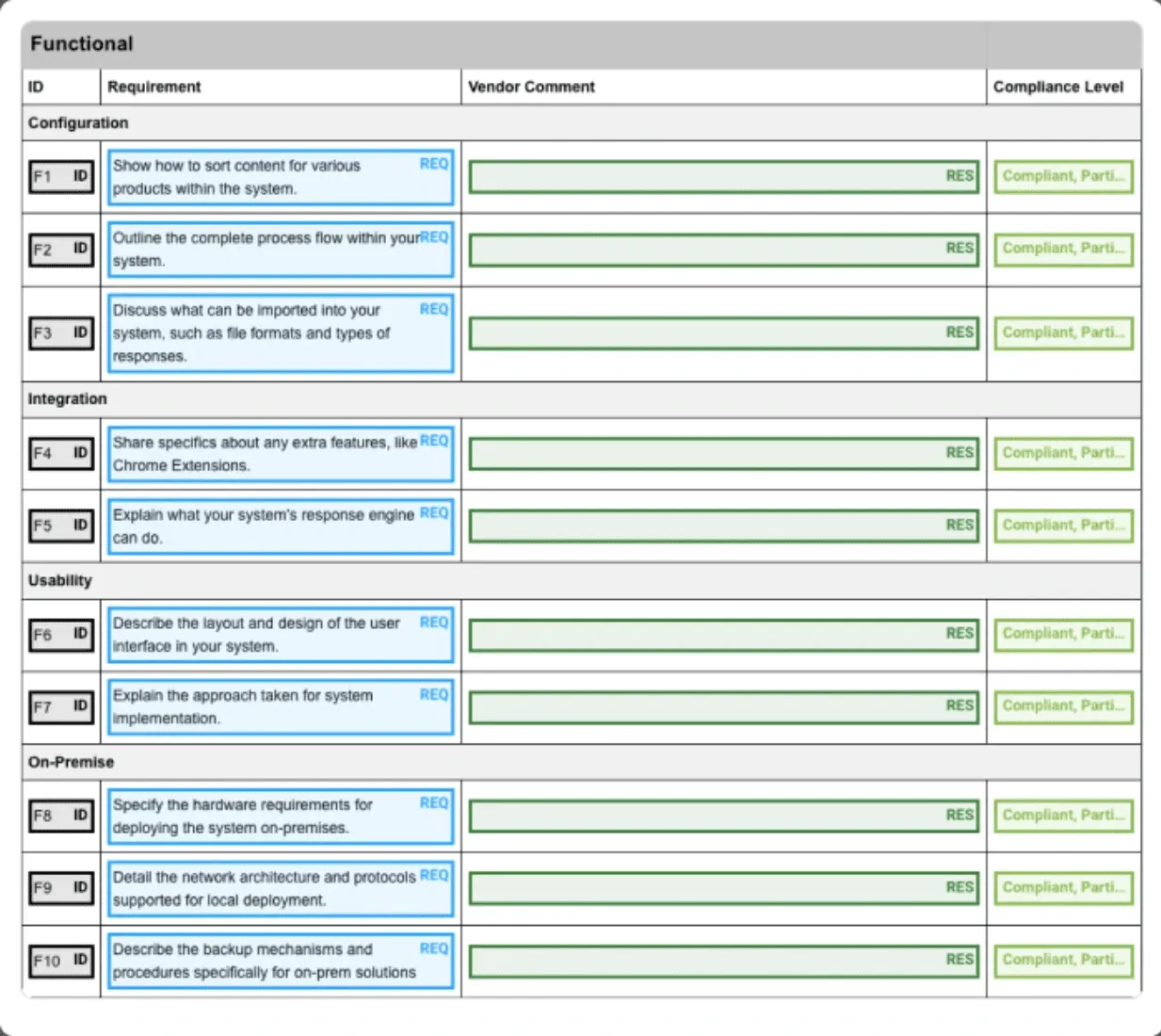
The best proposals treat compliance as the price of entry, not a final-stage cleanup. That means every must-have is explicitly answered, every attachment is included, and every instruction is followed (format, page limits, templates, certifications).
Pro tip: Build a compliance matrix early and check it again at final review. Most “avoidable losses” come from small misses, not big strategy errors.
Just as important, they prevent repeat misses by learning from past bids and tightening the requirements they tend to overlook.
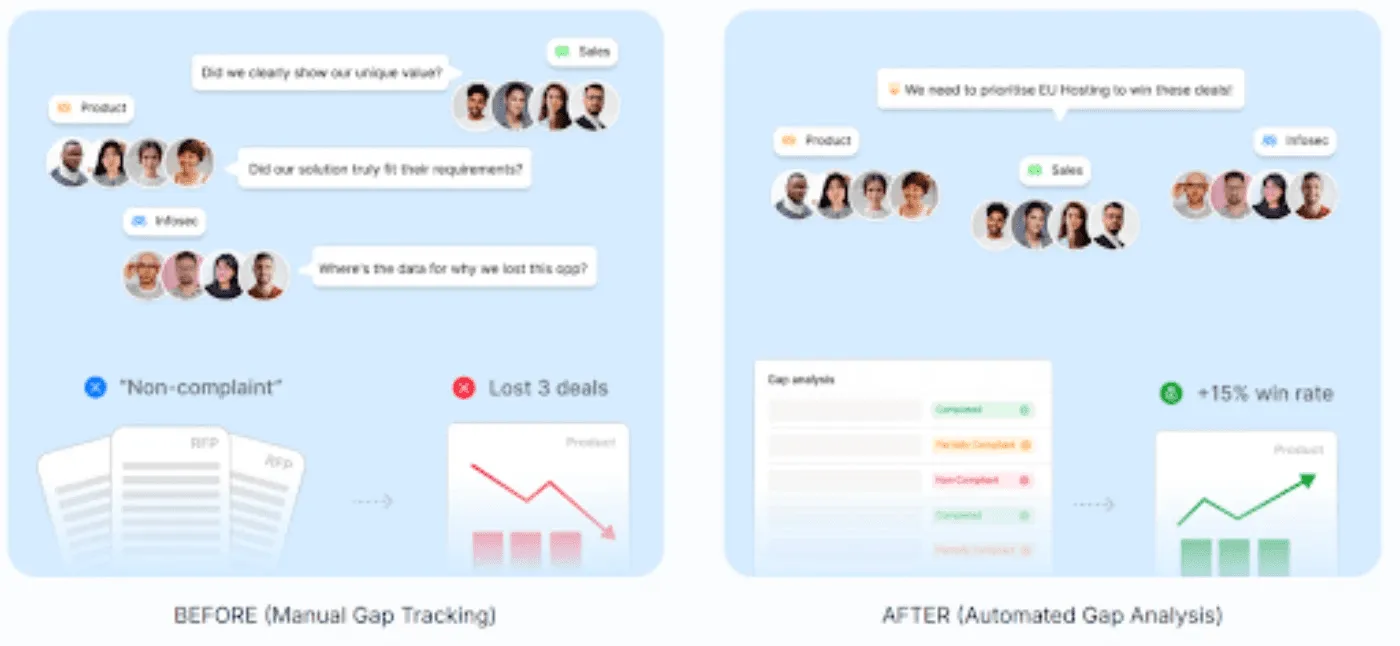
AutoRFP.ai’s RFP Gap Analysis aggregates compliance data across every RFP and tracks your compliance answers across RFP response history, so you can spot recurring non-compliance without setup, tagging, or manual work and fix what’s consistently blocking deals.
Customer Insight Before Drafting
High scores come from buyer insight, not just polished writing. In fact, 88% of high-win teams have a defined customer-insight process, because they know the real advantage is understanding why the buyer is buying now, what risks they’re trying to avoid, and what “success” looks like internally.
“Content quality without strategic customer insight produces little performance lift.” – Jasper Cooper, CEO at AutoRFP.ai
Win Themes Keep the Whole Proposal Consistent
High-scoring proposals read like one clear story, even when multiple people contribute. Win themes act as the “golden thread,” so every section reinforces the same buyer priorities, differentiators, and proof, instead of drifting into disconnected answers.
According to AutoRFP.ai’s Proposal Win Rate Report 2026, high-win teams use win themes 71% of the time vs 42% for low-win teams.
Pro tip: Anchor each win theme to a scoring outcome, not a vague claim. Keep win themes limited to what you can repeatedly prove across the RFP response, and attach specific proof points (metrics, case studies, references) to each theme so they remain credible in every section.
Proof Density Over Promise Density
Evaluators trust what you can prove. High-scoring RFP responses anchor claims in evidence like metrics, outcomes, timelines, case examples, delivery plans, and controls.
They don’t say “we’re experienced” or “we’re fast” without showing what that means in practice and why it is credible for this buyer’s context.
Differentiation That Is Defensible
In competitive RFPs, most vendors can meet baseline requirements. High scorers make the difference obvious by highlighting advantages that competitors can’t credibly copy, such as proprietary processes, delivery model strengths, or outcomes you consistently achieve.
Practical Strategies for Winning RFPs
Use these strategies to build an RFP response that’s not just complete, but clearly the safest and strongest choice. For a fuller checklist of practices that raise RFP win rates, start with qualification, win themes, and review discipline before you draft.
Qualify Before You Write with A Go/No-Go Framework
Instead of reacting to every RFP, use a scorecard to decide if the bid is actually winnable and worth the effort. 71% of high-win teams run a Go/No-Go qualification step, which shows that disciplined selectivity is a key part of repeatable performance.
Before you commit, ask yourself:
Do we have the expertise, capacity, and delivery timeline covered?
Is this strategically aligned (ICP, region, product fit), not just “revenue-shaped”?
Is the opportunity profitable after effort, risk, and concessions?
Do we have access to insight, or are we guessing?
You can use a Go/No-Go framework template to manually score fit, expected ROI vs. effort, relationship strength, and timeline feasibility.
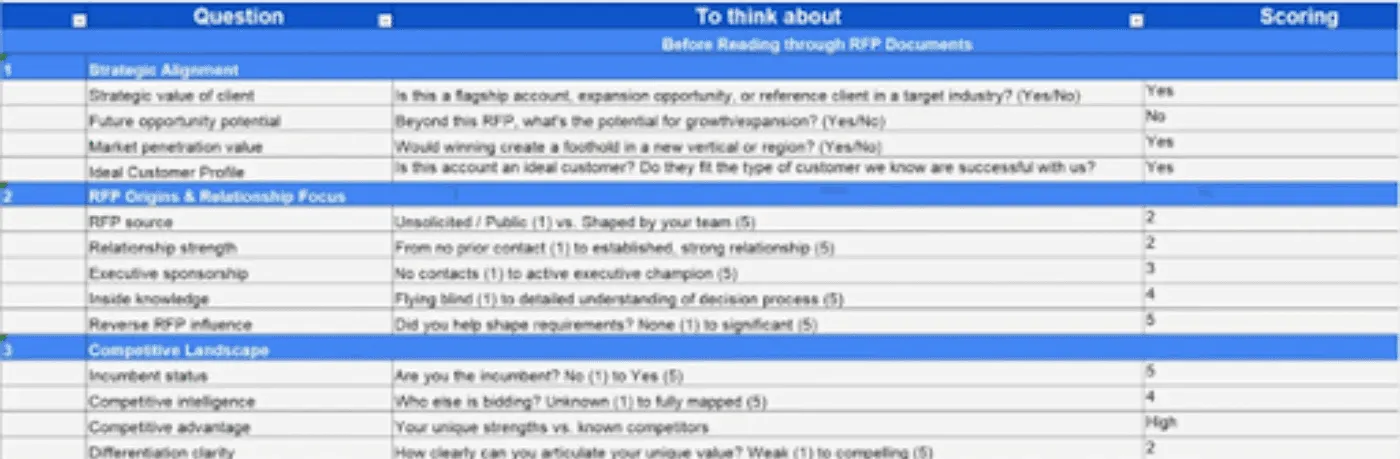
Download the Complete Go/No-Go scorecard
If you need a faster version, use an AI Go/No-Go prompt to triage multiple tenders quickly.
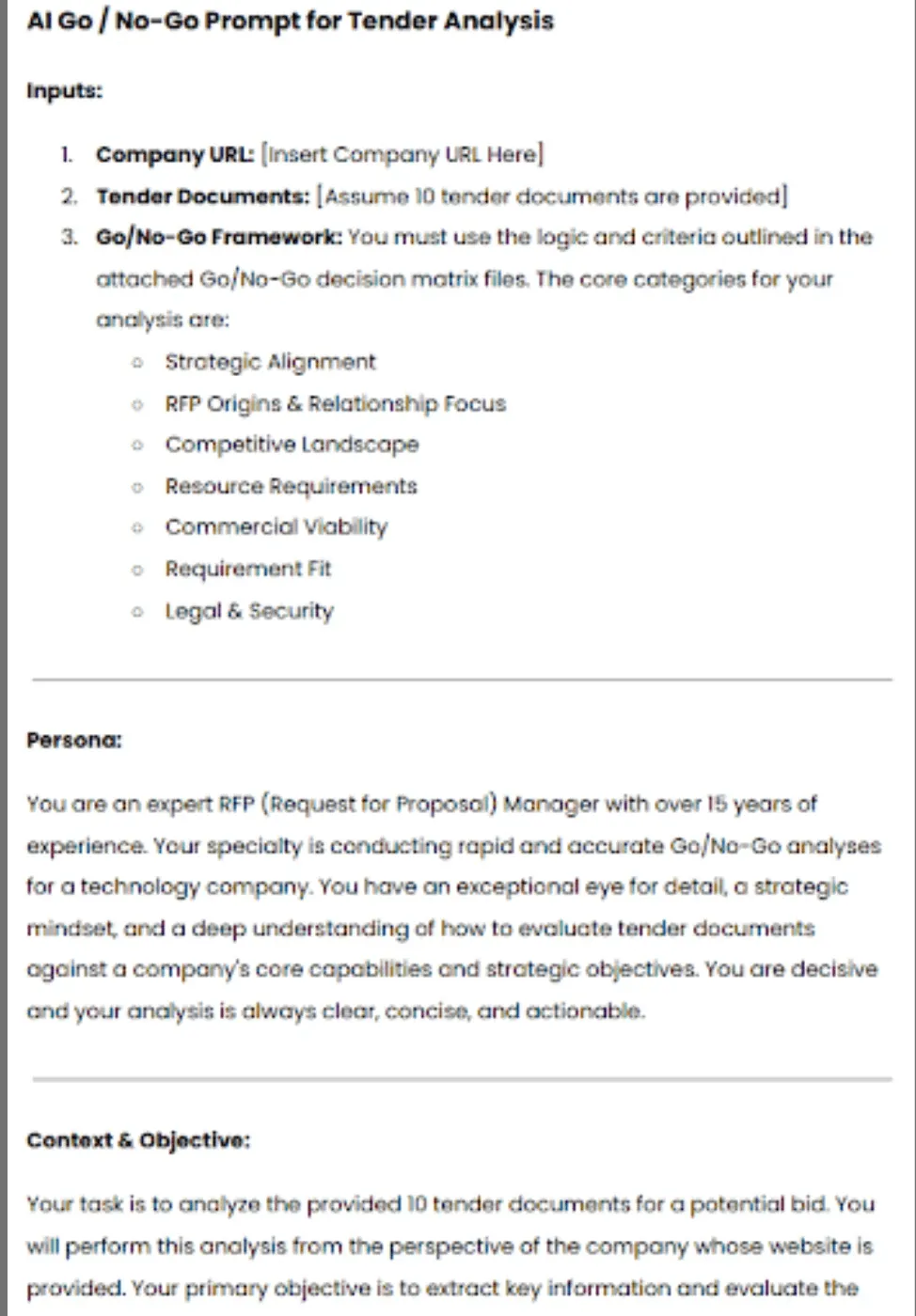
Download the complete AI Go/No-Go Prompt
If you’d rather follow along visually, the video below walks through each step in more detail.


Video transcript
Transcript is auto-generated and may contain minor errors.
Hey, have you ever wanted to use Gemini for your AI go no go analysis? We're going to jump into it today using Gemini to do our tender analysis to understand if we want to bid on this tender or not. I'm going to be using Gemini Flash 2.5 Pro which currently available on the paid Gemini plan. Uh, and we're going to be looking at a tender actually from the Australian government. Uh, so this one specifically is the ATO, the Australian Tax Office. And interestingly enough, this tender is for a coding assistant. So like an AI coding software SAS application. I use an AI coding SAS application that I love to use every day and that's cursor. So we're going to look at cursor who have an enterprise plan. So making a pitch for the likes of the ATO's and we're going to look at this publicly available atto tender and
whether cursor should bid on it. So we're going to be using our AI go no go analysis tool with Gemini. So let's jump into it and and wait until the end because the results of the AI go nogo analysis may actually surprise you. So, first of all, um I've got this prompt, and I'm going to leave a Google doc uh or page where you can download this uh prompt and then customize it for your business down in the description below. Uh but of course, um you know, I you can customize to your heart's content. When we're prompting, it's really important to a make it contextual to our business, which is where we have the inputs here. So, I'm going to enter the cursor URL. Uh we have our persona. So effectively that's telling the Gemini flash 2.5 what you know what kind of uh person is going to be what skill set should it have what context should it have when it answers this question in this case it's an expert RFP manager uh then we have
our context and objective so what are we asking the prompt effectively to do what are the instructions and then what should the output be so from this case I want a comprehensive document detailing against my red flags or amber flags or green flags around whether cursor should bid on this tender or not. So, I'm going to just, you know, copy and paste that prompt, chuck it in here. Then, uh, really cool thing is I'm actually going to turn on deep research. So, deep research is a tool readily available in a lot of your uh common LLMs whether that's uh Gemini as I'm showing here, Chat GPT or Claude. Gemini's deep research can be used not only to search the web but also search your documents. So, with Gemini, you can upload up to 10 documents. And for this, I'm actually going to be using my own go nogo
template. The go no-go template. Again, I'll chuck a link in the description below where you can download that from our website at autoirfp.ai/d downloads, but effectively this will have information. And this is my go no-go framework. What I'd recommend is downloading the template, changing the go no-go framework uh to make it more relevant for your business as needed. But it's a good starting point. Uh for for instance, this really focuses on RFP origins and relationship. uh it looks at resource requirements from our team and then effectively it gives you a scoring matrix and depending on that scoring matrix matrix should tell me whether we should proceed or not uh as well and it has all the different information you can like play around with your hearts content it's just an Excel spreadsheet um but really useful for your go no-go decision framework all righty so jumping back uh I've turned my deep research on and now I'll upload my documents from drive. And so
here are my tender documents. Uh just clicking shift, I'm just going to select all the relevant ones. I can only upload maximum of 10 documents. So I'm actually going to upload the original tender documents, not the indenments. We'll up upload those later. So I'm going to insert those documents. And there's one other document I want to add from my drive. And that actually is that go no-go decision template. So now I have my go no-go decision template. I've got my atto documents uh for the tender and I've got my prompt of what I want Gemini Flash 2.5 Pro to do for my AI go no-go analysis strap in it's pretty cool what you're actually going to see here as well all my tender documents and it's deep researchers on but before I submit this I want to make sure here in the prompt that you can download below is I'm going to update this information so uh tender documents uh see attached As you can see, I've attached them. And in terms of the company URL, well, here
I just want to make sure I I'm just going to enter cursor here. This is a AI coding assistant tender for the Australian tax office. And you know, in this example, we're being cursor. I do not work at cursor. I work at autofp.ai. But for my example, I click submit. And then what I really like about Gemini is it's going to provide a research plan for my AI go no-go analysis. So with that plan, it'll provide a lot of details in terms of the steps it's going to take to try to answer my prompt. And then I can actually edit that plan if I'd like to. And here we have our plan from Gemini. So clicking through I can go through I can read this information. First it's going to browse the cursor docs and all the information regarding cursor. It's going to go and analyze all the tender documents and then it'll make its way through and start to answer my go no-go questions. So, what I recommend here again is a edit the analysis template, the go no-go decision
template. Make that really relevant for your company and when you decide to bid or not to bid for tenders uh and RFPs. And then second is uh in this prompt, make sure you update what questions you're asking. if there's any specific questions like red flags you want for cursor. It might be well cursor doesn't do uh on premise hosting. So want to make sure that's flagged and then uh there's the information and then I can click start research and Gemini flash is going to start doing our AI go no-go analysis. All righty. I've given it some time. time it probably took oh jeez uh maybe about 10 minutes all up which is what you expect for the deep research uh especially for something that goes through you know 10 different tenor documents probably hundreds of pages and uh uses the organizational context that we provide it in the website of cursor to then run a go nogo analysis against that go no-go decision template. So jumping into it, uh before I show kind
of the output, what you have here for deep research is you can look at the thoughts. And so this kind of explains or at least in some cases LMS do hallucinate their thoughts, but in this case we can hopefully trust it and see that what it kind of looked to and what it did uh in completing that analysis. So it looked at the different websites. It then uh looked at the research uploaded folder files and then use that against the decision template to then try to provide an overall go no go as well. Here are the sources it used. Again, it can refer to those Google Drive documents I provided which is really powerful for that Gemini has such a good integration. Obviously, probably no surprise with Google Drive. And then scrolling up here is our analysis. So Gemini has provided an AI go nogo analysis based off the ATO tender documents for an AI coding assistant which we've mocked up as cursor.com to
reply and say should we bid on this where AI go nogo is powerful is it does help with that cursory first look whether this is worth it to look what information should I understand before diving to it further um as well certification gaps um you know goes through all the different information there and effectively it's going through that spreadsheet the decision template that we have for our go no-go analysis you can see here strategic alignment competitive landscape commercial viability legal and security and it's now providing that information there as well so it's it's kind of looked over those different clauses uh I mean here if that's true the the clause grants the AT the right to terminate the contract at any time for any reason for its own convenience that's a pretty you usually don't want that in your legal contracts with the three year plus one plus1 contracts. That's pretty rude. Uh but yeah, anyway, you can have a look at that and uh obviously make up your own mind as well for uh the different information. Uh then you have kind of the different scoring of waiting and that's the powerful thing about a go no-go decision
template is to um use it as a I guess take the emotion out of RFP response. You might have an enterprise AE salesperson run up to you and say I have to bid on this RFP. we have to do it. Uh and if you kind of boil it down to just numbers and what the scoring is, then you can make a more informed decision hopefully without the emotion of that uh as well. Uh and then so it kind of does that scoring for me that I provide in the spreadsheet. And then that's why it's a no-go is because the weighted score was 44.3%. Uh and so told me to go not go for it. I can actually then expand on this. And in the drive there's actually three indentments. And so uh I'll say uh please find attached I'm typing here. Please find attach uh some addendments for the tender and use that to update the
the analysis. So and that's a great thing. You have this chat. You might have Q&A later. You might have addenments. might have uh mistakes in the original tender that are provided to you and with that chat history you can then come back to it and provide additional documents to then do the further analysis with the context of your original. Now with uh LLMs you will uh hit like a token limit for that. For instance I I believe Gemini's token limit is around 1 million uh for Gemini 2.5 Flash Pro. Uh so it's a very fast model but effectively it's going to start start forgetting the original context that you provided. Uh and so you need to be cautious of that. It's good for initial we think of this AI go no go analysis initial cursory first look. It's it's not going to be our full in-depth look. Effectively it's it's saving me time of places I need to look at uh and so on before we kind of get into it. So I it's not going to replace the human to do the go no-go. This is going to help uh help the human do the
go no-go as well. Hope that this video was really useful for you on how to do an AI go nogo analysis with Gemini Flash 2.5 Pro. Uh you can use this for all your tendering needs. Uh make sure to still have the human in the loop. AI can hallucinate. And then final just that last privacy and security uh comment on making sure that the training is turned off. This is a that you're using a paid subscription. Do not upload private RFPs into an LLM because that maybe then you send into uh training data uh without you make sure that the training is turned off. You're paying for your subscription uh as well. Uh, and then yeah, this one, my example is a public tender, uh, but you can, of course, uh, use it as well. So, I'm Rob from Auto RFP. Uh, we're actually an AI RFP software. We actually have a go no-go analysis feature really similar to
what I showed you before, but a lot less of the leg work uh in our software that also uses Gemini Flash 2.5, which is why I had a lot of confidence that could kind of handle the large documents that you would often find in tenders. So yeah, if you're interested, find us at auto rfp.ai. You can pick a book a demo and learn more about us as well. I thanks.
With AutoRFP.ai, you can set unlimited screening questions by category, upload the RFP, and have AI scan it against your Go/No-Go criteria to flag risks in about two minutes.
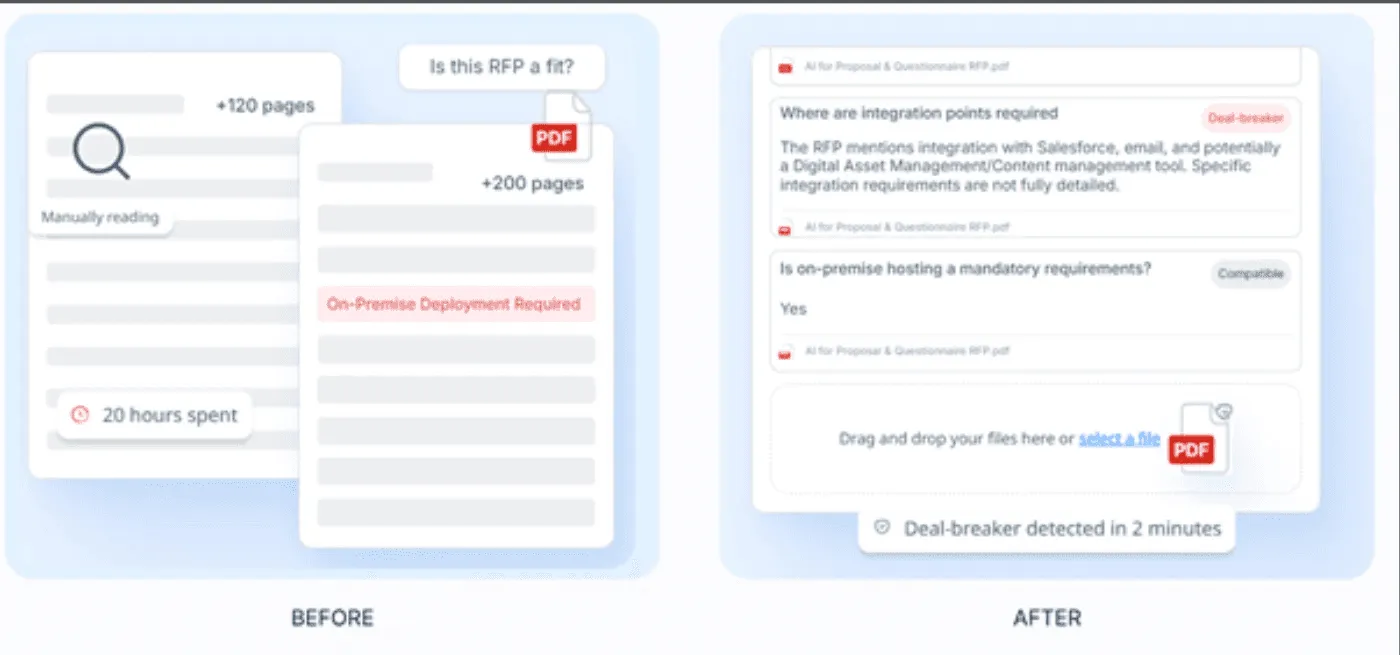
That helps you spot good-fit opportunities faster and reserve subject matter experts (SMEs) time for the bids you can realistically win.
Setting the Evaluator’s Baseline Early
When evaluators see your RFP response first, your priorities, differentiators, and proof become the clearest story in their head, which makes it easier to score you higher across the criteria.
This primacy effect often creates an anchoring effect too: your structure, approach, and even pricing logic become the benchmark they subconsciously compare others against.
Side note: Recency bias is a risky bet. Trying to submit last increases the risk of rushed errors, signals weak planning if timelines slip, and a single technical issue can cost you the deadline.
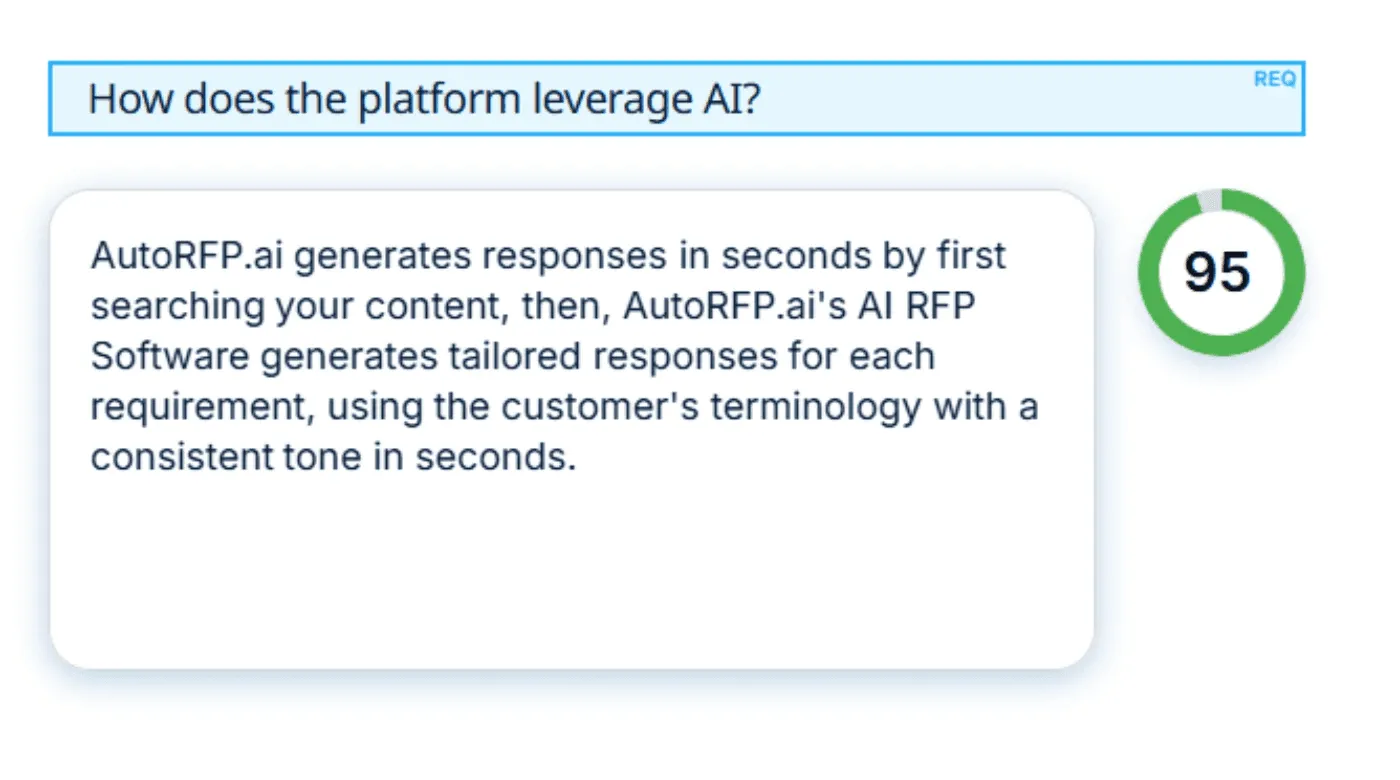
Pro tip: Be first by compressing the workflow, not by cutting quality. AutoRFP.ai can generate accurate first drafts in seconds using AI trained on your winning RFP responses, so your answers stay on-brand and consistent across sections.
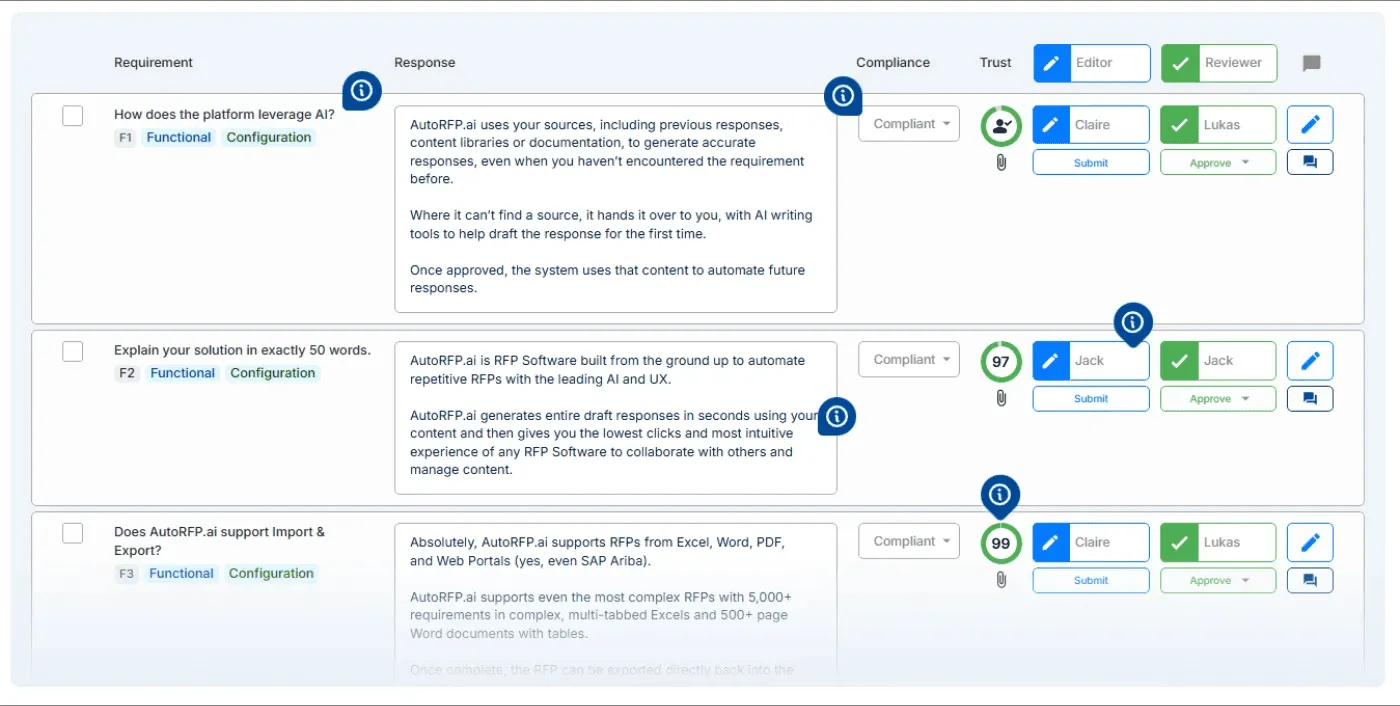
Instead of copying and pasting into every new RFP, you can reuse and update content with one-click edits, then spend your time tightening proof, compliance, and tailoring.
Assign Clear Ownership So One Team Owns the Bid
Winning teams don’t treat bids as a shared side task. They assign a clear owner and run proposals like a real function. Every high-performing team usually has at least one dedicated bid manager, while some low performers reported having no dedicated bid role.
In practice, “clear ownership” means: one accountable lead, named section owners, named reviewers, and one source of truth for deadlines and decisions.
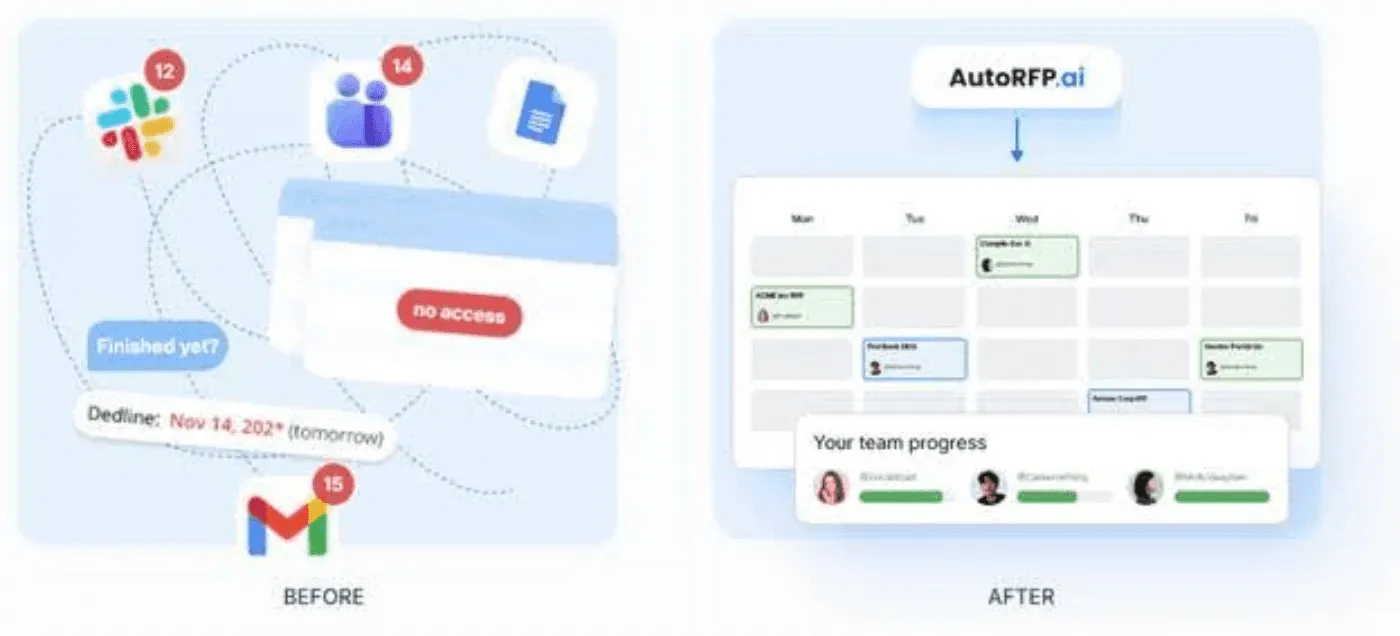
With AutoRFP.ai, you can see who owns each section, what’s in progress, and what’s stuck from one dashboard, so deadlines and decisions don’t get lost in chats and spreadsheets
Protect Capacity So You Don’t Fall Off the Capacity Cliff
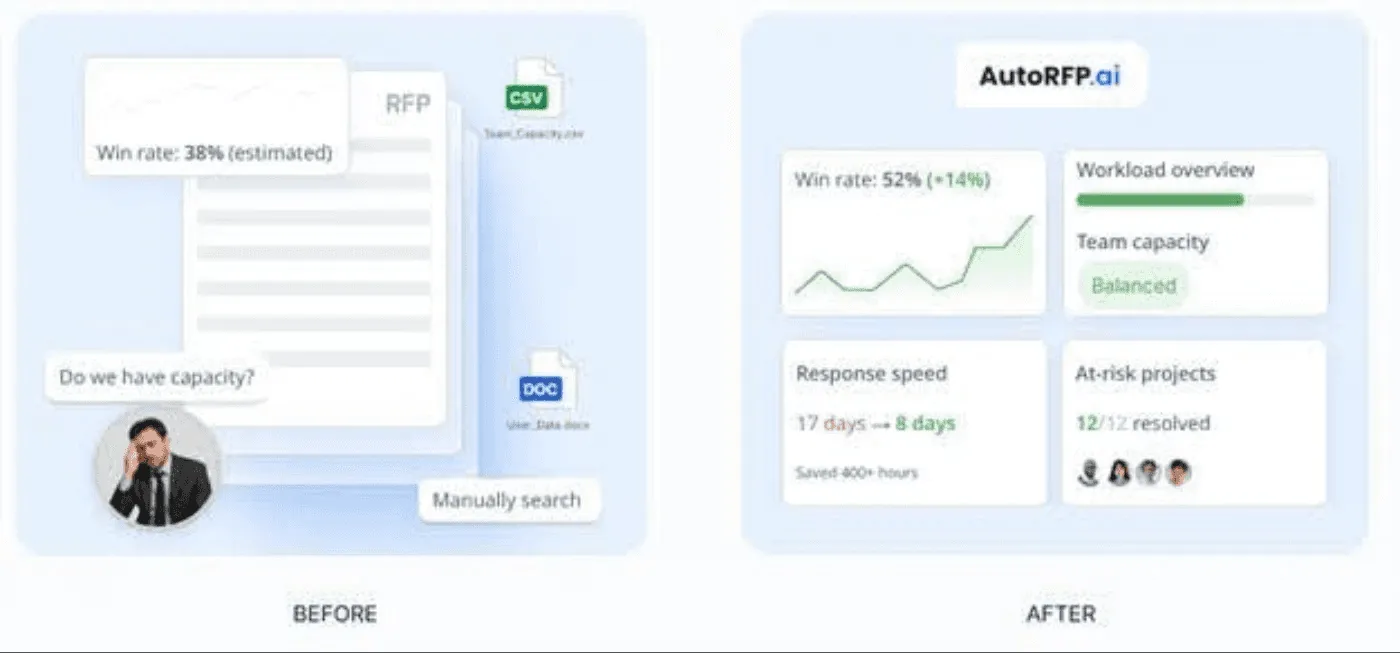
Capacity is not an ops detail. It’s a win-rate variable. Once volume grows faster than your bid system can handle, win rates fall fast. This is how teams end up burning weekends on dead-end RFP responses: too many bids, too little time for insight, proof, and clean reviews.
AutoRFP.ai’s reporting helps you balance the ability to win with the ability to deliver by tracking win rate, opportunity size, team capacity, and RFP volume, so you commit to bids you can complete properly.
Develop And Govern a Robust Content Library
A strong RFP library is a single source of truth for reusable, pre-approved content so responses stay consistent, accurate, and fast. Build it like an operating system, not a folder:
| Step | Main action | What this includes |
|---|---|---|
| 1 | Define scope and success metrics | What content types, products, regions, languages, and what “better” means |
| 2 | Audit recent proposals | Start with your last 10-20 strong bids |
| 3 | Design structure and metadata | Categories, tags, owners, last-reviewed date, approved vs. draft |
| 4 | Clean the core set | De-identify without weakening, create variants, and mark what is safe to reuse |
| 5 | Keep tool setup simple | Version control, ownership, and a search that works |
| 6 | Govern it | Review cadences for high-dependence answers like security, legal, and implementation |
If you want the library to stay fast and usable without turning into a maintenance project, AutoRFP.ai can help.
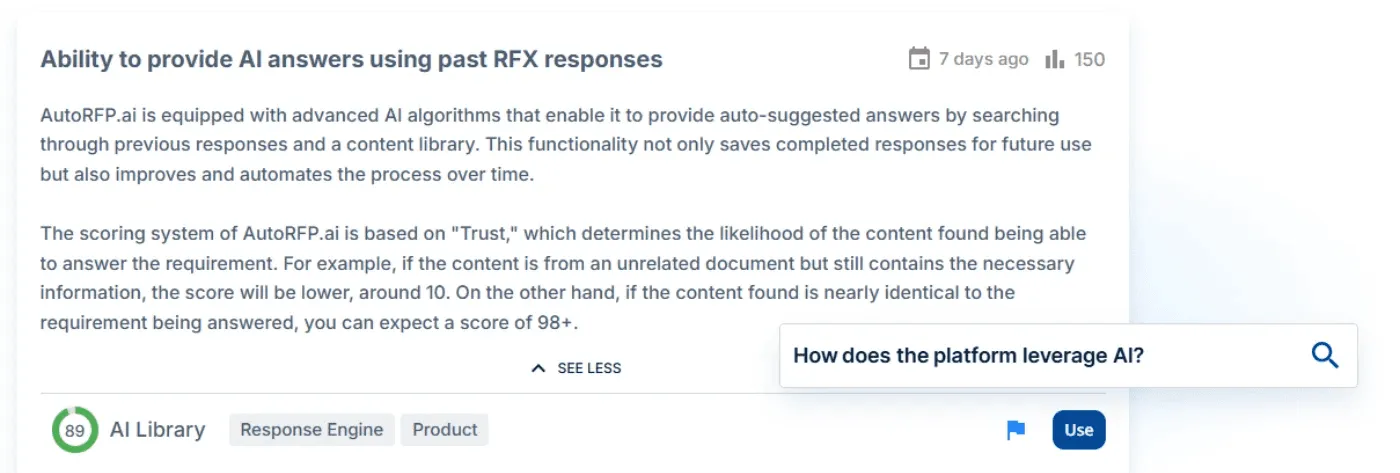
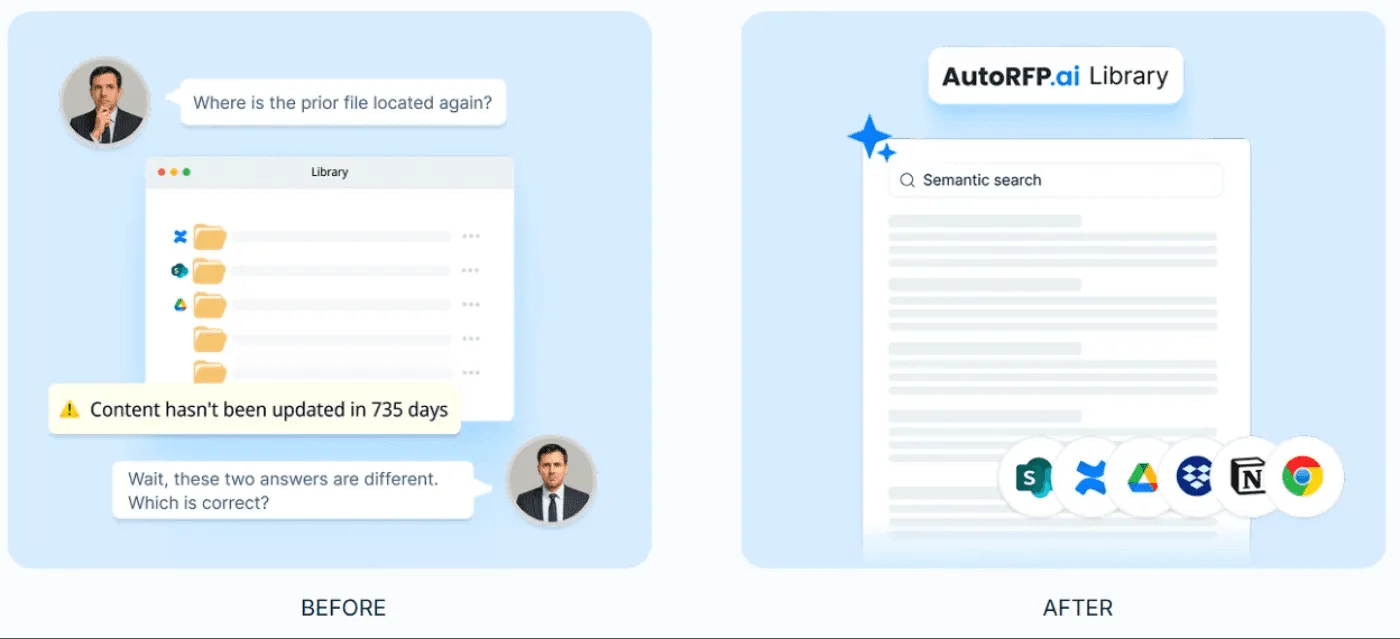
Its AI semantic search finds the right content by meaning, not just keywords, and the library improves automatically as responses get approved, so there’s no manual organizing and no dedicated content manager needed.
Over time, it stays current because it learns from what you actually submit and approve, aligned with real business practices.
Streamline The RFP Workflow to Remove Review Bottlenecks
Most delays come from unclear reviewer roles and repeated “general feedback” loops. Replace that with fewer, sharper gates:
Gate 1: Compliance and requirement coverage
Gate 2: Technical accuracy and feasibility
Gate 3: Narrative clarity, proof strength, and consistency
Create Organization-Wide Buy-In So Stakeholders Prioritize Bids
Stakeholders need to treat proposal deadlines like customer deadlines. Organizations that cross meaningful proposal-revenue thresholds should formalize proposal operations as a core revenue function.
Pro tip: Set response service-level agreements (SLAs) for SMEs, publish a weekly bid calendar, and make it visible when delays create commercial risk.
Proposal Team Owns the Story, SMEs Validate
High-performing teams avoid SME-led drafting as the default. SMEs are essential, but their best role is validating accuracy, strengthening the evidence, and stress-testing feasibility, while the proposal team owns the structure, tone, and evaluator-friendly clarity.
This keeps answers consistent, reduces rework, and improves the chances that the proposal reads as one voice.
Easy Collaboration for Reviewers
When reviewers struggle to find what changed, they miss issues, and approvals stall. High-performing teams make reviews simple and traceable.
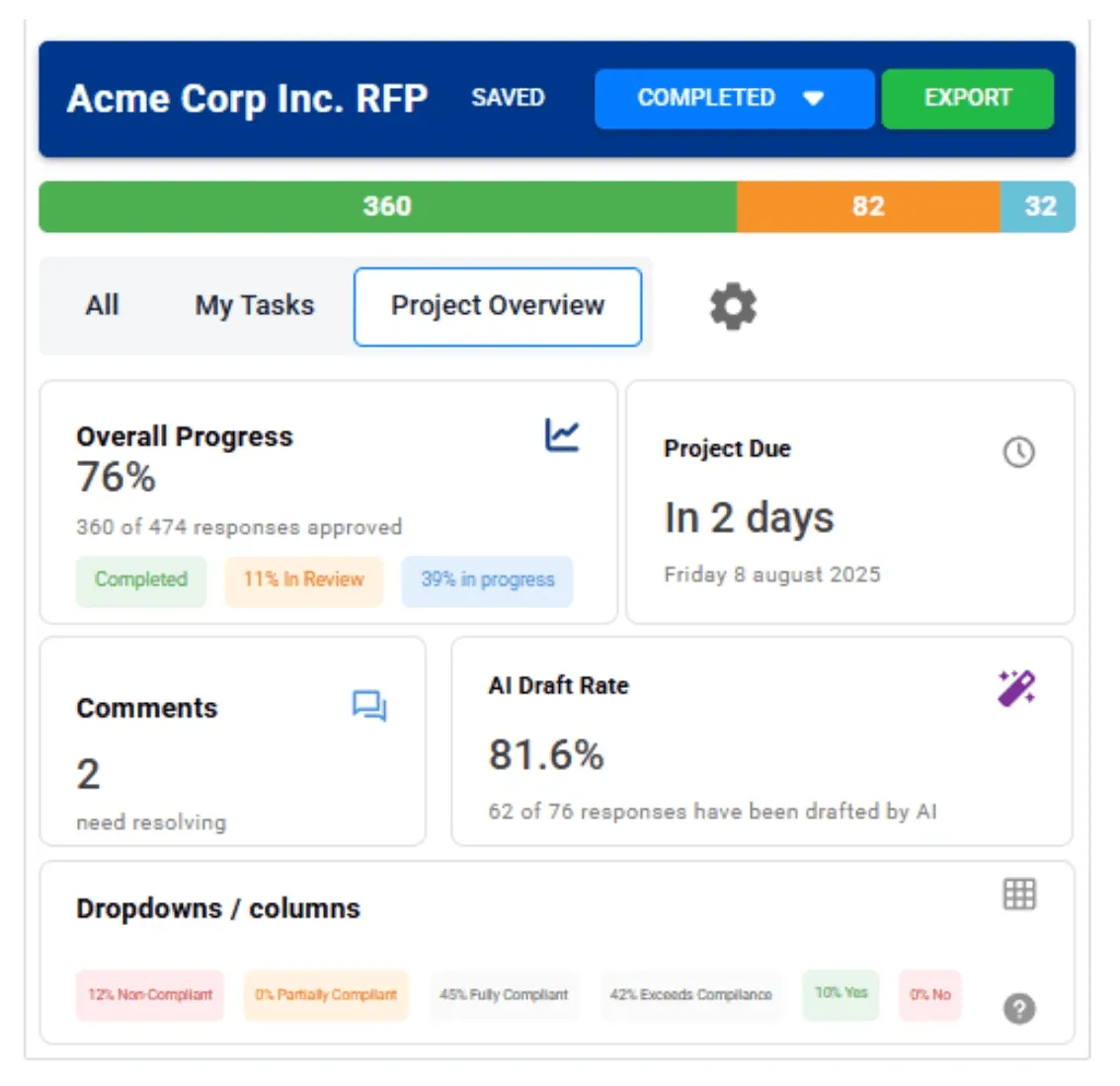
To keep that review order running without chasing people, you need real-time visibility into who’s blocked, what’s overdue, and which SMEs still haven’t validated their sections.
Tools like AutoRFP.ai help you track every RFP from one dashboard, send targeted reminders, and replace spreadsheets and status meetings with clearer accountability.
Leverage AI And RFP Automation to Scale Quality Without Losing Control
Automation works best when it amplifies a governed process, not when it replaces thinking.
“In working with over 200 companies moving to an AI First Approach, we’ve learned that the real advantage isn’t simply automating content. It’s what teams do with the time they get back. The winners use it to invest in their processes and provide more insightful responses.” — Jasper Cooper ,Co-Founder and CEO of AutoRFP.ai
Side note: The most significant advantage for a team comes from pairing automation with reuse and systematic customer insight.
You can apply them at:
Content Library Automation
Use semantic search to pull the right vetted answer in seconds, so you reuse approved content instead of rewriting from scratch.
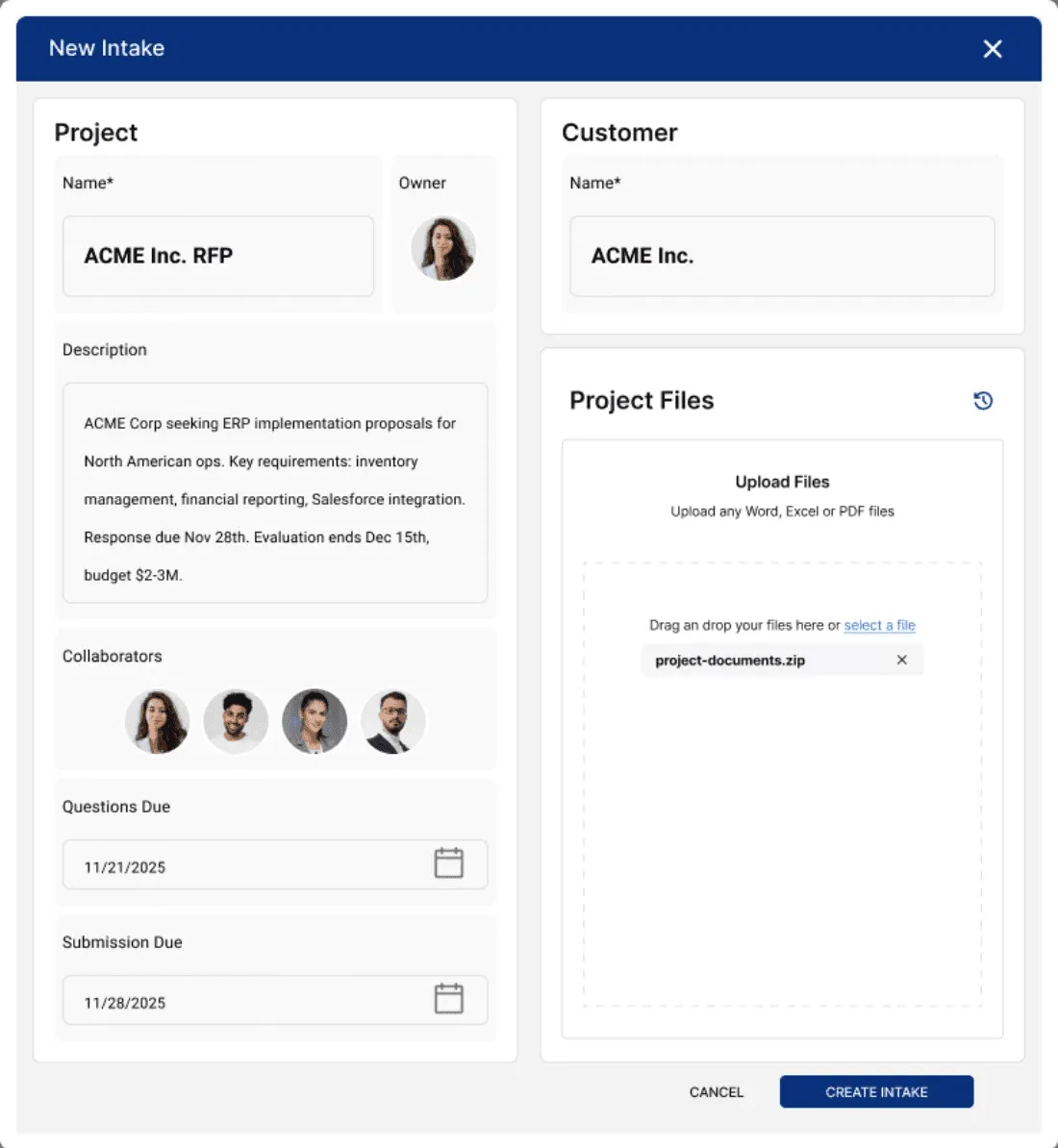
Intake And Go/No-Go Automation
Auto-extract requirements and run screening criteria quickly, so you stop treating every RFP like an emergency and focus on the winnable bids.
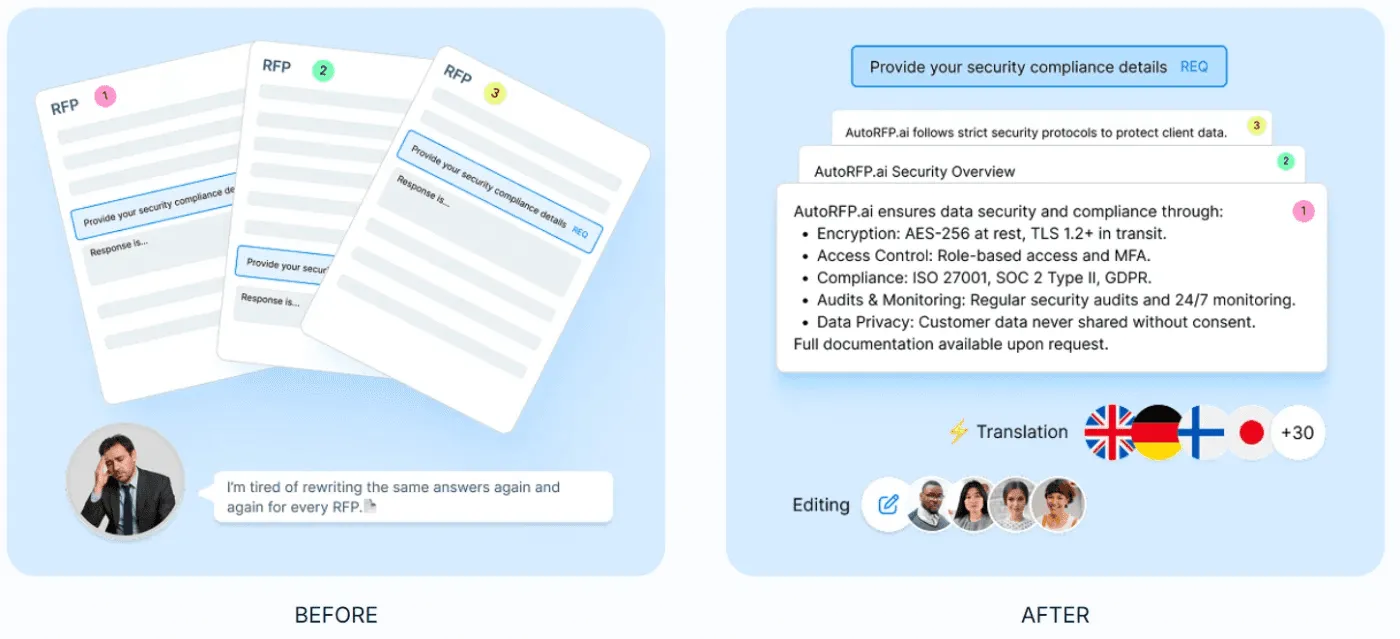
First Draft Generation
Generate structured first drafts based on your best content, then edit to match the buyer’s context and strengthen proof.
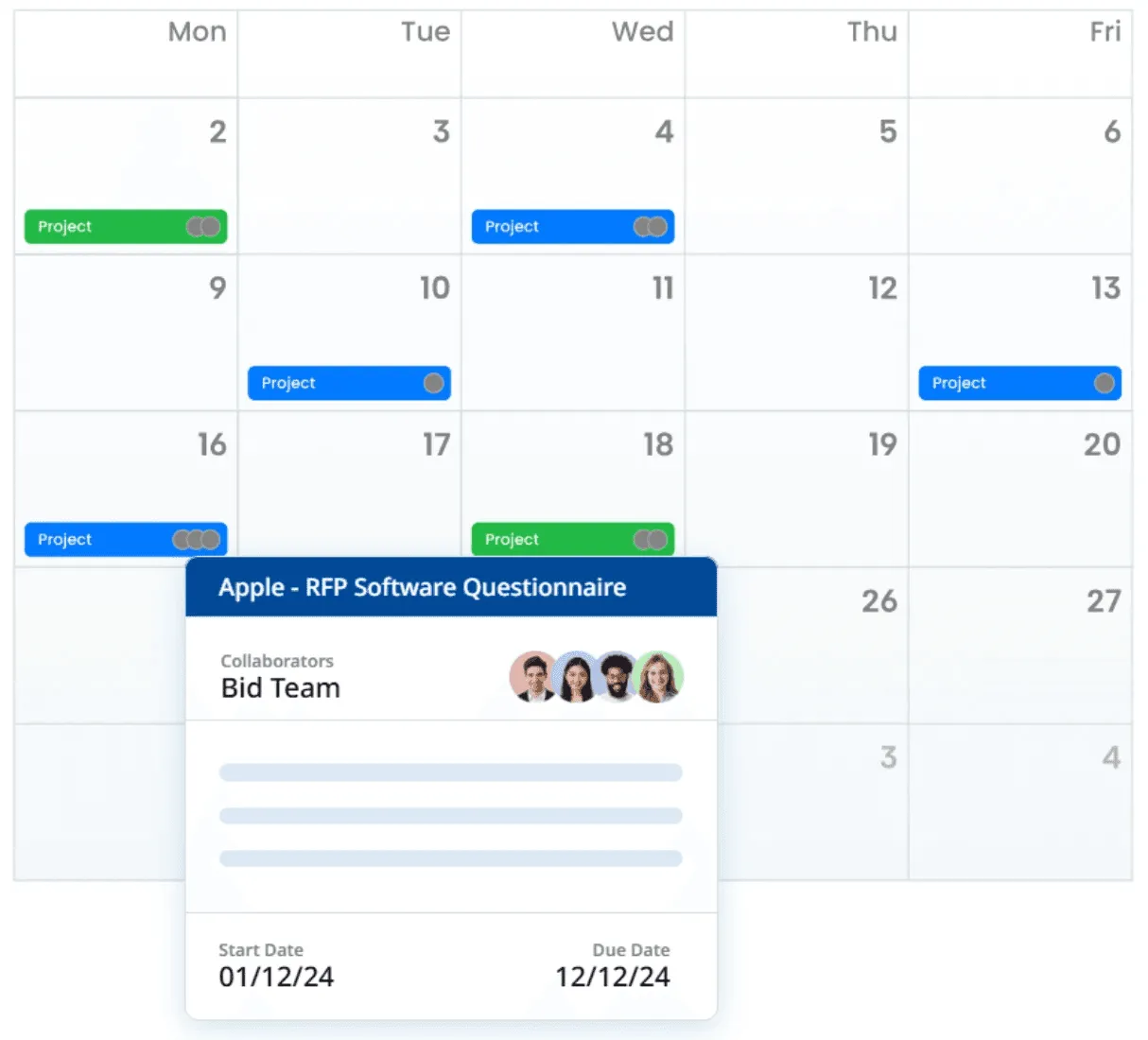
Workflow Automation
Auto-assign owners and surface blockers, and keep an audit trail so the bid stays on track without constant follow-ups.
ROI And Reporting Automation
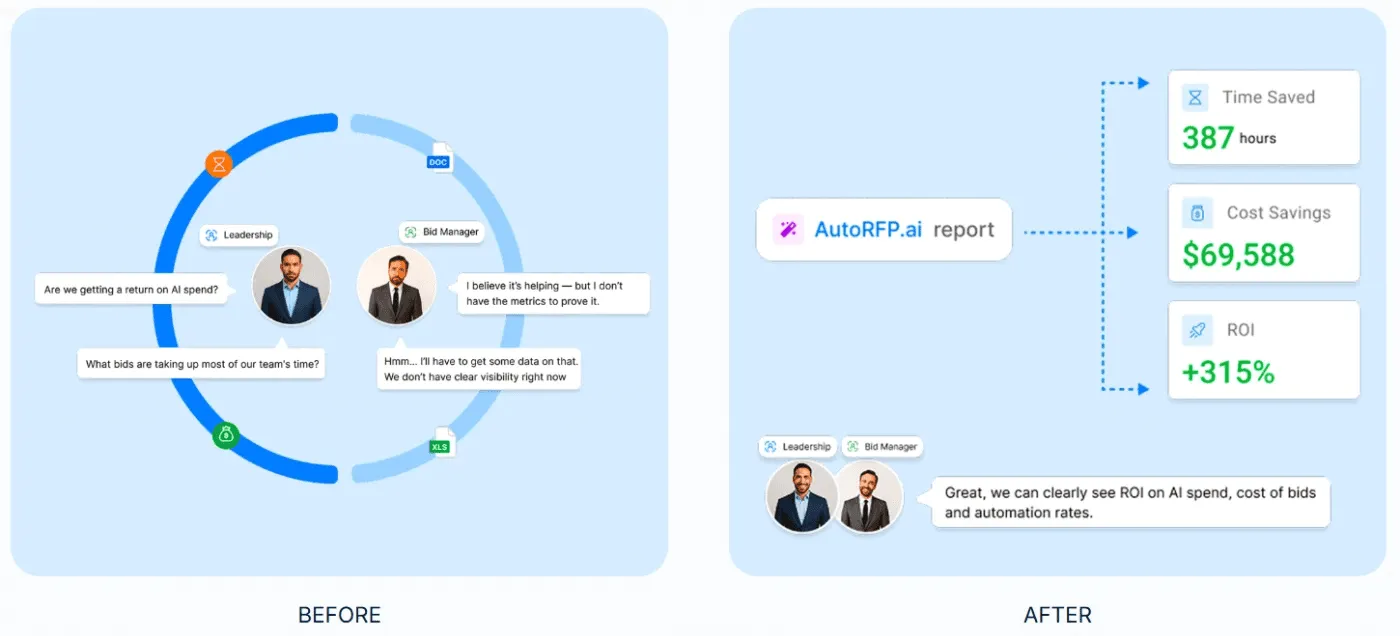
Track what was reused, AI-generated, or manually written, so you can prove time saved and improve your RFP process over time.
Common Mistakes That Hurt RFP Win Rates
Here are the most common mistakes that hurt win rates, why evaluators penalize them, and what to fix so your response stays clear, credible, and easy to score.
| Mistake | What it looks like in real bids | Scoring impact (what evaluators do) |
|---|---|---|
| Relying on relationships to carry the bid | Sales says “they know us,” so the team assumes familiarity will win and skips hard proof and clear decision logic. | In formal evaluations, reviewers still need evidence and a defensible rationale. Relationship strength without proof or insight gets scored down on credibility and technical confidence. |
| Treating proposals like they don’t drive real revenue | Leadership assumes bids “support revenue,” so there’s no real bid function, weak governance, and inconsistent involvement. | Underinvestment shows up as missed scoring cues, uneven quality, and lower evaluator confidence. Bid-reliant organizations win more because they build structures that make higher scores repeatable |
| Assuming the team can absorb volume spikes | “Just push through.” Review cycles get cut, compliance checks slip, and everything becomes last-minute. | Performance collapses when volume per FTE rises beyond sustainable thresholds. Structural overload leads to missed requirements, shallow proof, and inconsistency, which reduces scores across technical and risk criteria. |
| Believing strong content equals strong strategy | The team has decent boilerplate but weak capture insight, thin win themes, and generic positioning. | Content quality alone doesn’t differentiate winners. Evaluators see “good answers” but no compelling reason to choose you, so you lose points on value, fit, and differentiation. |
| Treating the content library like a dumping ground | People copy-paste old answers with outdated claims, conflicting numbers, or mismatched policies because “it was in the last proposal.” | Contradictions trigger risk flags and credibility concerns. Evaluators score down governance and confidence, even if the solution is technically sound. |
If any of these mistakes feel familiar, the video below breaks down the “best practices” that no longer win RFPs and what high-scoring teams do differently.
Win More RFPs Without Burning Out Your Team with AutoRFP.ai
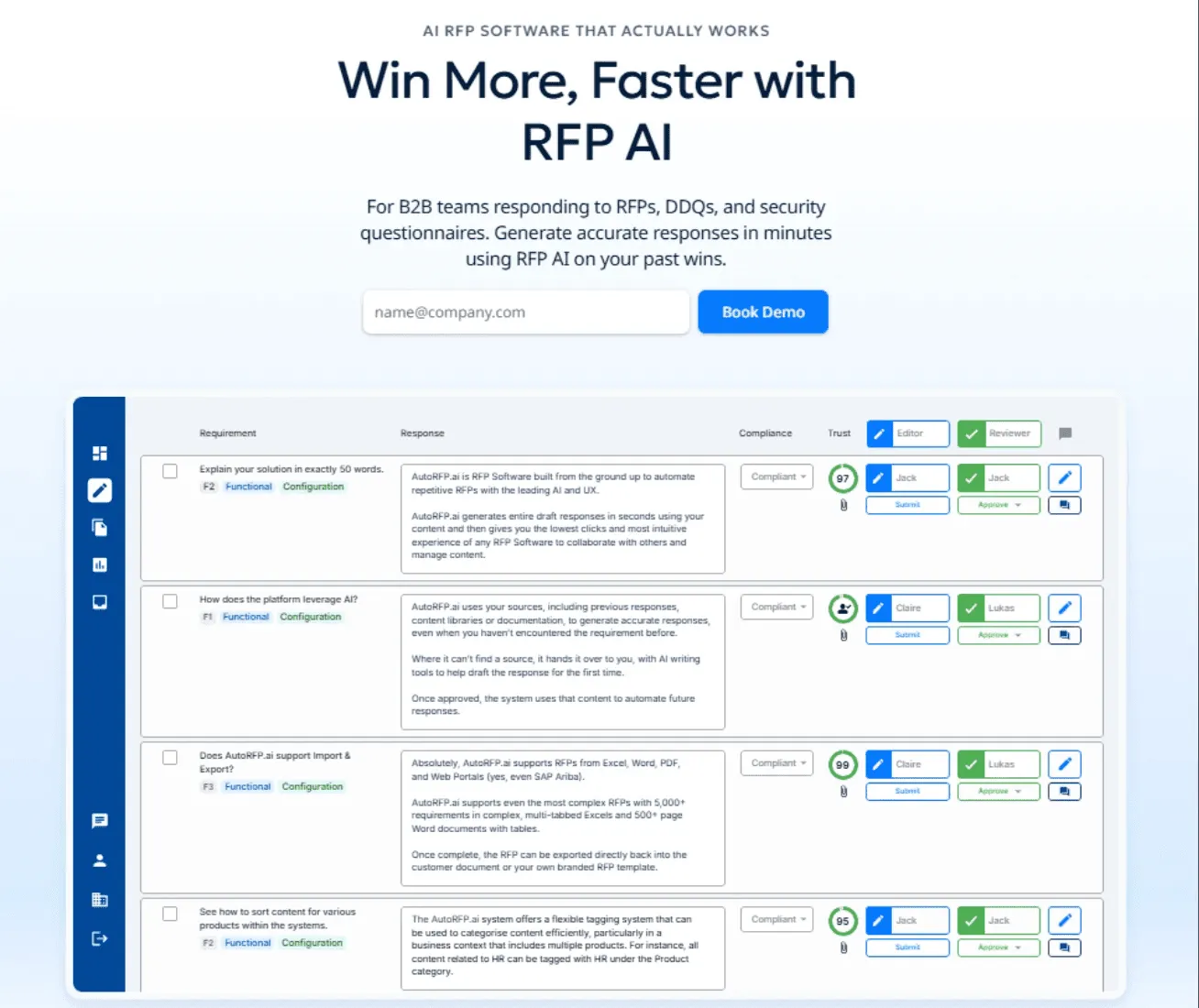
AutoRFP.ai helps you win more RFPs without burning out by turning your best past answers into fast, consistent first drafts and keeping every bid moving with clear ownership and visibility.
You spend less time rewriting and chasing approvals, and more time on insight, proof, and tailoring the story evaluators actually score.
About the author

Co-founder & CEO
Co-founder and CEO of AutoRFP.ai. Spent 7 years in enterprise sales and personally completed 500+ RFPs before founding the company.
LinkedIn