Proposal Management: Process, Best Practices & Tools (2026 Guide)
Learn what proposal management is, how the process works, key best practices, and how modern tools help teams create stronger, faster, and more consistent proposals.

Technical Account Manager, AutoRFP.ai··10 min read
What Is Proposal Management?
Proposal management is the end-to-end process of planning, writing, reviewing, and submitting business proposals, especially for RFPs, tenders, and large enterprise deals.
It covers everything from qualification (go/no-go) and gathering customer insights to assigning owners, drafting responses, managing versions, ensuring compliance, and collecting proof such as case studies and security documentation.
A good proposal management process keeps one clear narrative across sections, speeds up collaboration with SMEs, reduces last-minute rework with structured proposal reviews, and helps teams submit higher-quality proposals on time without relying on heroic effort. Teams that treat proposals as one part of a larger strategic response management process keep customer insight, content governance, and performance data aligned across every response type.
How Strong Proposal Management Processes Can Improve Win Rates, Speed, and Quality?
Here’s how strong proposal management improves outcomes.
| What strong proposal management does | How it improves win rates, speed, and quality |
|---|---|
| Aligns with the buyer’s problem and success criteria early | Increases relevance and evaluator confidence, reducing “nice deck, wrong message” risk. |
| Starts with customer insight before drafting | Increases persuasiveness and reduces generic messaging. |
| Keeps one consistent narrative across sections | Improves clarity and credibility, so reviewers don’t see contradictions or gaps. |
| Uses win themes as a simple through-line | Makes differentiation easy to spot without attacking alternatives. |
| Assigns clear owners for each section and decision | Cuts delays, prevents dropped tasks, and speeds up reviews. |
| Uses SMEs to validate and strengthen, not rewrite everything | Cuts rewrite cycles and keeps the message persuasive; in top-performing teams, only 6% rely on SMEs to write first drafts vs 22% in lower performers |
| Reuses approved content and evidence intelligently | Speeds drafting while reserving human time for the few sections that actually decide the deal. |
| Enforces governance (sources, freshness, compliance checks) | Reduces risk, prevents outdated claims, and improves response quality under scrutiny. |
| Tracks outcomes and learns (e.g., shortlist signals, post-bid feedback) | Improves future bids faster by fixing the real bottlenecks, not guessing. |
“Great proposals aren’t about how well we write (even though I’d like to think so most days). A great proposal is all about how well we understand the customer.” – Christina Carter, Founder of Stargazy
Proposal Team Roles and Responsibilities
Proposal teams win when cross-functional roles are clear, and everyone supports a single, consistent story.
| Role | Responsibilities |
|---|---|
| Bid manager | Leads the strategic, end-to-end bid lifecycle: capture, qualification, budget, win strategy, stakeholder alignment, and negotiation support. |
| Proposal manager | Owns tactical execution: content development, compliance, version control, reviews, and overall document quality. |
| Bid writer | Drafts and refines responses, maintains one voice, and builds clear differentiation across sections. |
| Sales engineer | Translate requirements into a credible solution, validate feasibility, and support technical Q&A. |
| Solution engineer | Owns solution design and architecture for the bid, builds demos/POCs when needed, and translates the approach into a credible implementation story. |
| Account executive | Owns customer context, positioning, stakeholder alignment, and commercial momentum. |
| Subject matter experts | Validate accuracy, provide evidence, confirm risks, and prepare concise specialist responses. |
Side note: Proposal success depends on cross-functional alignment plus clear ownership. According to AutoRFP.ai’s Proposal Win Rate Report 2026, every top-performing team had a dedicated bid manager.
The Proposal Process from Start to Finish
Let’s walk through the full proposal process so you can see what happens at each stage, who’s responsible, and how every step affects your chances of winning.
Stage 1: Opportunity Capture and Logging
You pull in new proposal opportunities from every channel and log them in one place, so nothing slips through the cracks.
Centralize all new opportunities (portals, partners, email, frameworks) in a single RFP tracker or bid tool.
Record the basics early: client, scope, deadline, submission method, and internal owner.
Stage 2: Qualification and Bid No-Bid Decision
You decide if the opportunity is worth pursuing, instead of responding to every RFP by default.
Apply a simple go/no-go framework (fit, risk, price pressure, capacity, margin, competition).
Check for early knockouts and log them in a proposal compliance matrix (formats, eligibility, and mandatory requirements).
Align fast with sales, delivery, finance, and leadership on bid, no-bid, or revisit.
In fact, 71% of high-win teams use a Go/No-Go step, which is strong evidence that disciplined selectivity is part of repeatable performance.
Every hour spent on a poor-fit RFP is an hour you can’t spend on a winnable one, and it’s how teams end up burning weekends on dead-end responses.
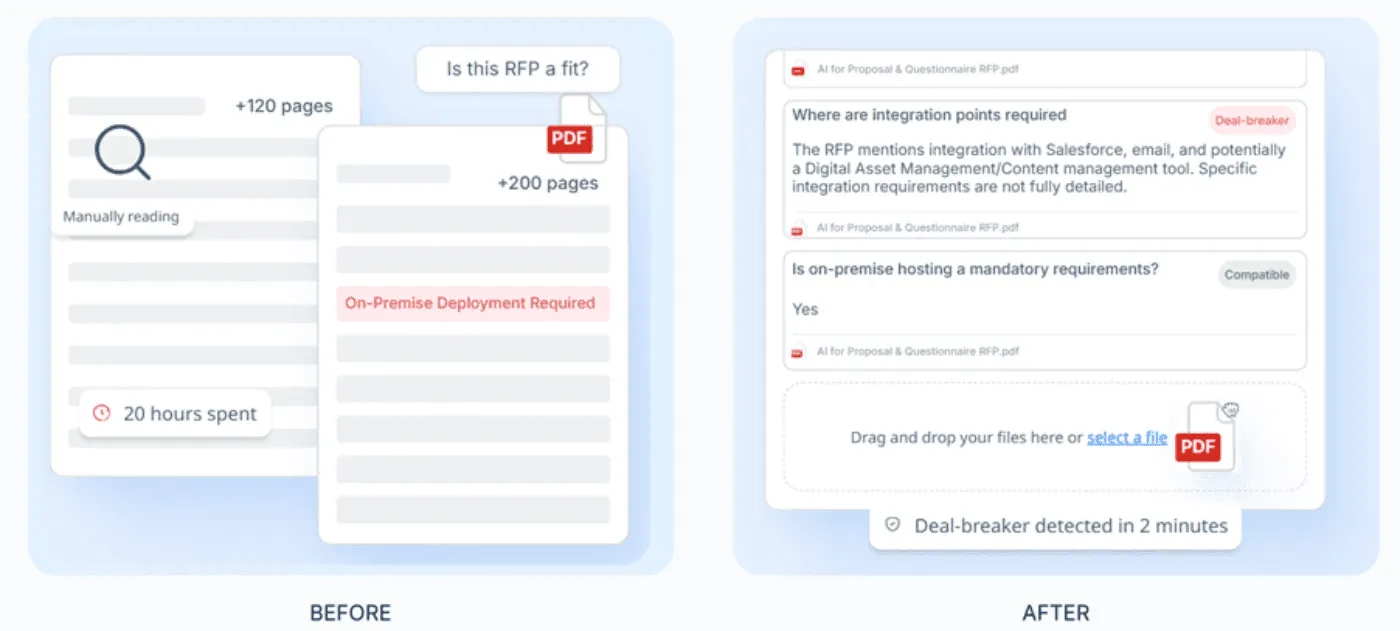
Pro tip: With AutoRFP.ai, you can configure unlimited screening questions across categories, upload the RFP, and have AI scan it against your Go/No-Go criteria to flag risks in 2 minutes.
“AutoRFP.ai has been one of the most life-changing tools that I’ve used in my career.”
– Katie Huff Sr. Director, Sales Operations
Watch this video to learn a practical gono-go method for qualifying RFP opportunities using bid cost, win probability, and AI.
Stage 3: Bid Strategy and Solution Design
You align on how you’ll win and what you’ll propose before anyone starts drafting.
Lock in win themes, key messages, and differentiators.
Confirm the solution approach, delivery model, and commercial direction.
Set review gates early (for example: Pink Team review, Red Team, Gold Team).
Stage 4: Response Planning and Content Development
You break the proposal into sections, assign owners, and build the first full draft.
Create a clear outline and ownership plan (who writes what, by when).
Draft responses and compile supporting documents (CVs, case studies, policies).
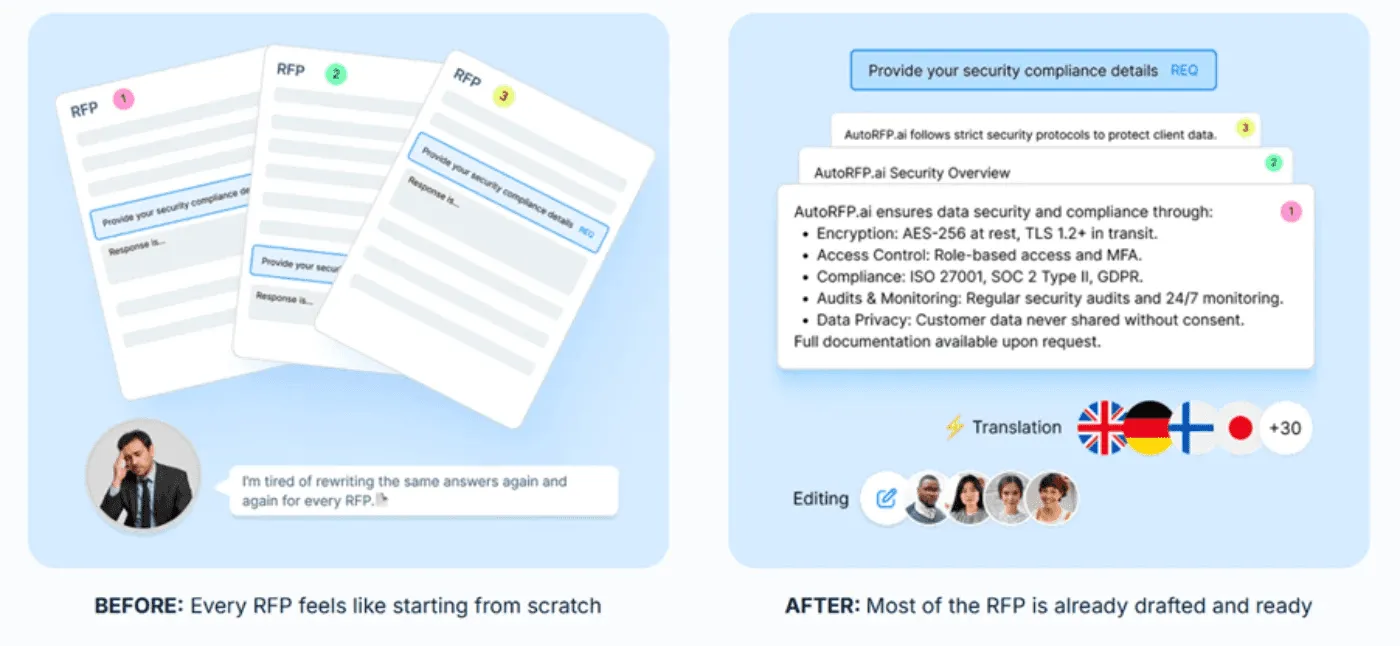
Reuse approved content where it fits, then tailor it to the client and evaluation criteria.
Track gaps and SME questions early so answers don’t bottleneck the timeline.
Stage 5: Review, Pricing Finalization, and Approvals
You tighten the proposal, confirm compliance, and lock pricing with the right sign-offs.
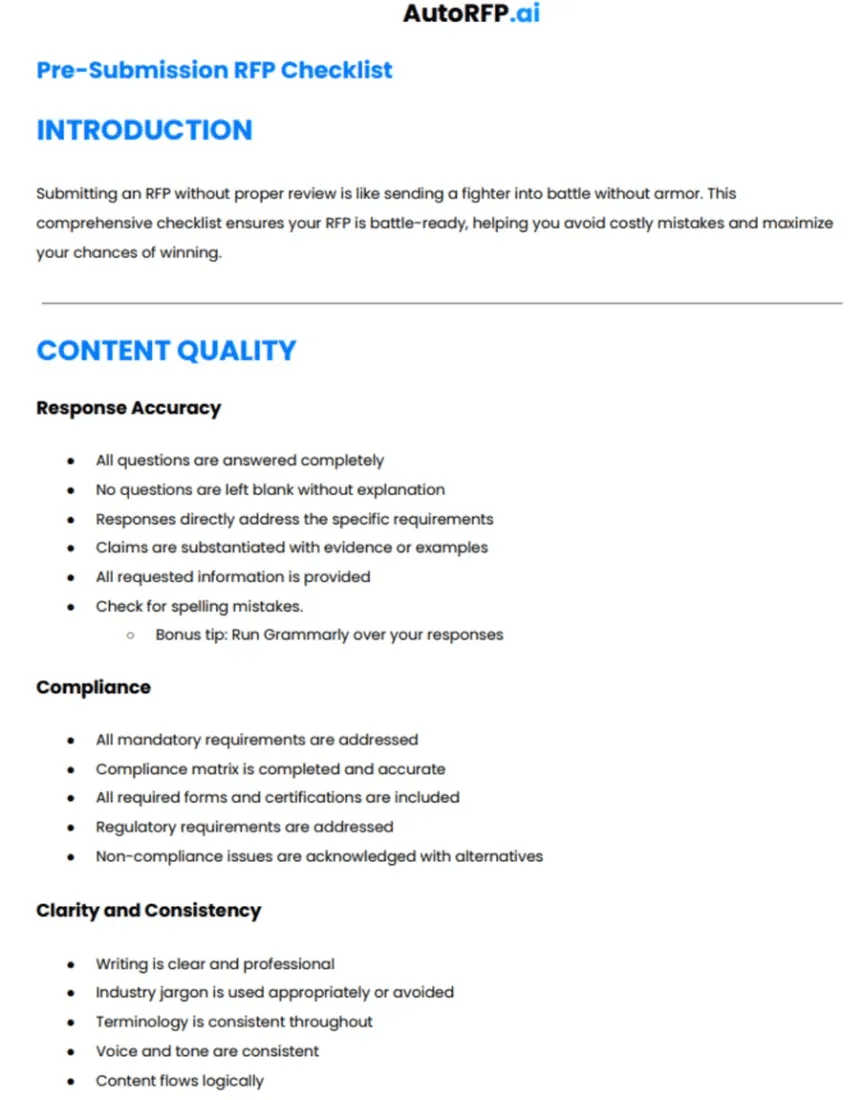
Run reviews for compliance, technical accuracy, clarity, and consistency.
Finalize pricing with finance and leadership, and validate margin guardrails.
Secure approvals and capture assumptions and risks for auditability.
Stage 6: Submission and Clarification Management
You submit correctly and handle clarification questions without losing control of the narrative.
Complete a final QA and compliance check, then submit exactly as instructed.
Confirm receipt and keep proof of delivery.
Coordinate clarifications and BAFO requests quickly with SMEs and bid leadership.
Stage 7: Presentation or Interview
If required, you bring the written proposal to life and address evaluator concerns directly.
Build a tight story that mirrors your win themes and differentiators.
Assign speaking roles, prep demos, and plan Q&A handling.
Stage 8: Award, Debrief, and Transition
You either transition into delivery fast or capture learning so the next proposal is stronger.
If win: Hand over into delivery with scope, risks, assumptions, owners, and timelines.
If loss: Request a debrief and document what shifted the outcome.
Update your content library, templates, and playbook with lessons learned.
How to Optimize Your Proposal Management Process (Step-by-Step)
These are the core habits high-win-rate teams use to qualify better and win more proposals.
Step 1: Start With Customer Insight Before Drafting
Top-performing teams don’t wait until the end to “add insight.” They built it in from the start. Across high-win teams, 88% have a defined customer-insight process, and 71% do formal customer research.
Pin down what the buyer truly cares about, what they’re trying to avoid, and what “success” means internally.
Gather signals from annual reports, strategy updates, and stakeholder priorities.
Summarize it into a one-page brief that the bid team can align on before writing begins.
Step 2: Formalize Win Themes and Build Narrative Before Content
Win themes aren’t optional when you want consistency and persuasion. 71% of high-win teams use win themes to keep proposals aligned and compelling.
Choose 3-5 win themes that match evaluator priorities.
Use them to shape the executive summary, solution storyline, proof points, and commercials.
Keep the narrative consistent across sales input, drafts, and reviewer feedback.
Step 3: Make SMEs Validators, Not First-Draft Writers
When SMEs own first drafts, quality and speed usually drop. High-win teams keep authorship with the proposal team: 94% use proposal-led drafting with SME review or collaboration, while only 6% rely on SMEs to write first drafts.
The proposal team owns the structure, clarity, and persuasive flow.
SMEs confirm accuracy, add evidence, and challenge shaky claims.
Use quick SME interviews to extract details fast, then draft centrally.
Side note: With AutoRFP.ai, you can see who has started vs. who’s still pending, so you can manage SME follow-ups from one dashboard with real-time progress across RFPs, RFIs, DDQs, and security questionnaires.
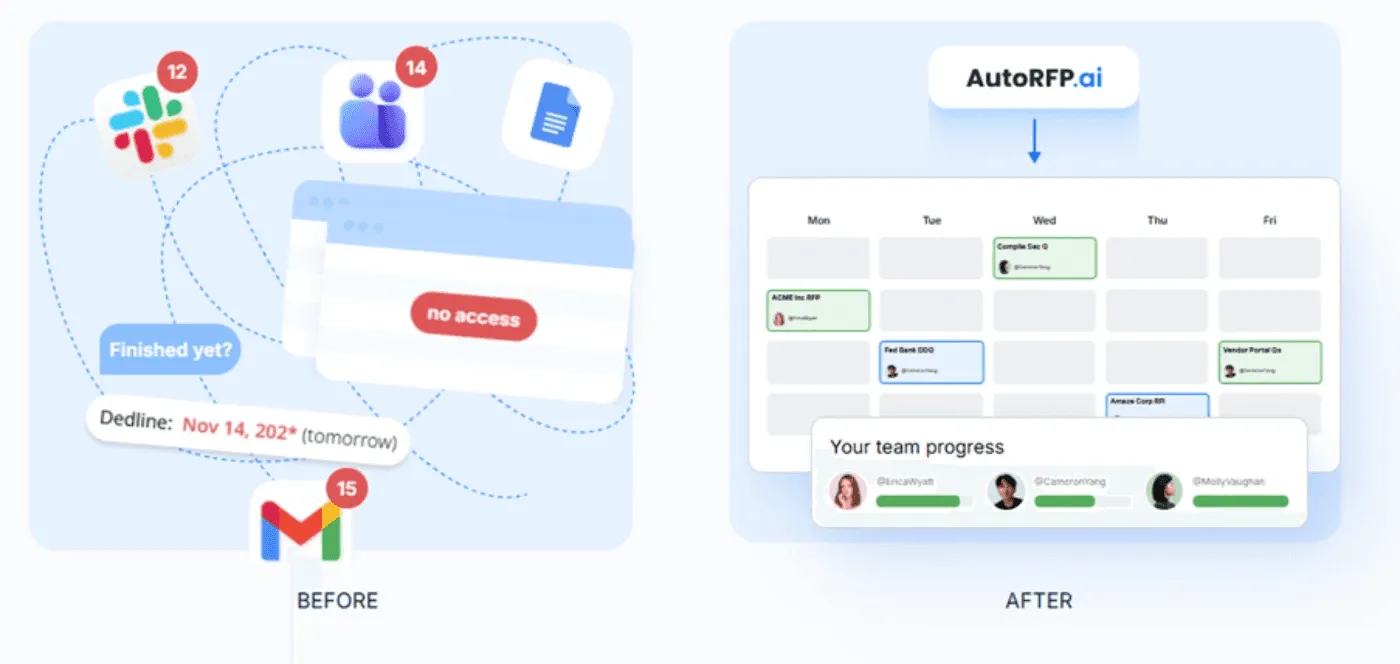
“Project management of all the different parts of a bid is often overlooked. Ensure you have clear responsibilities and when you want content, answers, and revisions completed by. I would know, I once lost an RFP because I submitted it 26 seconds late.” – Jasper Cooper, CEO & Co-Founder at AutoRFP.ai
Step 4: Run a Governed Operating Model, Not Last-Minute Scrambling
Strong win rates come from a repeatable system, not late-night scrambling.
Don’t start drafting until the insight is documented and signed off.
65% of high-win teams use formal review and governance.
If proposals drive 30% to 50%+ of revenue, treat proposals as a core revenue function with clear ownership and a mature process.
Step 5: Track Shortlist Rate and Use It as an Early Warning Signal
Shortlist rate gives you an early read on whether your approach is working. Teams combining automation, reuse, and structured insight tend to perform better.
With all three capabilities in place, 63% of teams report shortlist rates of 51%+.
If the shortlist rate drops, do a quick audit: insight depth, compliance gaps, weak proof, or unclear differentiation.
Feed the findings back into templates, content, and playbooks so mistakes don’t repeat.
Best RFP/Proposal Management Tools
Here are the best tools for managing RFPs and proposals end-to-end, from intake to submission.
1. AutoRFP.ai
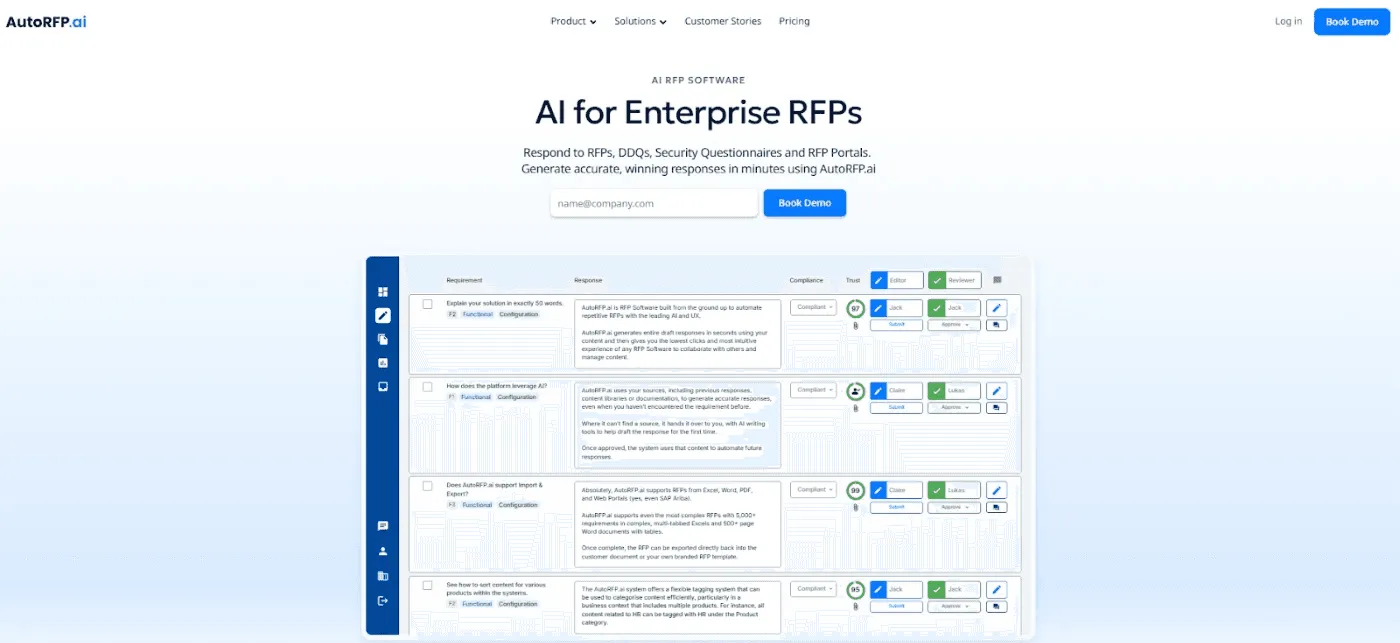
AutoRFP.ai is an enterprise proposal management platform that provides assisted sales automation to generate accurate, on-brand RFP responses in minutes using AI semantic search and tailored answer generation.
Key Features
These are the key features of AutoRFP.ai that help teams respond faster and stay compliant.
1. On-Brand AI Drafting
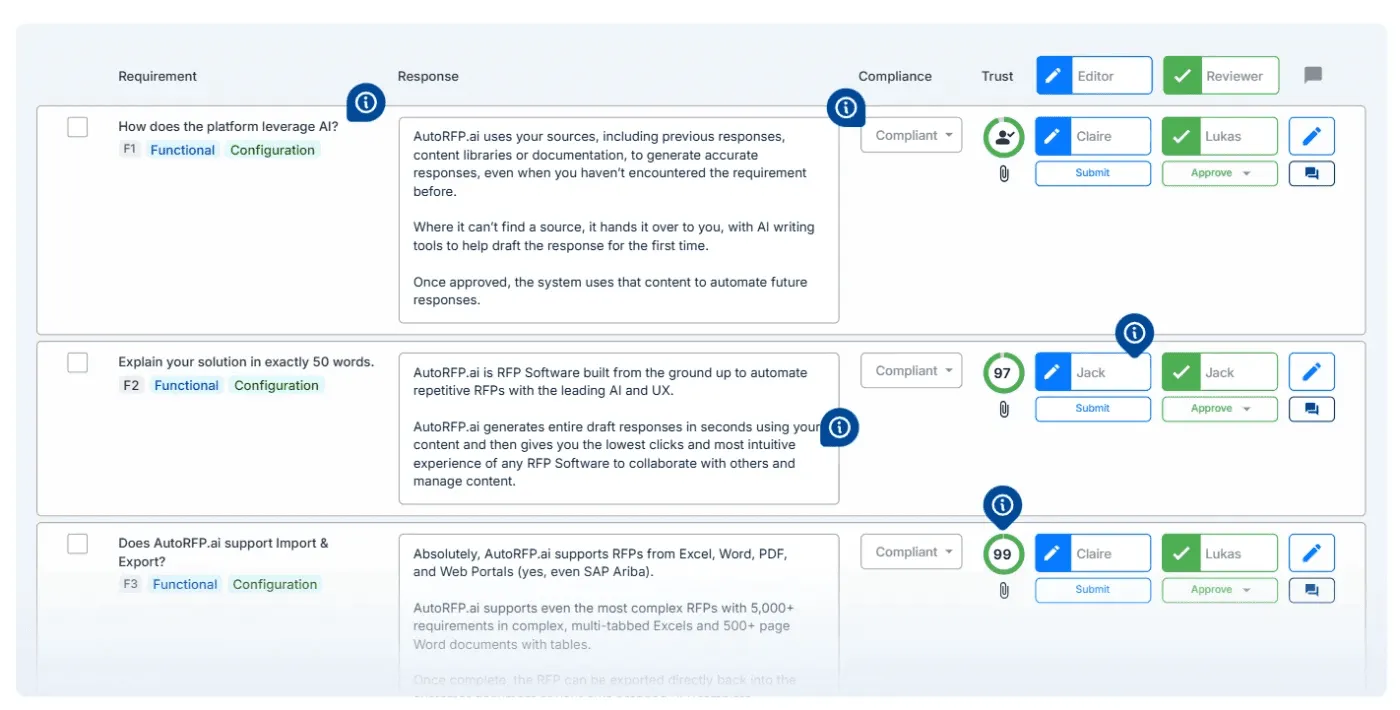
AI trained on your past wins generates accurate drafts that match your team’s voice.
2. Self-Building Response Library
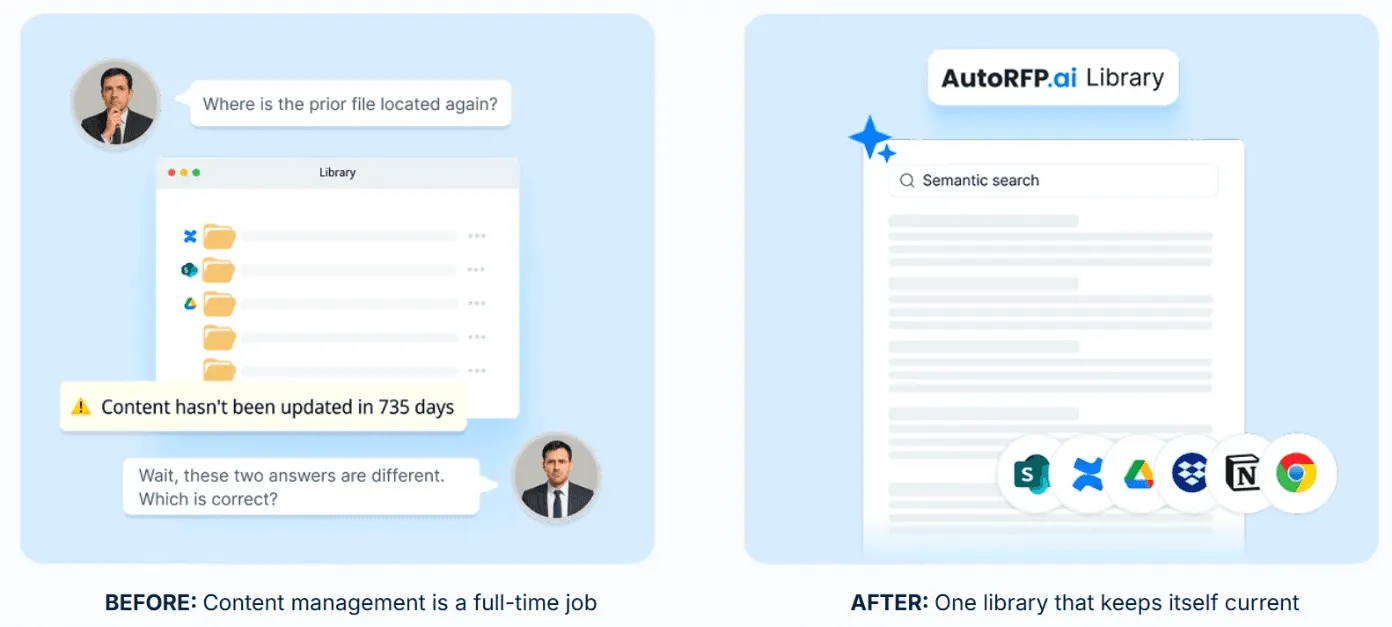
Every approved response is automatically saved and organized, so your library grows on its own.
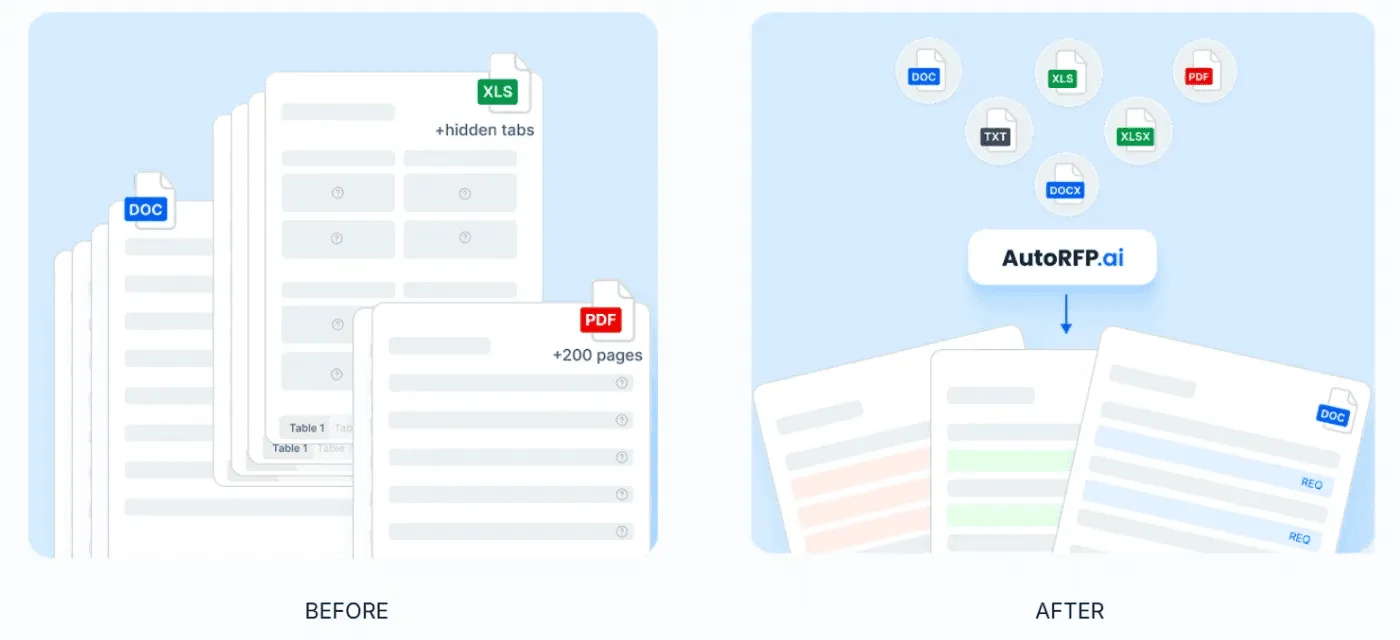
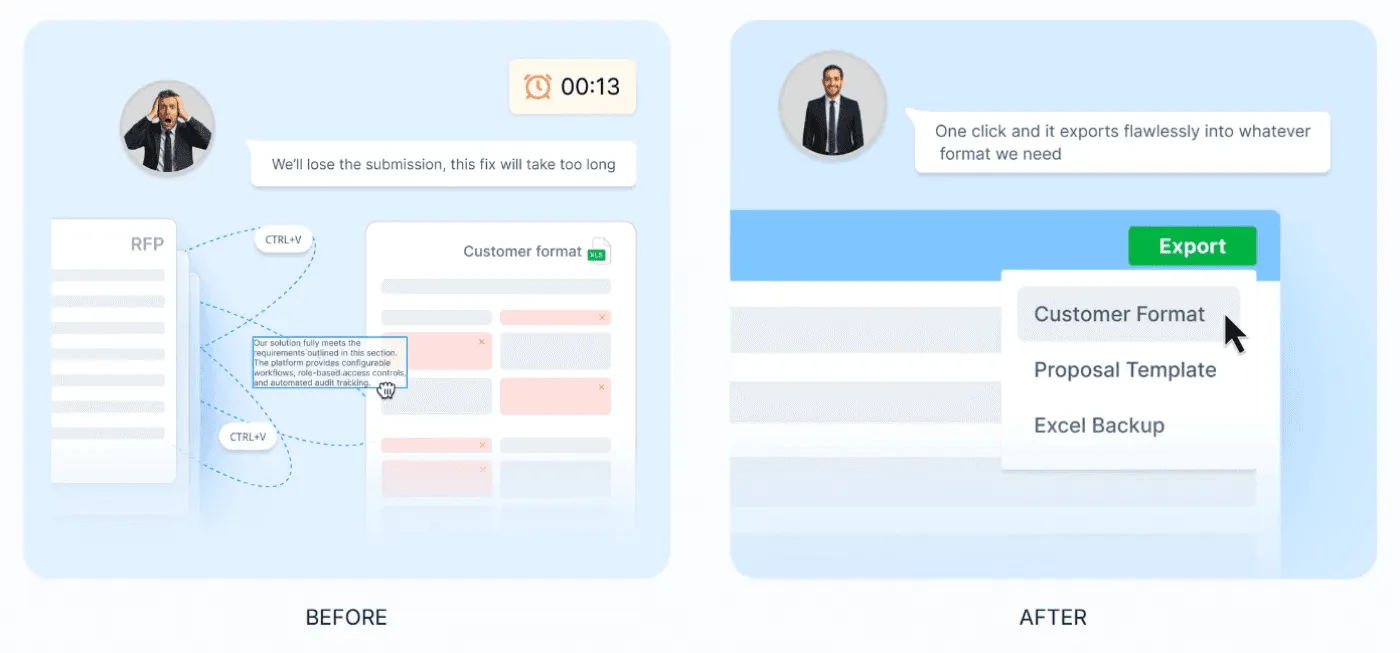
3. Format-Preserving Proposal Automation
Drop in an RFP from Word, Excel, or PDF, and AutoRFP.ai extracts every requirement automatically.
Export in the prospect’s exact format with macros, validations, and customer templates intact.
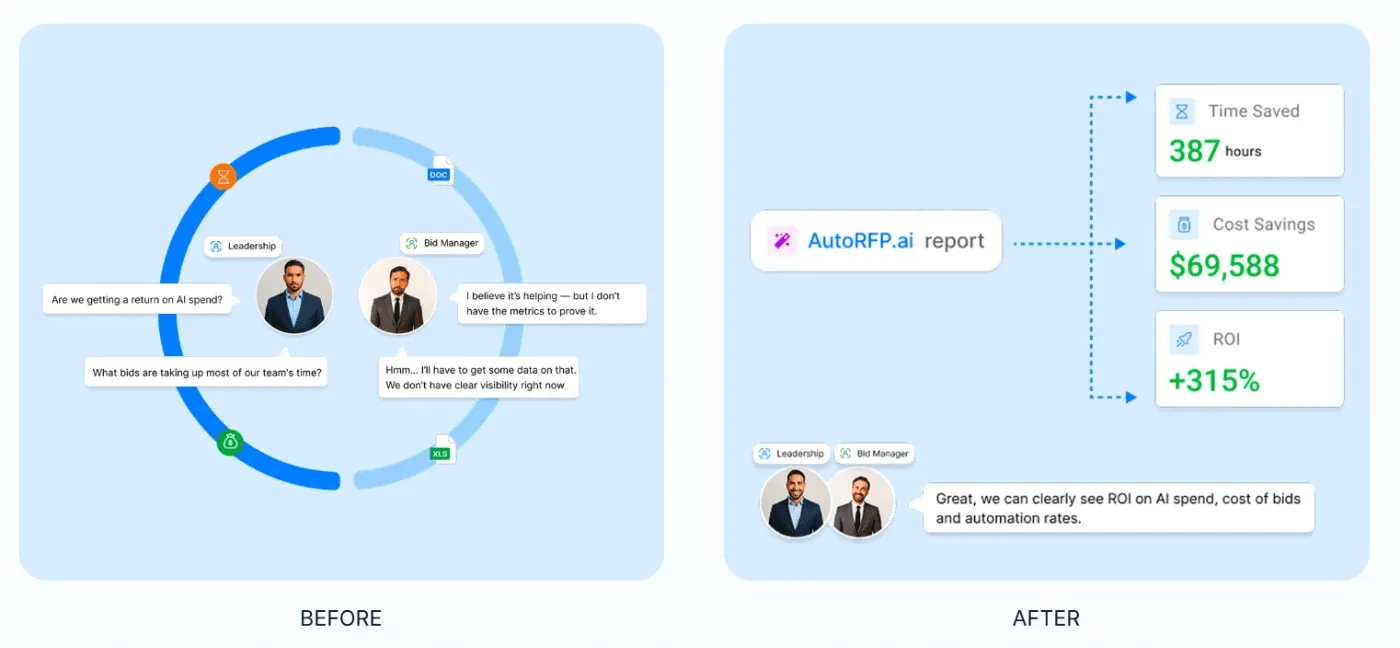
4. ROI Reporting
Show leadership real ROI with live, always up-to-date reporting.
Pros
Ask questions inside Slack or Teams and get sourced answers fast.
Pull questions from web portals, generate answers, and export back automatically.
Spot repeat compliance gaps across RFPs that are costing deals.
Integrates with CRM and SSO for smoother workflows and stronger governance.
Cons
- Not a fit for AEC, US GovCon, defense, custom software dev, or highly bespoke services where every answer is unique.
Best For
- Mid to large B2B SaaS handling enterprise RFPs, DDQs, and security questionnaires that need fast, consistent first drafts.


Video transcript
Transcript is auto-generated and may contain minor errors.
Hey, I'm Rob from autoRFP.ai. What is autoRFP.ai? Well, autoRFP.ai is an AI software as a service or SaaS application that does AI for proposal or RFP responses. That includes RFIs, like request for informations, includes due diligence questionnaires or DDQs, and includes security questionnaires. So, you can find all about us at autoRFP.ai. So, we're a technology company. We have offices all across the globe including Brisbane, Australia, Vancouver as well. And effectively, our tool allows, whether it be bid managers, sales people, proposal writers, RevOps team members, sales leadership, answer complicated request for proposals. So, what is a request for proposal? You can see one of our other videos below in the description. But effectively, our system
looks something like this. And it lets team members, and you can have unlimited number of people log in to autoRFP.ai, good product, allows people to go in, create projects, which would be for instance an RFP. I can go in here, create my information from my zip file, and that includes, you know, like an Excel spreadsheet, PDF, Word doc. We can run an AI go no go project analysis on the RFP. And then effectively from that, we can bring in all the information in terms of what are the questions, where our AI automatically scans the documents and figures out what is being asked of the RFP, whether it's multiple tabs in an Excel spreadsheet and everything else, whether it's drop-downs. And that all happens automatically through the power of AI. Then, we generate our response, and we can do it in in 40 plus different languages and adding languages all the time. Once you've imported your RFP into order rfp.ai,
you can collaborate with your team members assigning different people to answer the questions, review the questions, looking at an overview of the entire project and project managing due dates. Now AI effectively starts automatically answering those different questions based on your knowledge documentation. So that might be your website, your help docs, your technical documentation, your past RFP answers or security questionnaires, your security policies. But effectively all that different company information you import into order RFP and then our AI leverages that to create an AI first draft of an RFP response. Once we're happy with all those requests, we can approve it. That goes into the model to learn from and add to. So your current responses are automatically used for new responses and then you can export that as well. And then the final cool thing about order RFP is you have a lot of different
integrations that you can pull in, whether it's knowledge documentation from places like Notion, Google Drive and so on. So that's order RFP. We're an AI SaaS app. Uh you can host globally. We do not use customer data for training purposes or to send it back to LLMs. So we're secure and private. We have our ISO 2701 certificate and our SOC 2 certificate and then you can find up-to-date pricing and information on our website. Or if you came to learn more, you can book a demo and schedule time with our team. Thanks.
2. Loopio
Loopio is an RFP response platform that helps teams respond faster by reusing approved content and managing collaboration in one place.
Key Features:
Content library plus reuse (approved answers for RFPs, DDQs, security questionnaires).
Connects with popular tools such as Salesforce, Microsoft Teams, and Slack.
Pros:
Speeds up drafting by reusing a maintained answer library.
Strong enterprise security posture (e.g., SOC 2 Type II, encryption).
Cons :
Export/formatting can require manual cleanup.
Some users report that the UI can feel clunky/limited views.
Best For:
- Proposal managers/bid teams handling lots of RFPs who need repeatable workflows and governance.
3. Responsive (Previously RFPIO)
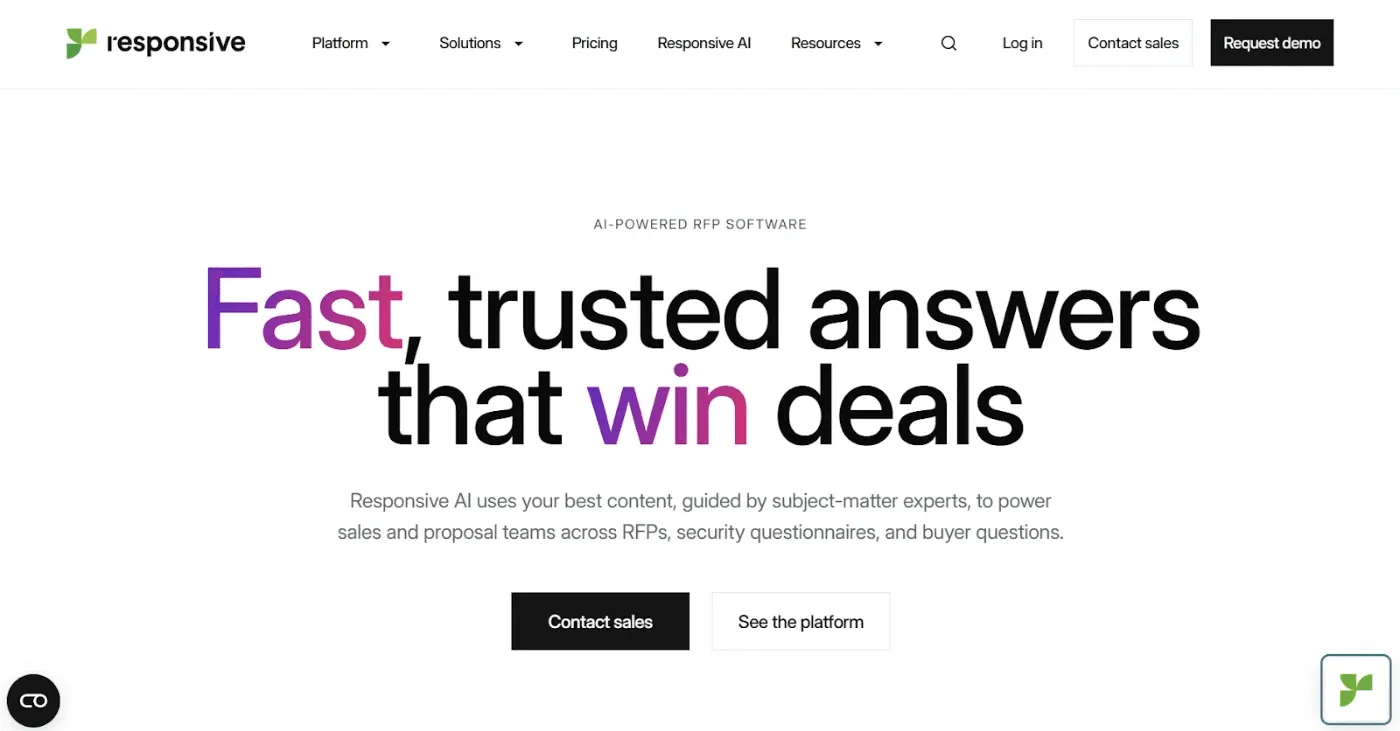
Responsive is an RFP response platform that helps teams reuse trusted answers, collaborate with SMEs, and speed up complex RFX and questionnaire work.
Key Features
AI-assisted drafting and answer recommendations from a governed content library.
Collaboration + workflow management, including integrations like Slack.
Pros
Strong for centralizing “approved” knowledge.
Enterprise security posture (SOC 2 Type II attestation).
Cons
Can feel click-heavy or require training for some teams (projects/workflows).
Formatting/ingestion and document handling can be limiting, depending on the RFP template.
Some users report the UI feels busy / too many views.
Best for
- Proposal teams handling high-volume, multi-stakeholder RFPs that need governance and repeatable workflows.
If you want the quick version, this video recaps AutoRFP.ai, Loopio, and Responsive for 2026 and helps you pick which one fits your workflow.


Video transcript
Transcript is auto-generated and may contain minor errors.
Hey, I'm Rob from Auto RFP.ai. We're going to go into the best RFP software in the market. What is RFP software? And jumping into it, looking at some of the different major players, and helping you hopefully decide which ones are worth having a look at. If you are interested in having a look at them, I recommend going to their website. RFP software in the market in 2025, you can break down some of the best players into two main markets or two main camps. You've got your legacy RFP software providers, like Loopio, Responses, Qvidian, which I'm going to go into detail. And then you've got your AI native players, like Auto RFP.ai I'm from. You've got Tribal, HeyRFP, Shift Hub, and and plenty of others as well. So, what are the difference between the two? Your legacy RFP software, they have generally been around since early 2000s. They brought software to the RFP process. RFP software providers
effectively built an ability for a company to store all their documentation and information and kind of questions and answers. So, it's like a question and answer bank. They built these big banks of answers and questions for companies. Then when they would get a new response or new RFP, it would use keyword search to copy and paste from the Q&A bank into that new RFP uh that they just received. So, that's what a legacy RFP software is. Then you have your AI native players who have launched since the huge uptick in AI with ChatGPT in uh what was that? 2021. So, Auto RFP.ai, we actually launched a couple of weeks just before ChatGPT came out. I've been building the product over the last three or four years with hundreds of customers. And effectively, your native AI players don't have all that legacy tech debts. They're built with a basis of being a vector database, which is a specific term with AI. They then use AI semantic
search, which effectively takes in the context of responses. And when you get a blank RFP, it'll pull in not just information from your Q&A bank, but from your website, from your case studies, from your integrations and different knowledge sources, and eventually use that to answer the RFP. So, that's kind of the nuts and bolts of it. You've got your legacy players who some do actually have AI now as well. And then you've got your AI native players. As I mentioned, you have all your content. That is generally your Q&A banks, your past responses, it might be your Google Docs, your SharePoint, Confluence, Notion, all your different information that you think holds relevant content for an RFP response. You upload that to the system or you integrate great and pull it through automatically. Then, when you have an RFP, you upload the RFP, create a new project. The AI, generally speaking, your AI native players, this is how it works.
It's going to automatically start drafting the responses or using a powerful AI semantic search to use to find relevant verbatim responses and effectively draft responses. It's going to allow your team to collaborate, set project deadlines, bring in subject matter experts to help answer that RFP. The really big thing about AI RFP software is it uses reinforcement learning to continually improve. And from your new responses, as you approve them, it gets better and better as time goes by. That's your RFP software in a nutshell. Now, how you can help determine what are the best RFP software. I would really recommend jumping on G2 or Gartner, having a look through actual verified user reviews. They'll have lots of different information regarding the RFP software. You can kind of click into each of those and understand it a bit better, the pros and cons, and so on. The RFP software is a pretty fast-moving
market, so I'd definitely recommend looking at a number of tools. Most of the providers here that you'll that I'll go into, you can book in for, you know, a 30-minute, 45-minute online demo just from their website. Hopefully, they don't have to do too many discovery questions. They jump on that call and they show you through the platform. So, your RFP software, like I said, you've got your Responsive, your Loopio. So, when you're looking at G2, you can look at, you know, the number of responses, but also you want to focus on the quality of responses, so what the actual total score is. And I would say anyone who has more than 50 or so reviews, as you can see, that's kind of how I made the short list today, is generally kind of worth a consideration to have a look at as well. Then you have Gartner. So, Gartner for your best RFP software has all the relevant information in relation to those different providers. Again, the reviews. You can understand more about each of those providers and what people are actually saying about those software. So, we've had a look at the review slides. Let's jump into some of the RFP software market's providers for 2025.
Loopio is an RFP software provider, one of those what you might classify as a legacy provider. They have a lot of really great large logos. They have been in the market for quite a long time now. Effectively, the basis of that product is kind of a question and answer bank using your past responses to then copy and paste when you bring in a new empty RFP. It's kind of the general gist of the product, and you can find out more information about Loopio from their websites. You can book in for a demo to chat to their team to understand more about them, and so on. Under plans, they have some information about their pricing. They don't have public pricing, but you can request a quote and get more information regarding their pricing. I believe their pricing plan has add-ons, so you can take that into account in relation to finding the right package that meets your requirements for what you're looking at. Responsive or responsive.io, they are also acquired a company called RFP360. If someone's referencing RFP360, that also is responsive.io or responsive.
Responsive is an RFP software. Again, one of those legacy providers that have been around for quite a while, have a lot of really large customers, and you can kind of get to know more about their product by going to their website. So, you can see here like I said, you effectively have a question and answer bank of your past responses, and then you can upload documents, your blank RFPs, and it helps answering those and has your different reporting and project management capabilities, and so on. If you want to chat to their team, you can request a demo, get to know them better. Or, in their pricing, the yeah, their pricing isn't available on the website, but you can obviously get a quote from their team, and I believe they also have paid add-ons as well in some ways. There you go, paid add-ons as well to find a plan that meets your your business's requirements as well. So, that's responsive.io. Now, jumping onto the next best RFP software, we have Qvidian. So, Qvidian is part of a much larger
family called Upland. They have a lot of products across their entire suite. Qvidian is one of those legacy RFP software providers that is a Q&A bank and uses your past RFP answers to help answer RFPs. You can, of course, find out more information on their websites. You can request a demo, and so on. What we found is that Qvidian generally has a lot of financial services customers, so those in managed investment funds, and so on. Next you have order rfp.ai. So that's where I'm from. Order RFP, we were one of the first AI native RFP software. So like I mentioned, that means our entire premise of product is based on effectively a vector database which is all your relevant context that might be used to answer an RFP. Then when you have a blank RFP, it comes in and then our system uses AI to generate responses, provide trust scores to see if you can trust the responses, has AI
actions to iterate and improve on the responses as you go and kind of work through your RFP. Then you then export that RFP back into the exact same format, translate it if necessary to different languages and so on. You can of course find out more about order to our team. If you'd like to book a demo with our team across the globe, we have global offices. You can find out more about some of our customers on our website as well. And then in our pricing, we do show our pricing in relation to some of our different plans there as well. So you can kind of see what makes sense for you. Our pricing is based off projects per year. Oh, I didn't mention about Loopio and Responsive. As far as I'm aware, their pricing is based off like seats. So number of team members that you might have used the tool. So you might actually come across different pricing models across some of the RFP software in a list of top best RFP software. You can find out more about order rfp.ai and chat to our team if you'd like. Go Jumping on to next, you've got Hey Iris. So Hey Iris is another AI RFP native
software provider. Again, one of the newer ones. They've got a video there that kind of showcases and goes through parts of their product, some of their customers as well if those are relevant customers to yourself. I don't believe they have pricing on their websites, but if you'd like to get in touch with their team, you can of course book a demo to understand more about them as well. Then you've got another one which I wanted to throw in is Shift Hub. Shift Hub is a little bit different to some of the others where they just focus on security questionnaire automation. Although all the RFP software I mentioned, whether it's Loopio, Auto RFP, Hey Iris, they all can do security automation questionnaire automation. Shift Hub just focus just on that. And you can find out more about their site by going there. And again, similar to Auto RFP and Hey Iris, you know, using AI to help answer those security questionnaires and so on. And you can kind of I don't believe they have pricing on their website, but you can understand more about them by obviously booking a demo and chatting to their team as well.
Next, you have Tribble. So, Tribble or tribble.ai is a little bit different to the other ones as well. Tribble, as far as I'm aware, isn't necessarily a product you log into, but it's a Chrome extension that then works in where you work. So, that might be Google Docs, Google Spreadsheets, you know, kind of completing RFPs in G Suite. It then comes in and answers different questions within those documents for you. So, that's Tribble. Yeah, they they again still integrate with like your knowledge base and support docs and those different information just like Auto RFP does. And you know, pulls in different information to help to help answer that as well. Don't believe they have pricing on the their website, but I'm sure there's some more information here as well so you can understand you can get to know them better. And you of course can book a demo as well and chat to their team if you'd like to learn more. So, that was our comprehensive list of best RFP software for 2025. So, we've got your legacy players, like I mentioned, your Loopio, Responsive, Qvidian. And then you've got your AI
native players or kind of like disruptors in the space, you know, your Auto RFP, Hey Iris, Tribble, Shift Hub, and so on. If you'd like to find out more about Auto RFP, obviously get in touch or any of the others, you can obviously visit their website and book in for a demo. So, that was the best RFP software for 2025. Thank you.
Build a Proposal Process That Wins More & Faster With AutoRFP.ai
Build a proposal process you can trust, not a last-minute scramble. AutoRFP.ai helps you keep a clear story, tighter ownership, and cleaner reviews, so you can submit on time with confidence.
With 80%+ AI-automated responses, your team spends less time searching and rewriting, and more time tailoring what wins.
About the author

Technical Account Manager
Technical Account Manager at AutoRFP.ai. Background in asset management completing institutional RFPs and DDQs; now implements AutoRFP.ai for some of the company's largest accounts.
LinkedInFrequently asked questions
How is proposal management different from bid management?
Bid management drives qualification and win strategy. Proposal management turns that strategy into compliant, polished content and submits it on time.
How do you choose proposal management software?
Pick a tool that fits your workflow: content reuse, collaboration, version control, reviewer approvals, strong security, easy exports, and integrations your team already uses.
What skills matter most in proposal management?
Customer insight, clear writing, project management, stakeholder coordination, detail-focused compliance, and the ability to get SMEs to validate fast without rewriting.
