
ESG DDQ: Frameworks, Questions, and How to Respond
An ESG DDQ is a due diligence questionnaire that limited partners send fund managers to assess responsible investment, climate, and governance practices.

Technical Account Manager, AutoRFP.ai··24 min read
If you’ve been asked to complete an Environmental, Social, and Governance (ESG) DDQ, you may be wondering what investors actually want to see. An ESG DDQ helps investors evaluate your environmental, social, and governance practices, risks, policies, and performance.
In this guide, we’ll explain the main frameworks, the questions you may receive, and how to prepare responses that are accurate, structured, and supported by evidence. We’ll also show how an AI-native DDQ platform can help you respond faster while keeping answers defensible.
What is an ESG DDQ?
An ESG DDQ is a due diligence questionnaire that tests whether your environmental, social and governance claims can be proven.
The key word is proven.
A buyer, investor, LPs (Limited Partners) or enterprise review team is not asking for a polished sustainability paragraph. They are checking whether your ESG position can survive follow-up questions from procurement, compliance, legal, risk, auditors or the board.
A typical ESG DDQ asks about:
Environmental practices: Emissions, climate risk, energy use, waste, resource efficiency, environmental policies and reduction targets.
Social practices: DEI, labor standards, human rights, employee wellbeing, supply chain conduct and community commitments.
Governance controls: Board oversight, ethics, anti-bribery, risk ownership, conflicts of interest, compliance training and escalation paths.
ESG integration: How ESG factors are built into vendor selection, investment decisions, risk reviews, product decisions or enterprise sales processes.
Evidence and reporting: The documents, metrics, owners, approvals and audit trails behind each answer.
The failure point is usually not the first draft. Most teams can write something that sounds reasonable.
The real failure point is the evidence trail.
That is where manual ESG DDQ workflows break:
Sales pulls one answer from an old RFP.
Compliance has a newer policy in SharePoint.
The ESG owner updated the metric in a board deck.
An SME gives a slightly different version in Slack.
The final answer sounds fine, but nobody is fully confident where it came from.
A strong ESG DDQ response needs three things:
Clear ownership: Every ESG topic needs a responsible owner, not a loose handoff to “someone in compliance.”
Approved source material: The answer should come from current policies, reports, metrics, governance documents and previously approved responses.
Defensible review: The team should know which answers are strong, which are weak, which are stale and which should stay blank until approved evidence exists.
This is why ESG DDQs are a poor fit for copy-paste workflows and generic AI drafting.
The risk is not that the team cannot write an answer. The risk is that the answer cannot be traced, challenged, reviewed or defended once the buyer pushes back.
That is where a governed DDQ response platform starts to matter. AutoRFP.ai drafts from approved content, shows a Trust Score on every answer, links responses back to source material and leaves gaps blank when the evidence is not there.
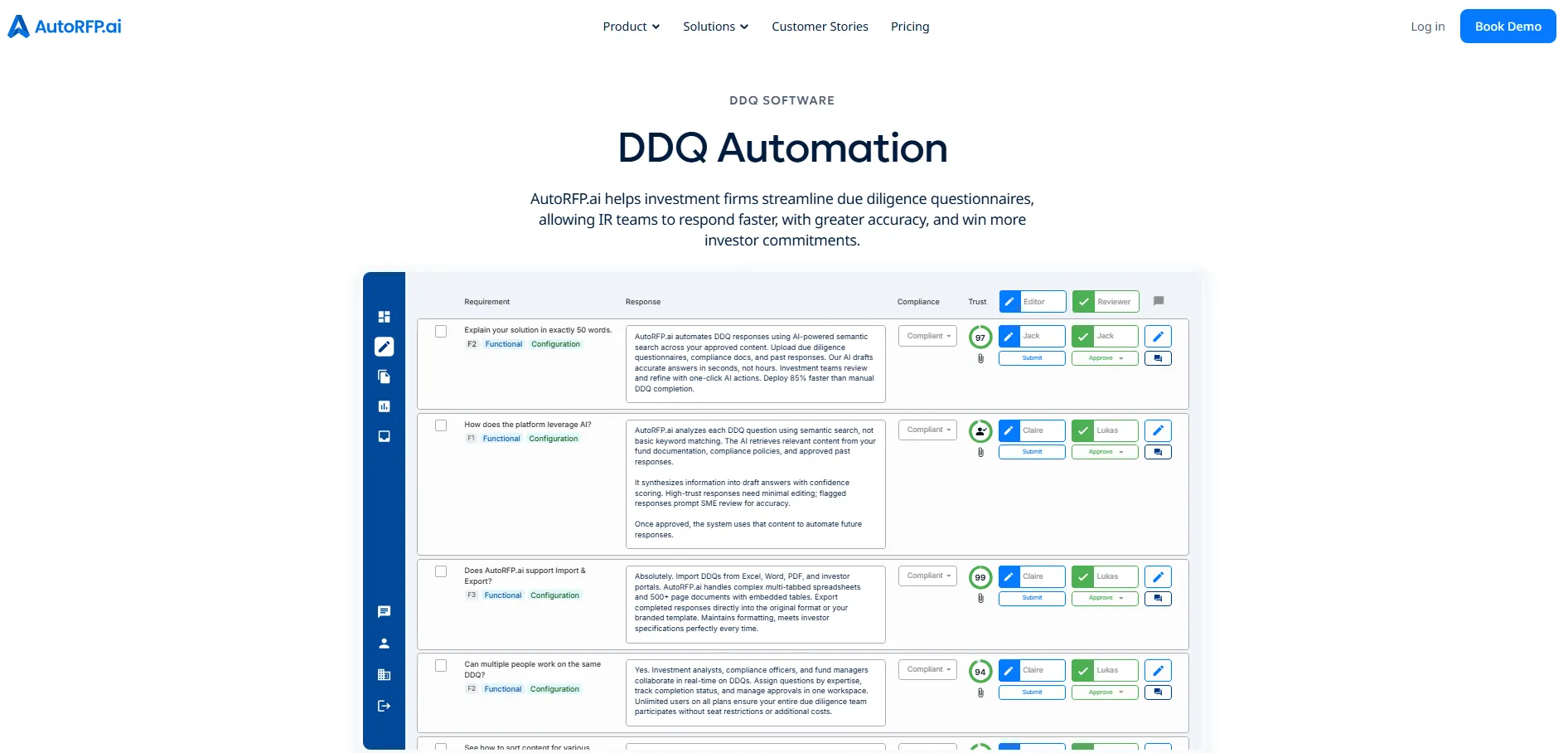
That matters because the best ESG DDQ answer is not the one that sounds best. It is the one your sales, compliance, ESG and legal teams can stand behind.
ESG DDQ Standards: PRI, ILPA, and AIMA Explained
Most ESG DDQs are not built from scratch.
They usually start from a recognized industry framework, then the LP adds its own supplemental questions. That is where the operational mess starts: the same ESG topic appears in three slightly different formats, with different wording, evidence requirements and follow-up logic.
| Framework | Who issues it | Who uses it | ESG focus |
|---|---|---|---|
| PRI LP Private Equity Responsible Investment DDQ | Principles for Responsible Investment, a UN-supported investor initiative | LPs diligencing private equity GPs (General Partners) | The core ESG DDQ for private equity. It focuses on how the GP integrates ESG into policy, process, resourcing, investment decisions and ownership. |
| ILPA DDQ | Institutional Limited Partners Association | LPs and GPs in private markets fundraising | A broader private equity diligence questionnaire covering firm, fund, strategy, governance, risk, ESG, track record, reporting and DEI. ILPA says its ESG section is sourced from UNPRI. |
| AIMA DDQ | Alternative Investment Management Association | Hedge fund and alternative investment managers, plus investors reviewing them | The industry-standard DDQ template for hedge funds and alternatives. AIMA also replicated PRI responsible investment questions into its own familiar DDQ format for responsible investing. |
| PRI Climate Module | PRI, developed with ILPA and iCI | LPs conducting climate diligence on private equity GPs | A supplementary climate questionnaire covering governance, pre-investment, post-investment, reporting and disclosure. Its reporting section references frameworks such as TCFD/IFRS S2, SFDR PAIs, PMDR, EDCI and SBTi. |
| ESG Data Convergence Initiative | ESG Data Convergence Initiative | GPs, LPs and portfolio companies in private markets | A standardized data effort for portfolio-level ESG metrics, built to reduce fragmented reporting and create comparable sustainability data across private markets. |
The practical read is simple: PRI gives the ESG spine, ILPA wraps it into broader private equity fund diligence, and AIMA adapts the responsible investment lens for hedge funds and alternatives.
What an ESG DDQ Covers (Section by Section)
An ESG DDQ covers:
1. ESG Strategy, Policy and Integration
This section checks whether ESG is actually managed inside the business.
A strong answer does not stop at “we have an ESG policy.” It shows who owns the policy, how it is reviewed, how ESG issues reach leadership and how performance is tracked.
Typical questions cover:
Whether the company has formal ESG, sustainability or responsible investment policies.
Whether ESG policies are approved by senior leadership or the board.
How ESG is built into business decisions, investment decisions or risk management.
Whether the company has an ESG committee or steering group.
Which ESG risks and opportunities are considered material.
Whether ESG issues are included in the corporate risk register.
What ESG KPIs are monitored and how often they are reported.
Whether the company aligns with frameworks such as PRI, UN Global Compact, TCFD or other relevant standards.
Side note: This is where many weak DDQ answers fall apart. A policy without an owner, reporting cycle or evidence trail is not a strong control. It is just a document.
2. Environmental Factors
This section checks how the company manages environmental risk, compliance and performance.
The questions usually move from high-level policy into hard evidence: permits, emissions, incidents, waste, hazardous materials, resource use and climate exposure.
Typical questions cover:
Environmental policy, commitments and targets.
Who signs off the environmental policy.
How often the policy is reviewed.
Who manages environmental matters day to day.
Environmental training for staff and senior management.
Environmental management systems, such as ISO 14001.
Environmental improvement projects, including energy, waste or water initiatives.
Compliance with permits, licences and consents.
Serious environmental incidents, breaches or enforcement action.
Carbon and greenhouse gas monitoring.
Climate risk assessments, including flooding, drought or severe weather exposure.
Energy and water sources.
Waste streams, recycling and disposal methods.
Chemicals, hazardous substances and contamination risks.
Product lifecycle impact and product stewardship.
A strong environmental answer names the control, the owner, the data source and the review process.
A weak answer says “we are committed to reducing our environmental impact” and leaves the reviewer to guess what that means.
3. Social Responsibility
This section looks at how the company treats employees, contractors, communities, customers and other stakeholders.
The common mistake is treating this as a DEI-only section. In most ESG DDQs, the social section is much wider.
Typical questions cover:
Health and safety policies.
Workplace risk assessments.
Safety management systems.
Accident, incident and near-miss data.
Health and safety enforcement action.
Employee contracts.
Minimum wage compliance.
Minimum working age.
Grievance mechanisms.
Migrant worker protections.
Anti-discrimination policies.
Diversity and equal opportunity policies.
Human rights controls.
Modern slavery and child labor risk.
Freedom of association and collective bargaining.
Community investment and stakeholder engagement.
Consumer health and safety.
Side note: Social answers often need input from HR, legal, procurement and operations. That is why they get messy manually. One team owns the policy, another owns the data, and another knows what actually happens on the ground.
4. Data Privacy and Security
ESG DDQs often include data privacy and cybersecurity because governance risk is not limited to board structure.
For software, fintech, healthcare and data-heavy companies, this section can become a deal blocker quickly.
Typical questions cover:
Data security policies.
Cybersecurity measures.
Data privacy controls.
Security breaches in the last three years.
IT security management systems.
Certification to standards such as ISO 27001.
Customer data protection processes.
Internal responsibility for information security.
The response cannot be vague here.
If the buyer asks about data protection, the answer needs to be specific, current and approved by the right internal owner.
5. Supply Chain and Vendors
This section checks whether ESG standards extend beyond the company’s own operations.
Investors and buyers want to know whether suppliers, subcontractors and logistics partners create hidden environmental, labor, compliance or reputational risk.
Typical questions cover:
Responsible purchasing policies.
Supplier codes of conduct.
How supplier standards are applied and monitored.
Supply chain risk assessments.
Supplier countries and regions.
Labor risks in the supply chain.
Environmental risks in the supply chain.
Supplier sustainability performance.
Anti-bribery and anti-corruption checks on suppliers and contractors.
Actions taken when supplier risks are identified.
A supplier code of conduct is not enough on its own.
The stronger answer explains how suppliers are assessed, what risks were found, what was done about them and who monitors the process.
6. Governance and Ethics
This section tests whether the company has the controls to prevent ESG promises from becoming unmanaged risk.
Governance questions are usually direct because they touch accountability, board oversight, ethics, legal exposure and escalation.
Typical questions cover:
Corporate governance structure.
Board composition.
Board diversity.
Whether ESG is assigned to a board member.
Whether ESG is discussed at board level.
Risk, audit, remuneration or ESG committees.
Anti-corruption controls.
Fraud detection.
Ethics policies.
Code of conduct.
Gifts and entertainment policies.
Whistle-blowing policy.
Audit committee structure.
Anti-bribery and anti-corruption training.
Governance breaches, litigation or enforcement action.
The best governance answers are specific.
They name committees, owners, reporting cycles, policies, training coverage and escalation routes. The weakest answers hide behind phrases like “managed by senior leadership.”
7. Reporting, Audits and Evidence
This section checks whether ESG claims are measured, reviewed and supported.
It is the difference between saying “we care about ESG” and showing how ESG performance is actually tracked.
Typical questions cover:
ESG KPIs and performance metrics.
How ESG data is collected and stored.
Internal ESG audits.
External ESG audits.
Whether audit findings are reported to the board.
ESG, CSR, sustainability or impact reports.
Materiality assessments.
ESG improvement programmes.
Climate, safety, emissions and compliance data.
Evidence behind reported claims.
This is where ESG DDQ response work becomes an evidence problem, not a writing problem.
The team needs to know which answer is current, which source supports it, who approved it and whether it still applies to the question being asked.
That is why governed DDQ workflows matter. AutoRFP.ai drafts from approved content, shows source traceability, scores answer trust and leaves gaps blank when evidence is missing. For ESG DDQs, that is the difference between a polished response and a defensible one.
Why Answering ESG DDQs Gets Harder at Scale
ESG DDQs get harder at scale because:
1. Standardization Reduces Variation, It Does Not Remove It
Most LPs do not start from a blank page.
They often start with a recognized standard, then add their own supplemental questions. ILPA’s DDQ is designed to standardize common investor diligence questions, and ILPA notes that its ESG section is sourced from UNPRI.
That helps.
It does not solve the problem.
An LP may start with the PRI DDQ, add questions from the PRI Climate Module, request EDCI-style portfolio data, then attach its own internal ESG policy questions. PRI says LPs may still add additional climate questions based on their own needs.
Side note: Standard templates make ESG diligence less chaotic. They do not make it uniform.
That is why ESG DDQ work becomes hard to manage manually. The issue is not one standard. It is the collision between standards, LP-specific overlays and evidence that lives across policies, fund reports, portfolio company data, compliance files and past responses.
2. Every LP Asks the Same Substance Differently
The same ESG topic can show up in several different ways.
One LP may ask:
“Describe your ESG integration process.”
“How are ESG risks considered during an investment committee review?”
“Provide examples of ESG factors affecting investment decisions.”
“Explain how ESG risks are monitored post-investment.”
“Map your responsible investment approach to PRI expectations.”
The substance overlaps.
The answer cannot simply be copied and pasted.
The response team still needs to know:
Which framework the question comes from.
Whether the answer has already been approved.
Which source supports it.
Whether the data is current.
Who needs to review it before submission.
Without that control, teams rewrite the same answer in slightly different ways. That is how inconsistency gets into a live diligence process.
3. ESG Answers Must Match the Pitch Deck, Data Room and Prior Submissions
LPs notice when ESG reads as core in one place and an afterthought in another.
That is one of the fastest ways to weaken trust.
The ESG DDQ answer needs to line up with:
The fundraising deck.
The data room.
The responsible investment policy.
The annual ESG report.
The PRI report or climate disclosure.
Prior DDQ submissions.
Portfolio company metrics.
Side letter commitments.
Internal investment committee materials.
If the pitch deck says ESG is embedded across the investment lifecycle, but the DDQ answer cannot explain ownership, governance or monitoring, the gap is obvious.
Side note: The risk is not just a wrong answer. It is a correct answer that conflicts with another approved document.
That is what makes ESG DDQs different from ordinary sales questionnaires. The answer has to be readable, current and defensible against the rest of the diligence record.
4. The Data Problem Sits Across Several Teams
ESG answers depend on information no single person owns.
That is what makes manual completion slow and error prone.
The response usually needs input from:
ESG or sustainability: Policies, materiality, climate strategy, reporting commitments.
Investment teams: ESG integration, investment committee process, ownership approach.
Compliance and legal: Regulatory exposure, ABC policy, whistleblowing, governance controls.
Finance: Portfolio-level metrics, emissions data, financial provisions, reporting figures.
HR: DEI, labor standards, employee policies, training, grievances.
Operations: Health and safety, environmental permits, incidents, supplier risk.
Portfolio companies: Company-level ESG data, initiatives, incidents and KPIs.
ESG Data Convergence Initiative (EDCI) exists because private markets ESG data has historically been fragmented, and its goal is to create useful, performance-based and comparable ESG data.
That tells you the real issue.
Managers are not only writing answers. They are collecting, checking and defending data across several owners.
5. Version Drift Becomes a Diligence Risk
Version drift happens when teams copy old answers into new questionnaires without knowing whether the answer is still true.
It starts small.
A carbon figure is pulled from last year’s report. A board committee name changed. A policy was updated. A portfolio company metric was revised. A prior answer says ESG training is annual, but the latest internal process says it is role-based.
None of those issues look dramatic on their own.
Together, they create a diligence problem.
Version drift usually shows up as:
Conflicting answers across LP submissions.
Outdated ESG metrics.
Stale policy references.
Different wording for the same control.
Claims that no longer match the latest report.
Answers that cannot be traced back to an approved source.
SME review cycles that slow down because nobody trusts the draft.
This is why manual ESG DDQ work breaks at scale.
The team is not only trying to answer faster. It is trying to stop old answers from becoming a live risk.
6. Manual Content Libraries Do Not Survive the Workload
Traditional content libraries sound good until someone has to maintain them.
Every approved answer needs to be updated. Every stale answer needs to be removed. Every policy change needs to flow into the response base. Every old DDQ needs to be checked before reuse.
At 5 DDQs a year, that may be manageable.
At 40 to 60 LPs, it becomes a full-time content operation.
This is where AI DDQ tools like AutoRFP.ai’s architecture matters. Unlike legacy tools built before modern AI, AutoRFP.ai creates first drafts from approved content, scores every answer for trust, links each answer back to its source and leaves an answer blank when it is not confident.
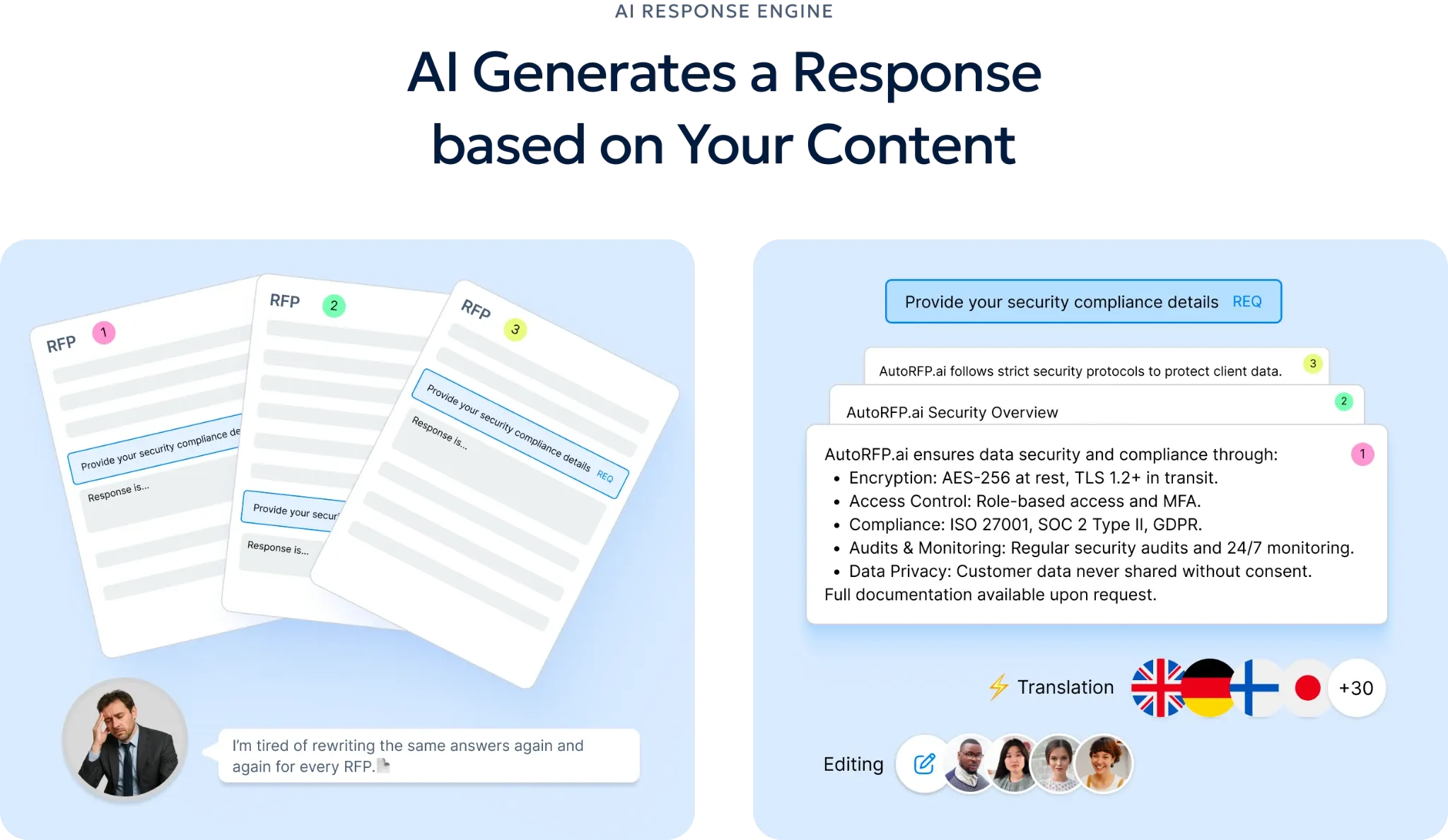
It also learns from every approved response, which reduces the manual content-library upkeep legacy tools require.
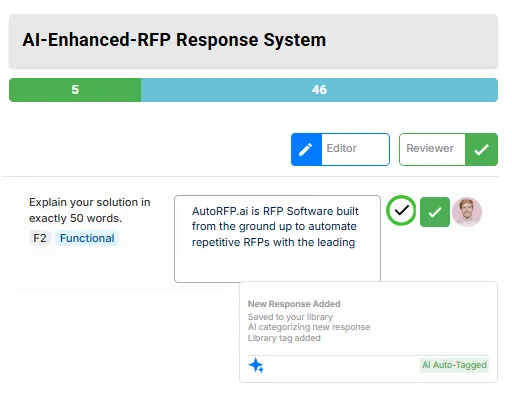
That is the right model for ESG DDQs because the goal is not just speed.
The goal is controlled reuse.
Approved answers should improve future responses. Weak answers should be flagged. Missing evidence should stay missing until someone approves the source. The system should not reward the team for filling every blank with something that sounds plausible.
7. A Scalable ESG DDQ Workflow Needs Control
A defensible ESG DDQ workflow does not just answer PRI, ILPA or AIMA questions faster.
It keeps the evidence trail intact when those standards get customized by each LP.
At scale, the workflow needs to show:
Which source supports each answer.
Which answers have already been approved.
Which answers are stale or low confidence.
Which questions need SME review.
Which data points came from portfolio companies.
Which answers should stay blank until evidence exists.
Which response version was submitted to each LP.
That is the real operating standard.
Not “Can we complete the ESG DDQ?”
The better question is: “Can we prove every ESG answer we submitted, across every LP, every fundraise and every reporting cycle?”
How to Respond to an ESG DDQ, Step by Step
Writing a strong ESG DDQ response is easier when you treat it as a controlled diligence workflow, not a writing task.
The goal is not just to complete the questionnaire. It is to give LPs, investors, procurement teams and internal reviewers enough confidence that your ESG strategy, governance, data, risk controls and reporting can be defended.
Step 1: Qualify the ESG DDQ Request
A strong ESG DDQ response starts with understanding the request before answering it.
Not every ESG DDQ is asking the same thing. One LP may be focused on PRI alignment. Another may care more about climate risk. Another may want portfolio-level metrics, EDCI-style data or proof that ESG is built into investment committee decisions.
AutoRFP.ai’s Proposal Win Rate Report 2026 found that 71% of high-win teams have a Go/No-Go qualification step, showing that strong opportunity selection is part of a more disciplined response process.
Before drafting, confirm:
Which fund, strategy, portfolio company or business unit is being reviewed.
Which ESG framework the request appears to follow, such as PRI, ILPA, AIMA, TCFD or an internal LP template.
Whether the DDQ is asking for firm-level ESG policy, fund-level ESG integration or portfolio-level ESG data.
The deadline, evidence requirements, required attachments and review format.
High-risk areas, such as climate risk, emissions, DEI, modern slavery, board oversight, data privacy, supplier risk or regulatory exposure.
What must be true for the team to respond confidently and accurately.
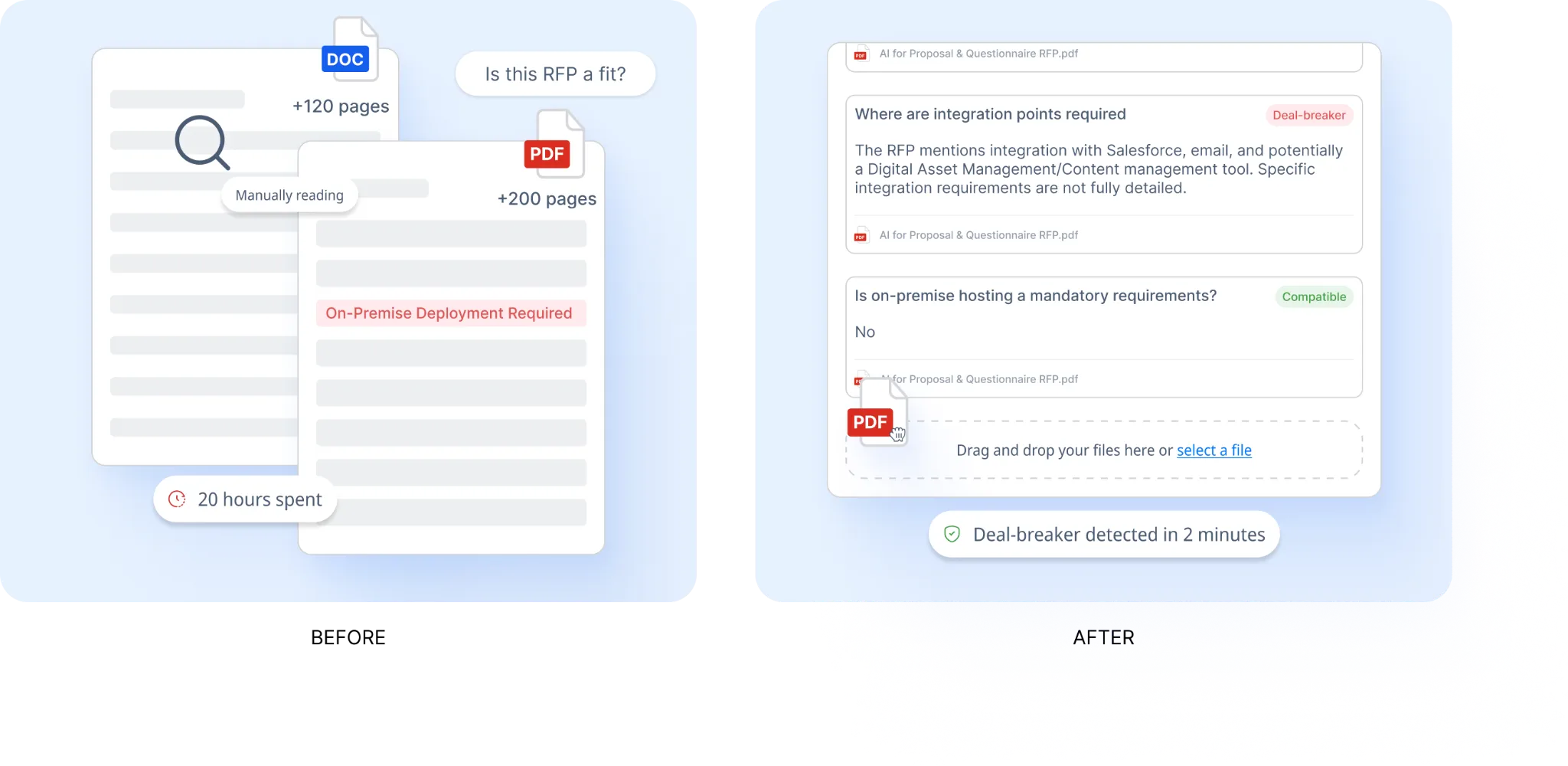
This video shows how to qualify tenders using a stronger Go/No-Go process, with AI helping teams assess fit, risks, win probability and response effort before deciding to proceed.
Pro tip: Use a DDQ tool with built-in Go/No-Go analysis so you can score fit, risk and capacity quickly instead of debating the same decision across email and Slack.
Step 2: Assemble the Right ESG DDQ Response Team Early
An ESG DDQ usually touches ESG, investment, compliance, legal, finance, HR, operations, procurement, cybersecurity and investor relations.
One person should not be expected to answer everything alone.
The response team usually needs:
Response owner: Owns the full DDQ lifecycle and keeps the response moving.
Investor relations or proposal manager: Manages content, reviews, consistency and final submission quality.
ESG or sustainability owner: Validates ESG policy, strategy, materiality, reporting and improvement programmes.
Investment team: Reviews ESG integration, investment committee process, ownership approach and portfolio monitoring.
Compliance and legal: Reviews regulatory exposure, anti-bribery, whistleblowing, modern slavery, policy language and disclosures.
Finance: Validates emissions figures, portfolio-level metrics, reporting data, insurance and financial provisions.
HR: Reviews DEI, employment policies, grievance mechanisms, training, human rights and labor standards.
Operations or procurement: Validates health and safety, environmental permits, supplier risk and responsible purchasing.
Technology or cybersecurity owner: Reviews data privacy, security controls, ISO 27001, breach history and incident response.
“Project management of all the different parts of a bid is often overlooked. Ensure you have clear responsibilities and when you want content, answers, and revisions completed by. I would know, I once lost an RFP because I submitted it 26 seconds late.” – Jasper Cooper, CEO & Co-founder at AutoRFP.ai
Step 3: Set Ownership, Timeline and Working Rules
A clear plan prevents last-minute confusion and keeps quality stable across the full ESG DDQ.
This matters because ESG answers often sit across several teams. The ESG owner may know the policy. Finance may own the data. HR may own DEI. Procurement may own supplier risk. Legal may own modern slavery and anti-bribery language.
Set the rules early:
Assign owners for each ESG DDQ section.
Set internal deadlines before the LP or buyer’s final submission deadline.
Lock review rounds for SME validation, legal review, compliance review and final approval.
Define version control rules so the team works from one source of truth.
Create a final submission checklist for evidence, attachments, formatting and approvals.
Decide which answers require board, legal, compliance or ESG sign-off.
Pro tip: Use one workflow board for owners, deadlines and status so nobody is guessing who owns climate data, DEI metrics, supplier risk or governance answers.
Step 4: Build an ESG Risk Brief Before Drafting
Insight is what turns a basic ESG DDQ response into one that directly answers the investor’s concern.
Before drafting, the team should understand what the LP, investor or buyer is trying to validate. ESG questions are rarely random. They usually point to a risk the reviewer wants to test.
In a survey of 94 bid professionals, AutoRFP.ai found that high performers used a defined customer-insight process far more often, with formal customer research showing up 88% of the time versus 67% for lower performers.
For an ESG DDQ, build a short risk brief covering:
Reviewer goals: What the LP, investor or buyer needs to validate before moving forward.
Stakeholder priorities: What matters to investment, compliance, legal, risk, procurement and board reviewers.
ESG risk areas: Climate exposure, emissions, DEI, modern slavery, health and safety, supplier risk, governance, anti-bribery and data privacy.
Proof strategy: The policies, reports, certifications, ESG data, board records, portfolio company metrics and prior submissions that will support the response.
Known gaps: Areas where evidence is missing, stale or needs SME confirmation.
Pro tip: Write a one-page “ESG risk reality” summary and make it the required input for every section owner.
Step 5: Build Trust Themes and Lock the ESG Storyline
In a normal proposal, win themes help persuade.
In an ESG DDQ, trust themes help reassure.
The goal is to show that ESG is not a side paragraph. It is part of how the firm manages risk, makes decisions, oversees portfolio companies and reports progress.
Win themes show up strongly in higher-performing teams, with 71% of the high-win cohort using them. For ESG DDQs, these themes should be reframed around governance, transparency, evidence, risk management and measurable progress.
Create 3 to 5 trust themes in investor language, not marketing language:
Because you need evidence, we map each ESG claim to approved source material.
Because you need governance, ESG oversight is assigned, reviewed and reported.
Because you need portfolio-level visibility, ESG data is tracked across material metrics.
Because you need risk control, ESG issues are assessed before investment and monitored during ownership.
Because you need consistency, our DDQ answers align with the pitch deck, data room and prior submissions.
Then:
Tie each theme to a real investor concern.
Assign each theme to the ESG DDQ sections where it should appear.
Build a proof bank under each theme.
Use policies, ESG reports, board materials, committee records, audit reports, certifications and portfolio data as evidence.
Pro tip: Build an ESG DDQ compliance matrix that breaks every question into sub-requirements and maps each one to an owner, evidence source and approval status.
Step 6: Decide What to Reuse Versus What to Tailor
Reuse saves time only if the content is current, accurate and relevant.
ESG DDQs include repeatable answers, but they are rarely identical. A question about ESG integration may look familiar, but the answer may need to change depending on the fund, strategy, LP, geography, sector or reporting period.
Teams that used content library automation were far less concentrated in the lowest win-rate tier, with 36% in the low-win band compared with 51% for teams without automation.
Use this split:
Reuse: Firm ESG policy, governance structure, board oversight, responsible investment approach, DEI policy, anti-bribery policy, modern slavery controls, data security policy, supplier code of conduct and approved reporting language.
Tailor: Fund-specific ESG integration, portfolio company examples, climate exposure, sector risks, emissions data, LP-specific reporting requests, regional regulations and current-year metrics.
Check carefully: Any answer involving carbon data, safety statistics, DEI figures, portfolio-level metrics, board composition, incident history or regulatory disclosures.
Keep one approved source: This keeps ESG DDQ answers consistent across LPs, teams, funds, reports and submission formats.
This is where traditional content libraries start to break.
Someone has to maintain every answer, remove stale content, update policy language and stop teams from reusing old metrics. AutoRFP.ai learns from every approved response, so teams do not need to manually maintain a traditional content library. Approved answers improve future responses and reduce the need for a dedicated content manager.
Step 7: Draft With One Voice and Clear Evidence
Speed matters, but consistency builds trust.
An ESG DDQ should not sound like separate answers stitched together from ESG, finance, legal, HR, operations and investment teams.
The response manager should give each owner the same inputs:
ESG risk brief.
Approved answer base.
Evidence list.
Trust themes.
Tone rules.
Review expectations.
Required attachments.
Each answer should:
Answer the question directly first.
Explain the process behind the answer.
Name the owner where relevant.
Include evidence when the claim affects risk, compliance, reporting or investor confidence.
Avoid vague sustainability language.
Match the pitch deck, data room, ESG report and prior submissions.
Pro tip: Have the response manager do a single consistency pass across the full ESG DDQ before final review. LPs notice when ESG sounds strategic in one answer and like an afterthought in another.
Step 8: Use AI and Automation to Accelerate the Repeatable


Video transcript
Transcript is auto-generated and may contain minor errors.
Hey, we're going to jump into how you can use AI to automate your DDQ process. Let's jump into it. We're going to be using AutoRFP.ai, where an AI software application cloud-hosted across the globe with hundreds of customers, everyone from Silicon Valley startups to some of the largest managed investment fund companies in the world across managed investment funds with portfolios and offices across Switzerland, United States, and Singapore using our product every day to answer hundreds and thousands of DDQs. Let's jump into it. So, AutoRFP, you can upload diff- you can upload different DDQs that you might get. This might be your LP DDQs or just any from
your LPs that are coming through and you want to highly automate that process. You can also upload your RFPs and any other kind of compliance questionnaires you'd like. Really, what AutoRFP is Really, what AutoRFP is effectively you create an AI knowledge lake with your relevant context. This could be information from your website, whether that's fund information like investment performance over time and other relevant public information. AutoRFP can scrape that information automatically or it could be technical documents or fund documentation in relation to your products and services and so on. But effectively, all that information, as well as integrating with 15 plus other systems like Google Drive, SharePoint, Microsoft Teams.
We pull that together into an AI knowledge lake, which is a vector database. Then AI starts to do its work across two different ways to generate DDQ responses en masse. First is the AI semantic search which uses embedding models and re-ranker models to effectively site the most relevant context. That's how we have customers in Auto RFP that have hundreds and thousands of or tens of thousands or hundreds of thousands of pieces of content in their Auto RFP library with specific categorization in relation to tagging. For instance, here I have tagging. If I was a managing investment fund, I could go all the way down to particular asset-backed credit and
different investment platforms and all different funds and effectively that relevant context is provided to the LLM. So then it knows what is the right information for automating DDQs. So then you have an AI response agent that takes that relevant context and across a series of LLMs, whether it's Gemini, OpenAI, and Anthropic, generates a response. That can then be collaborated across the team as well as translated to 50 plus languages with translation and AI optimization for localization of translation as well. English US, English Australia, and English UK, and so on. Then within the product, you have workflows, whether it's integrating with your CRM like Salesforce for intakes of new
DDQs, importing via portals, AI analysis, and a lot more. And let's jump into that. So, within AutoRFP, you have your different projects that might be a RFP, a due diligence questionnaire, and so on. We create those projects, load the relevant files. That comes in, whether it's a zip file, Excel, PDF, Word doc, and we import that information. First, we do a project analysis. Imagine this LP, this is the first time you're working with them, and the first time they've sent you a due diligence questionnaire. You may have specific questions that you want to understand before responding to that DDQ based off the context and content in the due diligence questionnaire itself. That's where we leverage an LLM AI to analyze that relevant DDQ and provide any answers to our questions, and it'll provide sources as well a confidence
scoring based off that information. So, now I've looked through that, and I've read through the DDQ, it's time to start answering. First, here our software will automatically mark up the document with AI and OCR to effectively specify what are the requirements and what are the responses that it needs to then generate answers for. So, you can see here it's done multiple Excel tabs. It's looked at the PDF and pulled out the requirements there from the DDQ, whether it's tables and so on. It's also done that in a Word doc, other information that might be relevant. Then, we can choose what content is most relevant. So, here I might say, "Okay, this is a fun four, and this information's relevant, and that's the kind of content that I want to use to answer this our DDQ.
Once we have our content selected with your tagging and hierarchy that makes the most sense for your kind of large waves of context for the LLM, we then can provide what kind of style responses we want, and we can change anything here later, and what languages. Now, the fun begins. So, this is pretty cool. So, we have generate we have pulled in all those responses. So, now the fun begins. The AI, as you can see, it's ticking up along the top is automatically generating responses for those questions based off our context. Everything's going to come in here from rich text formatting to tables to images. Anything that you have in your content that was relevant for that answer, it will then effectively, like I said, use a re-ranker and embedding model to source the relevant information, and then use AI to generate those responses. Any of these responses I can go in and click here and understand the trust
score. And so, that will provide whether it's a tag level match across our context. So, for instance, our information and the confidence of that response as well. Clicking in edit here, I can see more relevant information. It hasn't pulled from This is actually expired two months ago. So, our content features have expirations and teams to review content and all the kind of information you provide you can do in the content. If then I want to say this content looks great, but I actually want to suggest any changes or flag it for review, the content owner would then get information for that content. Let's say instead I actually wanted to add in this relevant information and this relevant information, but then I want to add a prompt to edit that with the AI or just use a little prompt here to shorten that response and effectively AI now will again answer and edit that response according to my prompts that I've used there.
I I can see the changes and then I can accept those changes and of course there's revision history and AI assistant so I can ask it questions to help me understand that requirement in more details. Like I maybe I don't know what an SAP Ariba is. Sadly I do, but maybe I don't and it can tell me more information there. So that's a bit of our response editor and now all those different responses have come through. I can go to my different sections within the DDQ like my artificial intelligence section. I can select all those requirements and I can start assigning those to relevant team members. So I might assign this to the legal team as reviewers and so anyone from the legal team now has the opportunity to review those responses once I start submitting them and they will get Microsoft Teams notifications or Slack about that workflow and get updates on the process of the project as it goes.
Let's take a step back and say I was now project managing this DDQ response because I'm the investment manager for that fund. I can click on the project overview, quickly see how many responses are left to complete, who they've been assigned to, send reminders to those team members, again Slack, Microsoft Teams, and I can also see when the project is due and how our overall progress as time goes on. We can add additional attachments as well. So, I might want to add this attachment and this attachment. So, when I export my completed project, that will then include any attachments that either myself or the AI has added. Let's take a step forward and go back to now answering those responses. Here, of course, I can make any changes as I want and submit that and work through my task list of different tasks for those responses until it's done.
Looking through, we can also look at any low trust score ones we have or any that are empty, which might which will require human intervention to answer. So, looking at this low trust score, I can see, okay, why is it low? And then I can go in and I can edit and make changes to that response. You also might notice there's a second AI score here, and this is the AI feedback score. The AI feedback score will tell me if how well that response, whether it's AI or human generated, will is answering that DDQ requirement. Okay, so we've just finished editing our responses, we've reviewed the trust scores, filled everything out that needs to be filled out. We can regenerate responses, write additional feedback like and so on. Now, we're ready to export. So, once everything is approved, and what we can
do there is then mark the project as completed and then export that entire project, and that can include any proposal templates that you have. So, that might be executive summaries and other relevant information that is in your firm's tone and marketing collateral and that and then you can have the requirements and relevant context auto-generate into those export templates. And then we can export that and then submit the DDQ. So, that's a lot of it. So, we're AutoRFP.ai. We're a DDQ software and RFPs that helping global technology and fund manager companies all around the globe automate the mundane when it comes to DDQs and RFPs. And not just automate, but really help free up people to write better responses to win more faster. In terms of our pricing and all our
information, you can find out more information. If you're doing more than 50 DDQs per year, recommend getting in touch with us by booking in for an online demonstration. And you can find all about us at AutoRFP. ai. Well, thank you. I'm Rob from AutoRFP and I'm glad I could show you how to leverage AI to automate the DDQ process. Thank you.
AI is now common in strong response workflows, with 65% of the highest-performing cohort using AI proposal technology.
For ESG DDQs, the advantage comes from using AI to support a disciplined evidence workflow, not from removing human judgment.
AI is useful when it helps teams retrieve approved answers, map questions to source evidence and reduce time spent searching through old DDQs, shared drives, ESG reports, policy folders, spreadsheets and emails.
Use AI to:
Draft from approved sources, then validate and tailor.
Extract questions from Word, Excel, PDFs and investor portals.
Retrieve evidence for ESG policy, climate, DEI, governance, supplier risk, cybersecurity and reporting.
Route sensitive questions to the right reviewer.
Use confidence scores to identify which answers are ready and which need SME review.
Keep answers consistent across LPs, funds and reporting cycles.
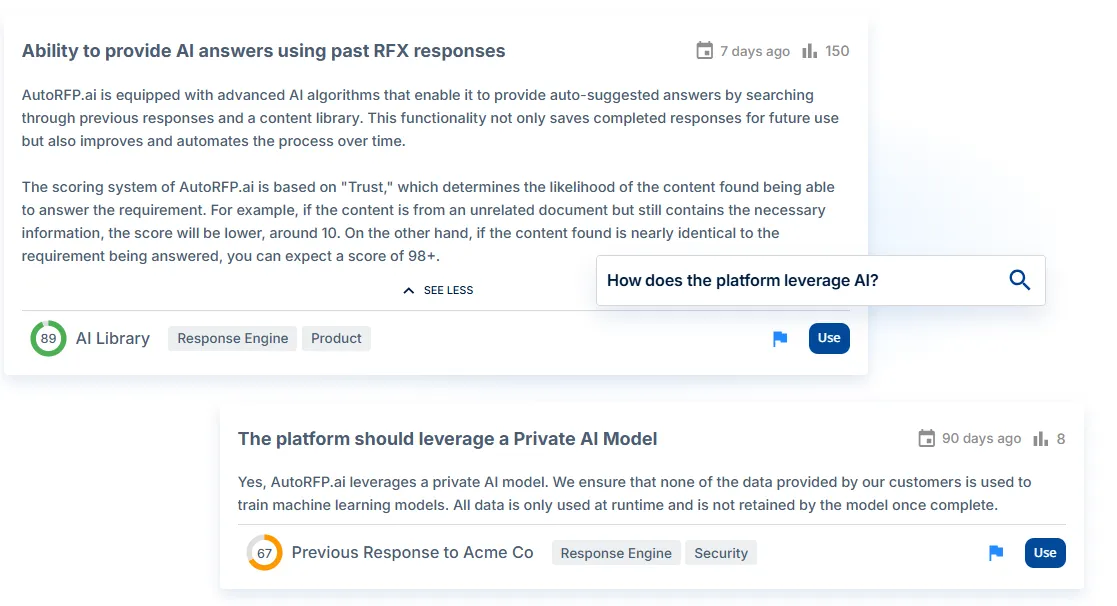
AutoRFP.ai uses a multi-model pipeline: retrieval, re-ranking, drafting, redrafting and checking across multiple frontier models chosen for their strengths. It creates a first draft in minutes, scores every answer for trust, links each answer back to its source and leaves an answer blank when it is not confident.
That last part matters.
ESG DDQs often contain commercially sensitive information, especially around portfolio data, regulatory exposure, incidents, controls and internal processes. AutoRFP.ai does not use customer data to train AI models, which matters when RFPs, security questionnaires and DDQs contain information that should not leak into public or shared model training.
Pro tip: Use AI-native response tools like AutoRFP.ai to handle repetitive ESG DDQ drafting, but keep human review for legal, compliance, financial, climate, portfolio data and non-standard LP-specific answers.
Step 9: Validate With SMEs, Do Not Outsource the Response to Them
Specialists protect accuracy, but they should not own the entire ESG DDQ narrative.
In ESG DDQs, SMEs are most valuable when they validate facts, risks, controls and evidence. They should not be forced to write full answers from a blank page.
Ask SMEs to:
Validate key claims, risks, controls and exceptions.
Review specific questions instead of drafting whole sections.
Confirm whether ESG data is current and safe to submit.
Provide supporting evidence such as policies, certifications, audit reports, board minutes, ESG reports, portfolio data and process documents.
Flag answers that need legal, compliance or board review.
Confirm whether the answer aligns with current practice.
Pro tip: Give SMEs a draft answer and a clear review question, such as “Is this accurate for our current ESG integration process?” or “Can we support this carbon data with approved evidence?”
Step 10: Run Final QA, Submit Cleanly, Then Debrief
Final QA is where ESG DDQ responses quietly get stronger or weaker.
A complete answer can still create problems if it includes outdated metrics, unsupported claims, inconsistent dates, missing attachments or statements that do not match the data room.
Stronger teams showed formal review and governance more often, at 65% versus 42%.
Run these checks before submission:
Completeness check: Every required question is answered directly, with no unexplained gaps.
Proof check: Claims are current, supportable and linked to the right evidence.
Consistency check: Answers match the pitch deck, data room, ESG report, prior DDQs and fund materials.
Compliance check: Legal, regulatory, anti-bribery, modern slavery, data privacy and governance answers are accurate.
Data check: Metrics such as emissions, DEI, safety, portfolio-level ESG data and incident history are current.
Submission check: Formatting, attachments, file names, portal fields and deadlines are correct.
Debrief: Capture what worked, what slowed the team down and what should be reused for the next ESG DDQ.
Pro tip: Track a simple wins and losses log by theme and requirement type. Teams that stack automation, reuse discipline and systematic insight are much less likely to sit in low-win bands, at 16% versus 47%.
The standard is not “Did we finish the ESG DDQ?”
The standard is: “Can we defend every ESG answer we submitted, with the right source, owner and approval trail behind it?”
Make your next ESG DDQ faster than your last with AutoRFP
Your next ESG DDQ should not start from a blank page, an old spreadsheet or a Slack hunt for evidence.
AutoRFP.ai helps teams draft from approved content, score every answer for trust, link responses back to source material and leave gaps blank when evidence is missing. That means faster completion, cleaner review and ESG answers your team can defend. Fund managers comparing full RFP and DDQ platforms can also review our ranked RFP software for financial services teams, and PE teams weighing LP DDQ tools can compare DDQ software for private equity fundraising.
Book a demo to see how AutoRFP.ai handles your next ESG DDQ.
About the author

Technical Account Manager
Technical Account Manager at AutoRFP.ai. Writes about DDQs and security questionnaire response.
LinkedInFrequently asked questions
Who Fills Out an ESG DDQ?
An ESG DDQ is usually completed by the team that owns investor, customer or compliance responses, but the evidence comes from several functions. Investor relations, ESG, compliance, legal, finance, HR, operations, procurement and cybersecurity may all need to contribute. The response owner should control the workflow, but SMEs should validate the facts, data and evidence behind each answer.
Is the ESG DDQ the Same as the PRI DDQ?
No. The PRI DDQ is one of the major ESG DDQ frameworks, especially in private equity responsible investment due diligence. In practice, many LPs start with PRI-style questions, then add their own climate, governance, DEI, portfolio data or internal policy questions. That is why two ESG DDQs can ask the same substance in different formats.
How Often Do Fund Managers Receive ESG DDQs?
Fund managers usually receive ESG DDQs during fundraising, investor onboarding, annual LP reviews, reporting cycles and specific follow-up requests. The frequency depends on the number of LPs, funds, strategies and reporting obligations. A manager with many institutional investors may answer similar ESG questions repeatedly throughout the year, but rarely in the exact same wording.
Do Vendors and Suppliers Get ESG DDQs Too?
Yes. ESG DDQs are not limited to fund managers. Enterprise buyers, investors and procurement teams also send ESG DDQs to vendors, suppliers and subcontractors. The goal is to check whether ESG risk extends into the supply chain. These questionnaires often cover labor standards, environmental practices, data privacy, anti-bribery controls, modern slavery, supplier codes of conduct and reporting evidence.
