AIMA DDQ: Structure, Questions & How to Respond (2026 Guide)
An AIMA DDQ is a standardised due diligence questionnaire used by institutional investors to evaluate hedge fund managers across operations and risk.

Technical Account Manager, AutoRFP.ai··10 min read
Completing an AIMA DDQ is much easier when you understand the logic behind the template. The questions are not random; they are designed to help reviewers understand how a manager operates, manages risk, works with service providers, and communicates with investors. This guide will help you understand the structure, prepare for the most common question types, and build a response process that keeps answers accurate and reusable.
If you are new to the format, it helps to start with how due diligence questionnaires work before diving into AIMA-specific sections.
What Is the AIMA DDQ?
The AIMA DDQ is a standard due diligence questionnaire created by the Alternative Investment Management Association for the alternative investment industry. Their 2,100 corporate members manage $2.5 trillion, making their DDQ framework the standard for alternative investment due diligence.
Investors use it to review fund managers before investing. Fund managers use it to provide structured answers about their firm, fund, strategy, operations, risk controls, and compliance processes.
The AIMA DDQ is commonly used for:
Hedge funds
Private credit funds
Private equity funds
Alternative investment managers
Institutional investor due diligence
Operational due diligence reviews
It helps both sides work from a consistent question set instead of creating a new questionnaire for every investor request.
Key areas usually covered include:
Firm background
Ownership and governance
Investment strategy
Fund structure
Risk management
Compliance policies
Operations and controls
Service providers
Valuation process
Cybersecurity and technology
ESG, where relevant
Who Uses AIMA DDQ and Why It Matters
The primary users of the AIMA DDQ are split into two main groups:
Investors and Allocators
Investors use the AIMA DDQ to assess alternative investment managers before committing capital. It helps them review whether a fund manager has the right strategy, controls, operations, governance, and risk management processes in place. AIMA states that its DDQs help investors assess potential fund investments.
This includes:
Institutional investors
Pension funds
Endowments
Family offices
Fund of funds
Consultants and investment advisers
Operational due diligence teams
Fund Managers and Investment Managers
Fund managers use the AIMA DDQ to prepare structured answers for investor due diligence requests. Instead of creating a new response from scratch each time, they can use the DDQ as a standard framework to explain their firm, fund, strategy, service providers, compliance processes, and operational controls.
This includes:
Hedge fund managers
Private credit managers
Private equity managers
Multi-strategy managers
Alternative asset managers
Investor relations teams
Compliance and operations teams
AIMA DDQ matters because:
| Why AIMA DDQ matters | Explanation |
|---|---|
| Standardizes due diligence | It gives investors a common question set instead of forcing every fund manager to answer different versions of the same due diligence questions. |
| Reduces administrative work | Fund managers can prepare structured, reusable answers, which reduces the time spent responding to repeated investor requests. |
| Makes fund comparisons easier | Investors can compare multiple managers using the same framework, making it easier to review funds on an apples-to-apples basis. |
| Supports comprehensive risk assessment | The DDQ covers the key areas of due diligence, including people, process, and product, so investors can better understand how the fund is managed. |
| Improves transparency before capital is allocated | It helps investors review trading strategies, liquidity, leverage, counterparty risk, operational controls, and other risk areas before making an investment decision. |
| Strengthens operational due diligence | The DDQ helps verify whether the manager has the right internal controls, infrastructure, valuation processes, and asset protection measures in place. |
| Helps prevent operational and fraud risks | By reviewing controls, service providers, and governance processes, investors can identify weak points before they become serious issues. |
| Keeps due diligence aligned with modern expectations | Updated DDQ modules can cover newer investor concerns such as private markets, ESG, responsible investing, cybersecurity, and regulatory readiness. |
How AIMA DDQ Is Structured
The AIMA DDQ is structured as a modular questionnaire. Instead of forcing every fund manager to complete one long, fixed document, it lets investors and managers use the sections that match the fund type, strategy, and due diligence scope.
1. Basic Setup Modules
The DDQ usually starts with a basic setup module. This captures the core information investors need before reviewing the fund in detail.
It may cover:
Firm background
Ownership and governance
Key personnel
Regulatory status
Compliance structure
Fund overview
Service provider details
This section helps investors understand who the manager is, how the firm is organized, and whether the basic governance framework is in place.
2. Fund Type Modules
AIMA DDQ then separates questions based on the type of fund or structure being reviewed. For example, an open-end fund may require different information from a closed-end fund, managed account, platform provider, or sub-advisory relationship.
This matters because each structure has different due diligence concerns, such as:
Liquidity terms
Redemption process
Capital calls
Valuation process
Investor reporting
Fund governance
Fee and expense disclosures
3. Strategy Modules
The DDQ also includes strategy-specific modules. These sections help investors understand how the manager invests, what risks the strategy carries, and how those risks are controlled.
Depending on the fund, this may cover:
Hedge fund strategy
Private credit
Private markets
Corporate lending
Trading strategy
Portfolio construction
Leverage
Counterparty exposure
Liquidity risk
This structure helps investors avoid generic reviews and focus on the risks that actually apply to the strategy.
4. Operations and Risk Modules
A major part of the AIMA DDQ focuses on operational due diligence. These sections assess whether the manager has the right controls, systems, and processes to protect investor capital.
It may review:
Risk management
Operational controls
Outsourcing
Technology and cybersecurity
Anti-money laundering controls
Valuation policies
Fund counterparties
Business continuity
Service providers
This part is important because investors are not only assessing performance. They are also checking whether the manager can operate safely, consistently, and transparently.
5. Data Requests and Supporting Information
The DDQ may also include data request sections and supporting document requirements. These help investors collect more detailed information behind the manager’s written answers.
This can include:
Performance data
Risk reports
Fund documents
Policies and procedures
Organization charts
Service provider details
Compliance documents
Side note: The purpose is to move due diligence beyond written claims and give investors material they can review, compare, and verify.
How to Respond to an AIMA DDQ (Step by Step)
Writing a strong AIMA DDQ response is easier when you break the process into clear stages. The goal is not just to complete the questionnaire. It is to give investors enough confidence in your firm’s strategy, governance, risk controls, operations, compliance, and service provider oversight before they allocate capital.
Step 1: Qualify The AIMA DDQ Request
A strong AIMA DDQ response starts with understanding the request before answering it. Since AIMA DDQs are modular, teams should first identify which modules apply to the fund, strategy, structure, and investor request.
AutoRFP.ai’s Proposal Win Rate Report 2026 found that 71% of high-win teams have a Go/No-Go qualification step, showing that strong opportunity selection is part of a more disciplined response process.
Confirm the fund or strategy being reviewed.
Identify whether the request relates to an open-end fund, closed-end fund, private markets strategy, platform setup, sub-advisory relationship, or another structure.
Check the investor type, deadline, required modules, and level of detail expected.
Flag high-risk areas early, such as liquidity, leverage, valuation, cybersecurity, AML, service providers, or regulatory disclosures.
Define what must be true for the team to respond confidently and accurately.
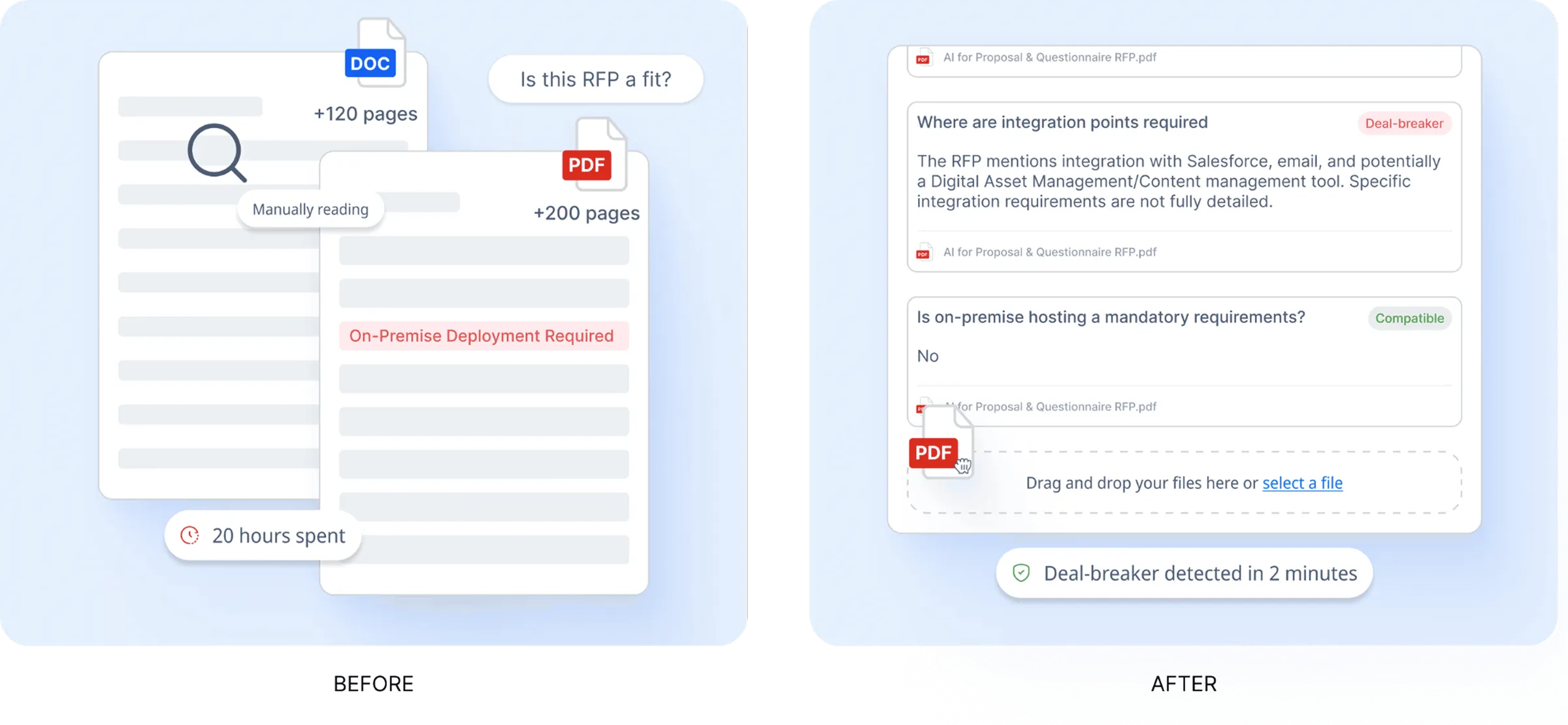
This video shows how to qualify tenders using a stronger Go/No-Go process, with AI helping teams assess fit, risks, win probability, and response effort before deciding to proceed.
Pro tip: Use an RFP or DDQ tool with built-in Go/No-Go analysis so you can score fit, risk, and capacity quickly instead of debating in circles.
Step 2: Assemble The Right AIMA DDQ Response Team Early
An AIMA DDQ response usually touches investment, risk, compliance, operations, finance, legal, technology, and investor relations. One person should not be expected to answer everything alone.
Response owner: Owns the full DDQ lifecycle and keeps the response moving.
Investor relations or proposal manager: Manages content, reviews, consistency, and final submission quality.
Investment team: Validates investment strategy, portfolio construction, investment process, and performance-related answers.
Risk team: Reviews liquidity, leverage, counterparty exposure, market risk, and operational risk responses.
Operations team: Validates trade operations, reconciliations, valuation, fund administration, and service provider oversight.
Compliance and legal: Reviews regulatory, AML, conflicts, policy, disclosure, and fund document-related answers.
Finance: Validates financial statements, insurance, expense allocation, and fund-level financial information.
Technology or cybersecurity owner: Reviews cybersecurity, access control, incident response, and business continuity answers.
“Project management of all the different parts of a bid is often overlooked. Ensure you have clear responsibilities and when you want content, answers, and revisions completed by. I would know, I once lost an RFP because I submitted it 26 seconds late.” – Jasper Cooper, CEO & Co-founder at AutoRFP.ai
Step 3: Set Ownership, Timeline And Working Rules
A clear plan prevents last-minute confusion and keeps quality stable across the full AIMA DDQ. This is especially important when the questionnaire includes multiple modules and several internal reviewers.
Assign owners for each DDQ section or module.
Set internal deadlines before the investor’s final submission deadline.
Lock review rounds for SME validation, legal review, compliance review, and final approval.
Define version control rules so the team works from one source of truth.
Create a final submission checklist for attachments, formatting, evidence, and approvals.
Pro tip: Use one workflow board for owners, deadlines, and status so nobody is guessing who owns what.
Step 4: Build An Investor Risk Brief Before Drafting
Insight is what turns a basic AIMA DDQ response into one that directly answers the investor’s concerns. Before drafting, the team should understand what the investor is trying to validate and which sections could create concern.
In a survey of 94 bid professionals, AutoRFP.ai found that high performers used a defined customer-insight process far more often, with formal customer research showing up 88% of the time versus 67% for lower performers.
Investor goals: What the investor needs to validate before moving forward.
Stakeholder priorities: What matters to investment, operational due diligence, legal, compliance, risk, and investment committee reviewers.
Risk concerns: Liquidity, valuation, leverage, counterparty exposure, cybersecurity, AML, business continuity, conflicts, and service provider reliance.
Proof strategy: The policies, reports, certificates, fund documents, committee records, and examples you will use to support claims.
Pro tip: Write a one-page “investor risk reality” summary and make it the required input for every section owner.
Step 5: Build Trust Themes And Lock Your Storyline
In a normal proposal, win themes help persuade. In an AIMA DDQ response, trust themes help reassure. The goal is to show that your firm is not only investable, but also controlled, transparent, and operationally mature.
Win themes show up strongly in higher-performing teams, with 71% of the high-win cohort using them. For AIMA DDQs, these themes should be reframed around governance, risk management, operational strength, and evidence.
Create 3 to 5 trust themes in investor language, not marketing language.
Tie each theme to a real investor concern.
Use a simple format: Because you need X, we have Y, proven by Z.
Assign each theme to the DDQ sections where it should appear.
Build a short proof bank under each theme, such as policies, certificates, audit reports, committee records, risk reports, or service provider reviews.
Pro tip: Build an AIMA DDQ compliance matrix that breaks every question into sub-requirements and maps each one to an owner, evidence, and where it is answered.
Step 6: Decide What To Reuse Versus What To Tailor
Reuse saves time only if the content is current, accurate, and relevant. AIMA DDQ responses often include repeatable answers on firm background, governance, investment process, compliance, risk management, cybersecurity, valuation, business continuity, and service provider oversight.
Teams that used content library automation were far less concentrated in the lowest win-rate tier, with 36% in the low-win band compared with 51% for teams without automation.
Reuse: Standard firm background, ownership details, governance language, compliance program descriptions, cybersecurity controls, valuation policies, AML processes, and approved service provider information.
Tailor: Strategy-specific risks, fund terms, liquidity profile, leverage use, private markets details, investor-specific concerns, regional requirements, and unique fund structures.
Keep one approved source: This keeps AIMA DDQ answers consistent across investors, teams, modules, and submission formats.
Step 7: Draft With One Voice And Clear Evidence
Speed matters, but consistency builds trust. An AIMA DDQ should not sound like separate answers stitched together from investment, legal, compliance, risk, and operations teams.
Provide each owner with the same inputs: investor risk brief, approved answer library, proof list, and tone rules.
Answer the question directly first.
Add the process behind the answer.
Include clear evidence where the question affects risk, compliance, operations, or investor confidence.
Avoid vague statements that sound like marketing copy.
Make sure claims are supported by policies, reports, committee records, fund documents, or other evidence.
Pro tip: Have the response manager do a single consistency pass across the full AIMA DDQ before final review.
Step 8: Use AI And Automation To Accelerate The Repeatable


Video transcript
Transcript is auto-generated and may contain minor errors.
Hey, we're going to jump into how you can use AI to automate your DDQ process. Let's jump into it. We're going to be using AutoRFP.ai, where an AI software application cloud-hosted across the globe with hundreds of customers, everyone from Silicon Valley startups to some of the largest managed investment fund companies in the world across managed investment funds with portfolios and offices across Switzerland, United States, and Singapore using our product every day to answer hundreds and thousands of DDQs. Let's jump into it. So, AutoRFP, you can upload diff- you can upload different DDQs that you might get. This might be your LP DDQs or just any from
your LPs that are coming through and you want to highly automate that process. You can also upload your RFPs and any other kind of compliance questionnaires you'd like. Really, what AutoRFP is Really, what AutoRFP is effectively you create an AI knowledge lake with your relevant context. This could be information from your website, whether that's fund information like investment performance over time and other relevant public information. AutoRFP can scrape that information automatically or it could be technical documents or fund documentation in relation to your products and services and so on. But effectively, all that information, as well as integrating with 15 plus other systems like Google Drive, SharePoint, Microsoft Teams.
We pull that together into an AI knowledge lake, which is a vector database. Then AI starts to do its work across two different ways to generate DDQ responses en masse. First is the AI semantic search which uses embedding models and re-ranker models to effectively site the most relevant context. That's how we have customers in Auto RFP that have hundreds and thousands of or tens of thousands or hundreds of thousands of pieces of content in their Auto RFP library with specific categorization in relation to tagging. For instance, here I have tagging. If I was a managing investment fund, I could go all the way down to particular asset-backed credit and
different investment platforms and all different funds and effectively that relevant context is provided to the LLM. So then it knows what is the right information for automating DDQs. So then you have an AI response agent that takes that relevant context and across a series of LLMs, whether it's Gemini, OpenAI, and Anthropic, generates a response. That can then be collaborated across the team as well as translated to 50 plus languages with translation and AI optimization for localization of translation as well. English US, English Australia, and English UK, and so on. Then within the product, you have workflows, whether it's integrating with your CRM like Salesforce for intakes of new
DDQs, importing via portals, AI analysis, and a lot more. And let's jump into that. So, within AutoRFP, you have your different projects that might be a RFP, a due diligence questionnaire, and so on. We create those projects, load the relevant files. That comes in, whether it's a zip file, Excel, PDF, Word doc, and we import that information. First, we do a project analysis. Imagine this LP, this is the first time you're working with them, and the first time they've sent you a due diligence questionnaire. You may have specific questions that you want to understand before responding to that DDQ based off the context and content in the due diligence questionnaire itself. That's where we leverage an LLM AI to analyze that relevant DDQ and provide any answers to our questions, and it'll provide sources as well a confidence
scoring based off that information. So, now I've looked through that, and I've read through the DDQ, it's time to start answering. First, here our software will automatically mark up the document with AI and OCR to effectively specify what are the requirements and what are the responses that it needs to then generate answers for. So, you can see here it's done multiple Excel tabs. It's looked at the PDF and pulled out the requirements there from the DDQ, whether it's tables and so on. It's also done that in a Word doc, other information that might be relevant. Then, we can choose what content is most relevant. So, here I might say, "Okay, this is a fun four, and this information's relevant, and that's the kind of content that I want to use to answer this our DDQ.
Once we have our content selected with your tagging and hierarchy that makes the most sense for your kind of large waves of context for the LLM, we then can provide what kind of style responses we want, and we can change anything here later, and what languages. Now, the fun begins. So, this is pretty cool. So, we have generate we have pulled in all those responses. So, now the fun begins. The AI, as you can see, it's ticking up along the top is automatically generating responses for those questions based off our context. Everything's going to come in here from rich text formatting to tables to images. Anything that you have in your content that was relevant for that answer, it will then effectively, like I said, use a re-ranker and embedding model to source the relevant information, and then use AI to generate those responses. Any of these responses I can go in and click here and understand the trust
score. And so, that will provide whether it's a tag level match across our context. So, for instance, our information and the confidence of that response as well. Clicking in edit here, I can see more relevant information. It hasn't pulled from This is actually expired two months ago. So, our content features have expirations and teams to review content and all the kind of information you provide you can do in the content. If then I want to say this content looks great, but I actually want to suggest any changes or flag it for review, the content owner would then get information for that content. Let's say instead I actually wanted to add in this relevant information and this relevant information, but then I want to add a prompt to edit that with the AI or just use a little prompt here to shorten that response and effectively AI now will again answer and edit that response according to my prompts that I've used there.
I I can see the changes and then I can accept those changes and of course there's revision history and AI assistant so I can ask it questions to help me understand that requirement in more details. Like I maybe I don't know what an SAP Ariba is. Sadly I do, but maybe I don't and it can tell me more information there. So that's a bit of our response editor and now all those different responses have come through. I can go to my different sections within the DDQ like my artificial intelligence section. I can select all those requirements and I can start assigning those to relevant team members. So I might assign this to the legal team as reviewers and so anyone from the legal team now has the opportunity to review those responses once I start submitting them and they will get Microsoft Teams notifications or Slack about that workflow and get updates on the process of the project as it goes.
Let's take a step back and say I was now project managing this DDQ response because I'm the investment manager for that fund. I can click on the project overview, quickly see how many responses are left to complete, who they've been assigned to, send reminders to those team members, again Slack, Microsoft Teams, and I can also see when the project is due and how our overall progress as time goes on. We can add additional attachments as well. So, I might want to add this attachment and this attachment. So, when I export my completed project, that will then include any attachments that either myself or the AI has added. Let's take a step forward and go back to now answering those responses. Here, of course, I can make any changes as I want and submit that and work through my task list of different tasks for those responses until it's done.
Looking through, we can also look at any low trust score ones we have or any that are empty, which might which will require human intervention to answer. So, looking at this low trust score, I can see, okay, why is it low? And then I can go in and I can edit and make changes to that response. You also might notice there's a second AI score here, and this is the AI feedback score. The AI feedback score will tell me if how well that response, whether it's AI or human generated, will is answering that DDQ requirement. Okay, so we've just finished editing our responses, we've reviewed the trust scores, filled everything out that needs to be filled out. We can regenerate responses, write additional feedback like and so on. Now, we're ready to export. So, once everything is approved, and what we can
do there is then mark the project as completed and then export that entire project, and that can include any proposal templates that you have. So, that might be executive summaries and other relevant information that is in your firm's tone and marketing collateral and that and then you can have the requirements and relevant context auto-generate into those export templates. And then we can export that and then submit the DDQ. So, that's a lot of it. So, we're AutoRFP.ai. We're a DDQ software and RFPs that helping global technology and fund manager companies all around the globe automate the mundane when it comes to DDQs and RFPs. And not just automate, but really help free up people to write better responses to win more faster. In terms of our pricing and all our
information, you can find out more information. If you're doing more than 50 DDQs per year, recommend getting in touch with us by booking in for an online demonstration. And you can find all about us at AutoRFP. ai. Well, thank you. I'm Rob from AutoRFP and I'm glad I could show you how to leverage AI to automate the DDQ process. Thank you.
AI is now common in strong response workflows, with 65% of the highest-performing cohort using AI proposal technology. For AIMA DDQs, the advantage comes from using AI to support a disciplined review process, not from removing human judgment.
AI is most useful when it helps teams retrieve approved answers, map questions to evidence, and reduce the time spent searching through old questionnaires, shared drives, spreadsheets, and emails.
Use AI to draft from approved sources, then validate and tailor.
Use automation to extract questions from Word, Excel, PDFs, and investor portals.
Retrieve evidence quickly for compliance, cybersecurity, valuation, risk management, service providers, and business continuity.
Route sensitive questions to the right reviewer.
Use confidence scores to identify which answers are ready and which need SME review.
Pro tip: Use DDQ response automation tools like AutoRFP.ai to handle repetitive DDQ drafting, but keep human review for legal, compliance, risk, financial, and non-standard fund-specific answers. Fund managers comparing PE-focused options can also review DDQ automation tools for PE firms.
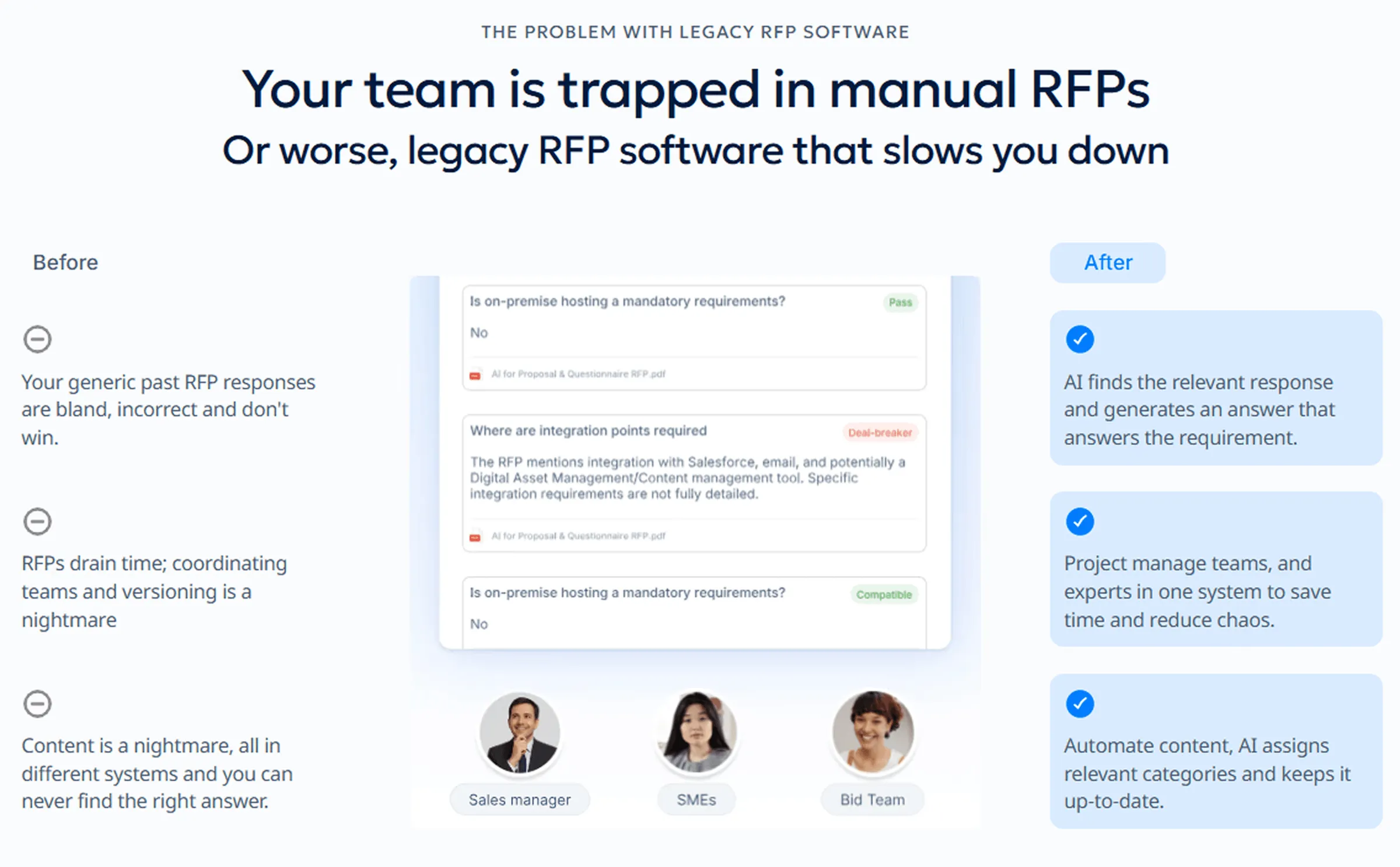
Step 9: Validate With SMEs, Do Not Outsource The Response To Them
Specialists protect accuracy, but they should not own the entire DDQ narrative. In AIMA DDQs, SMEs are most valuable when they validate the facts, risks, controls, and evidence behind each answer.
High performers relied on SMEs to write first drafts only 6% of the time, while lower performers did this 22% of the time, which often leads to inconsistent tone and heavy rewrites.
Ask SMEs to validate key claims, risks, limits, and exceptions.
Give SMEs specific questions to review instead of asking them to write from a blank page.
Collect supporting evidence such as policies, certifications, audit reports, committee minutes, risk reports, service provider reviews, and process documents.
Confirm whether answers are current, accurate, and safe to submit.
Keep final wording consistent across the full DDQ.
Pro tip: Give SMEs a draft answer and a clear review question, such as “Is this accurate for our current valuation process?” or “Can we support this with evidence?”
Step 10: Run Final QA, Submit Cleanly, Then Debrief
Final QA is where AIMA DDQ responses quietly get stronger or weaker. A complete answer can still create problems if it includes outdated policies, unsupported claims, inconsistent dates, missing attachments, or statements that do not match the fund documents.
Stronger teams showed formal review and governance more often, at 65% versus 42%.
Completeness check: Every required question is answered directly, with no unexplained gaps.
Proof check: Claims are current, supportable, and linked to the right evidence.
Compliance check: Regulatory, AML, legal, cybersecurity, valuation, and risk answers are accurate.
Consistency check: Answers do not contradict each other across modules.
Submission check: Formatting, attachments, file names, portal fields, and deadlines are correct.
Debrief: Capture what worked, what slowed the team down, and what should be reused for the next AIMA DDQ.
Pro tip: Track a simple wins and losses log by theme and requirement type. Teams that stack automation, reuse discipline, and systematic insight are much less likely to sit in low-win bands, at 16% versus 47%.
Best Practices for Strong DDQ Responses
These are best practices teams can use to prepare DDQ responses that are accurate, consistent, and easier for buyers or investors to review.
| Best practice | How to apply it |
|---|---|
| Start with qualification and risk triage | Review the questionnaire type, deal value, risk level, and required approvers before drafting. Identify whether it is a security, privacy, ESG, financial, legal, vendor risk, or mixed questionnaire. Flag high-risk questions early and confirm who owns the final response. |
| Capture buyer context before drafting | Understand why the questionnaire was sent and what the buyer cares about most. Check the buyer’s industry, region, regulatory context, and known risk concerns so answers are relevant instead of generic. |
| Let SMEs validate, not own the first draft | Let the response owner prepare the first draft using approved content. Then ask security, legal, product, finance, or compliance SMEs to validate accuracy, exceptions, and any sensitive claims. |
| Build a governed content library | Store approved answers by category with owners, review dates, sources, and approval status. Link answers to evidence such as policies, certificates, reports, and security documents, and retire outdated content. |
| Automate repetitive answers, but keep human review | Use automation to pre-fill common answers, retrieve approved content, surface evidence, and route questions to the right reviewer. Keep human approval for legal, security, compliance, or product-specific commitments. |
| Review for accuracy, evidence, and consistency before submission | Check for outdated claims, contradictions, missing attachments, unclear caveats, and risky commitments. Make sure the final response is accurate, defensible, and supported by the right evidence before submission. |
AIMA DDQ Response Templates & Examples
AIMA DDQ responses should be clear, specific, and easy for investors to verify. A strong response does not just say that a policy exists. It explains the process, identifies who owns it, and points to the evidence available for review.
AIMA DDQ Response Template
Use this template when preparing answers for AIMA DDQ sections such as investment process, risk management, operations, compliance, cybersecurity, valuation, service providers, and business continuity.
AIMA DDQ Response Example
Below are sample AIMA DDQ-style responses. These are not official AIMA answers, but they show how a fund manager can structure clear and review-ready responses.
Common AIMA DDQ Questions and Strong Answers
Here are some of the common AIMA DDQ questions investors may ask, along with stronger ways fund managers can structure their answers.
| Common AIMA DDQ question | Strong answer approach |
|---|---|
| Describe your firm’s ownership and governance structure. | Explain the legal entity structure, ownership, senior management roles, board or committee oversight, and how major business decisions are approved. |
| Who are the key investment and operational personnel? | Identify key team members, their responsibilities, relevant experience, reporting lines, and any key person risk controls. |
| Describe your compliance program. | Explain the role of the compliance officer, policy review cycle, employee training, monitoring process, regulatory filings, breach escalation, and recordkeeping. |
| How do you handle conflicts of interest? | Describe how conflicts are identified, disclosed, reviewed, approved, documented, and monitored. Mention whether a conflicts register or policy is maintained. |
| Describe your AML and investor onboarding process. | Explain investor due diligence, KYC checks, sanctions screening, source-of-funds review, escalation procedures, and ongoing monitoring. |
| How are fees and expenses allocated? | Explain the expense allocation policy, approval process, investor disclosure, review controls, and how expenses are checked against fund documents. |
| Describe your investor reporting process. | Cover reporting frequency, report content, responsible teams, review controls, delivery method, and how reporting errors are corrected. |
| How do you manage material changes to the business or fund? | Explain how changes to personnel, strategy, service providers, systems, or fund terms are reviewed, approved, documented, and communicated to investors where required. |
| Do you use outsourcing arrangements? | List outsourced functions, explain provider selection, oversight, service-level monitoring, issue escalation, and periodic review. |
| Describe your responsible investing or ESG approach, where applicable. | Explain whether ESG factors are integrated into the investment process, who oversees them, what data is used, and how related claims are documented. For ESG DDQ questions and frameworks beyond AIMA, see the dedicated ESG DDQ guide. |
How to Optimize The DDQ Response Process
The DDQ response process becomes much easier when teams combine automation, clear ownership, approved content, and a proper review workflow. Here are some practical ways to improve it.
1. Use a DDQ Response Automation Tool Like AutoRFP.ai
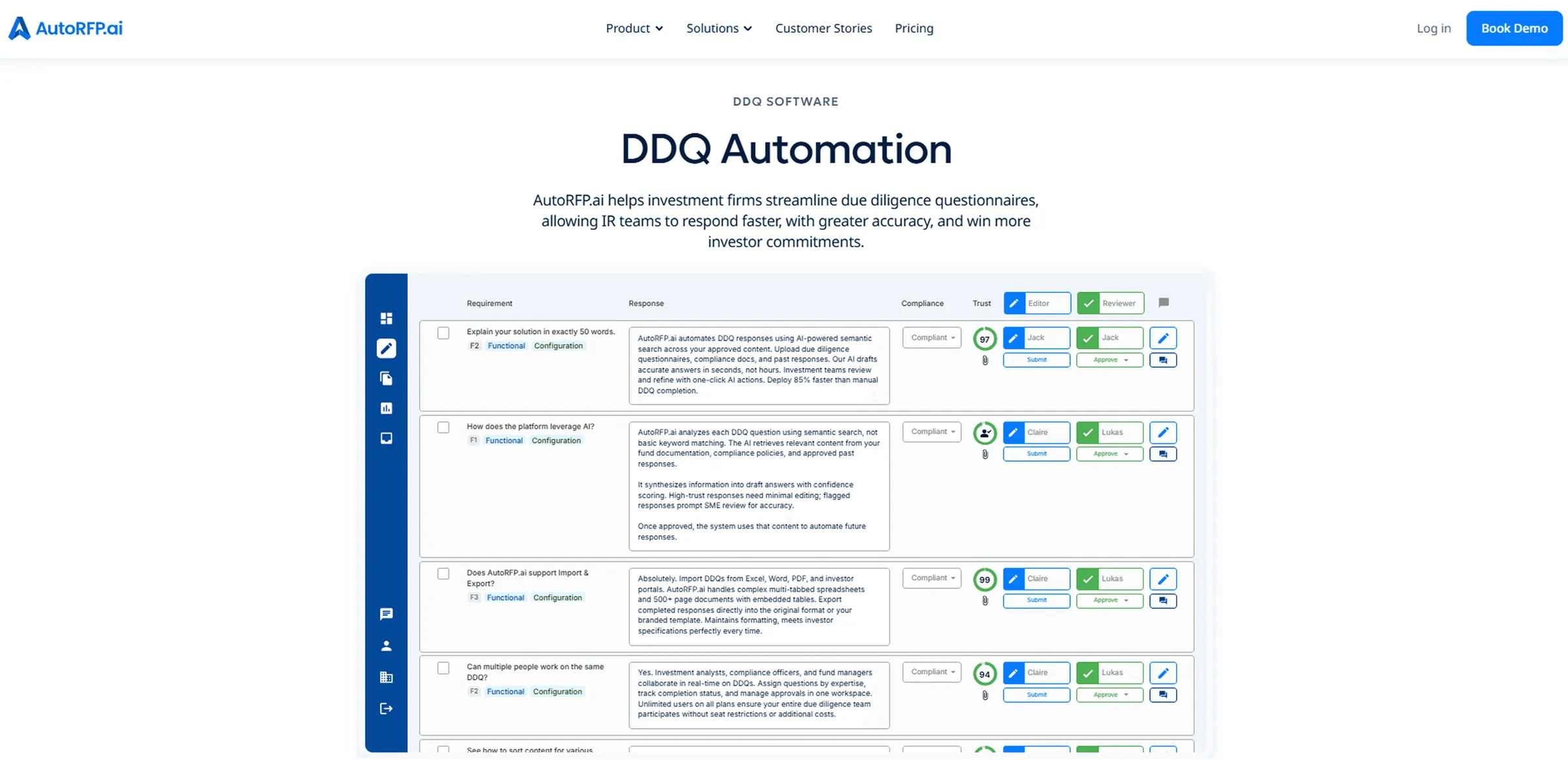
Manual DDQ work becomes slow when teams have to copy answers from old files, review long spreadsheets, and chase different reviewers for input. A DDQ response automation tool like AutoRFP.ai helps teams reduce repetitive work and complete questionnaires faster.
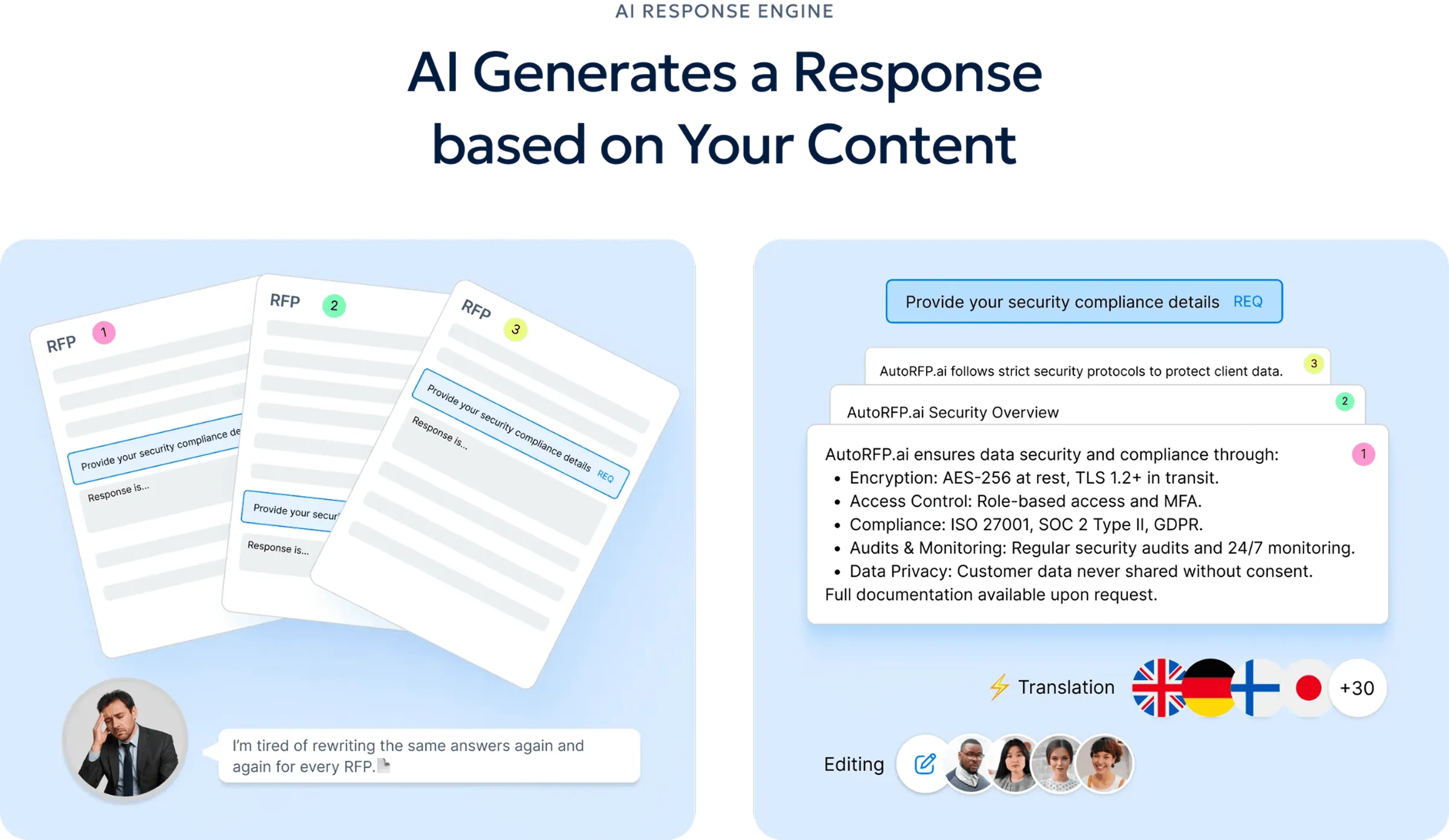
Import questions from Excel, Word, PDF, and online investor portals.
Use AI-powered semantic search to match questions with the most relevant approved content.
Generate draft responses with confidence scores, so teams know which answers are ready and which need SME review.
Assign questions to the right reviewers based on expertise.
Track completion status, approvals, and reviewer input in one workspace.
Export completed responses back into the original format or a branded template.
Use multilingual support to respond to DDQs from international investors.
Maintain consistency with audit trails, version history, approved content, and review workflows.
Pro tip: Use automation for the first draft, but keep human approval for legal, compliance, security, financial, and non-standard answers.


Video transcript
Transcript is auto-generated and may contain minor errors.
Hey, we're going to jump into the best due diligence questionnaire software that's currently on the market. We're going to look at those that are leveraging the latest AI as well as some of the more legacy DDQ software providers and how they all help you automate your DDQs. So, let's jump into it. Now, you're probably an investment fund manager or someone from security or compliance getting these constant questions asking a lot of the same questions. You have an answer buried somewhere. You know that on the website or in SharePoint, you have information on fund for and the relevant investments in that fund and all the other information that this DDQ is asking for, but it just takes so much time to find that answers. If that's
you, then DDQ's software and automation can be a real lifesaver to help you get your weekends back and automate the mundane that is DDQs sometimes. So, first of all, what is a due diligence questionnaire? Now, I think everyone here would have a solid understanding, but just in case, a DDQ stands for due diligence questionnaire. They come in various industries, but most common is a managed investment fund where effectively your institutional investors and limited partners would provide you a due diligence questionnaire for you to fill out to have that LP invest in one of your funds. The aim of the DDQ, a little bit different to an RFP, is you're trying not to get disqualified, which makes them very regulatory and complianceheavy. And in financial services need to make
sure that the information is correct. And often this involves subject matter experts from legal, marketing, investor relations all helping out on this due diligence questionnaire. and it becomes quite the process. So where software can help and here we have some of the best DDQ software currently on the market is not just in workflow management and process management for your DDQs and project management but collaborating with yourmemes as well as of course automating large swaves of the work. Now that automation comes into two main places. You've got automation with AI. So that's using your existing information whether it's past TDQs, your fund brochures, your website, publicly available information as well as fund specific information that can be
categorized and all that kind of context. So that context is then either used by a question and answer bank to copy and paste responses in that's how a lot of legacy DDQ software work or that context is used via AI to heavily automate the entire DDQ process. So let's look at some of these providers first. We're actually going to start with some of those legacy providers. So you've got responsive or responsive.io, also known as RFP IO, which they acquired a couple of years back, but effectively responsive is both an RFP software as well as a DDQ response software. on their website they're saying it's built for small business and yeah it effectively it's a useful tool for DDQ automation and effectively the way it works is based off you've got all your
organizational context and that could be through different integrations and different information through yeah SharePoint seismic and all these systems you might already be using and then it puts that into a library or like a question and answer bank. So you've got a question, a response, and it perfect effectively brings that all together. Then when you get a new DDQ, if you've had that same question or a very similar question before, it will use a keyword search to find the most relevant prior answer for that question and copy and paste it across, which is really useful. And then it has what you'd expect reporting project management features collaboration and be able to go in and you answer that DDQ really effectively. Some of its cons are it does have AI features. So more recently it's added AI.
My understanding at least that's mostly based on the response generation. So let's say you have that Q&A bank. It will then again based on its keyword search find a relevant answer and then maybe slightly generate it and change it slightly for your new answer if the question is slightly different. So copy and paste and sometime some AI generation there but yeah there are legacy RFP or DDQ software have been around for oh I think like 10 plus years. Yeah, really doing really well in the market. a lot of big logos known in the space. Their main competitor is another legacy RF software and that is Lupio. So Lupio similar to responsive for due diligence questionnaires will effectively have your context and your library of information that is then managed by your team. One caveat with DDQ software you
want to be cautious of is that management of content you you want to make sure it doesn't take too much time. I've heard stories of customers of legacy RF DDQ software where managing that library can take an entire wage like an entire person a full-time role or multiple people's roles which can be really important in highly regulated industries but again it's just a cost and timeintensive work managing a content of library to really help make that a software work for you. So, Lupio is yeah uses keyword search and also has some kind of AI top hat features where effectively it will also potentially generate responses. They call it magic and yeah helps with your DDQ responses as well. Then you've got some newer AI players like Inventive. So, Inventive have been
around I think for a couple of years now, but effectively they use their entire product is built on AI. So, like an AI native DDQ software. So, how it works is their products mostly used by technology companies, but I'm sure they've got some financial services customers, but effectively it will use things like competitor intelligence, your knowledge hub. So brings and integrates all the different sources and then brings that content and then uses like an AI semantic search and then generates responses based off your prior context and information about the funds and about the information. Yeah, it's an inventive I think newer player in the market. Definitely obviously wouldn't have as many customers as Lupio or Responsive but very AI native software. Similar to inventive you have Afy although Afy I would say is more positioned towards technology companies
with like sales engineers and go to market teams like salespeople and it's really built around that that shared knowledge hub so that all that context from your past DDQs from your past from your fund information and so on it will use that information and not just be able to help answer DDQ QS new DDQs with responses but also answer questions from your team whether that's in Microsoft Teams and so on. I think they have a Microsoft Teams integration. Definitely have a Slack integration I believe. But yeah, it'll integrate with SharePoint and Seismic and Highspot and so on to bring in all that knowledge information where Afy again similar to Inventive AI native software. So built AI from day one and inventive uh smaller player in the market as it just doesn't have as much brand recognition or as many customers
but yeah great product and the project management and kind kind of collaboration features might be a little bit less than say your loopio or responsive but some really good AI features in there as well. Then you got Ombbud. Ombbud are an interesting one. They're one of those kind of legacy RFP software, but have probably applied the AI features a lot better than say your lupios or responsives. So, OMBbud again has some large technology software providers like Sage and UKG and effectively integrates and they're going more of like that agent framework I guess where different like sales engineering and response management agents kind of work alongside your team to answer different questions. So yeah, a bit more of an RFP like technology and not as much of a investment management DDQ software but can be useful for DDQs.
Soian I would say Cvidian so is one of Upland software one of their products is very much built for DDQs and has a lot of managed investment companies very much a legacy DDQ software where I think they have an AI add-on now but it's like an add-on so it doesn't come natively in the product you may already be using potentially a little bit more dated UI I UX in terms of using the platform but really strong project management theme collaboration features can do like things like PowerPoint. So really useful across different modes that investment managers might find useful, not just DDQ response, but has like a plethora of different features that can be useful in relation to investment managers and how they manage LPS. But yeah, useful product,
really well known in the market in terms of has quite a lot of managed investment funds, but like I said, one of those more legacy providers and yeah, has less of an AI focus. But there you go. You can see it just has a lot of different kind of features that can be really useful across answering DDQs and managing LPS as well. Now, one that's a little bit different, but I thought I'd throw in there is TrustCloud. So they are more of like a GRC platform which is governance risk and compliance. So more like a DRA or a Vanta again more of a technology focus but I put it there just in case you are working at a technology company and your DDQs are more security focused the security questionnaire automation software is going to be really useful to help answer that. I wouldn't say it's as useful though for manage investment funds specifically for DDQs. Then you've got Hey Iris. Iris they're again another AI native player just like Ry and Inventive
but yeah more of that like technology lens as well and you can yeah view their website to find out more information like they can really contextualize all that different context make it a bit of a knowledge map as well but there's all the information there. Then you've got auto RFP. So that's where I work, auto rfp.ai. So we are a DDQ software with a large number of managed investment fund customers, those that are some of the largest in the top 20 in terms of asset under management in the globe all the way from we have customers in Switzerland to Singapore to the United States in that manage financial services, manage investment funds industry. Now where we really shine is with regards to our features is specifically yes a great import features. So things like ILP formats your standard industry formats
pre-built to be able to easily load into our system. So very little or no work on the investment fund manager or on the RFP professional or DDQ professional in terms of uploading that information. So really easy to use on uploading DDQs. Then we also have a browser extension. So if you do get any DDQs in different portals where this is useful is answering within the portal like it scrapes the portal and then automatically starts generating the answers and then you can just copy and paste them back into that portal and easily answer any portal questions. But once you've imported that blank DDQ whether it's Excel, PDF, Word doc, then you have our AI search. So legacy DDQ software generally would use like I said like that keyword search to look across their kind of content uh database whereas we and a lot of AI native DDQ
software use semantic search. So effectively it's not just someone typing in the words trying to find similar words. It is actually an LLM like a large language model providing all its context across an embedded database to find like a vector database to find the relevant query with the context. So for instance, semantic search would understand the difference between real estate assets and questions and answers that discuss that versus infrastructure assets. even though they might have a lot of the same words, it understands contextually they're different things and whether it's commercial and so on. So that's where semantic search and the power of AI not just in generating a response but in finding the relevant content can be really powerful across your AI native DDQ software. So the AI finds the relevant content then whether it's multilingual and so on. So it does AI
optimized translations as well. It then generates a response or provides a verbatim response. So if your content has the exact right response to use and you've done that previously, let's say it's your 15th Ilpa DDQ, it will just copy it will verbatim that response with its AI semantic search and then verbatim it effectively copy and pasting it, which is a lot better than just always trying to generate new responses. But when it can't verbatim response, it will then use AI to generate a response and provide different trust scores, effectively showing you how relevant the content it used is for that response and how trustworthy it thinks it does and uses a specialized reranker model here and that trust score. Then it generates the response. Of course, you've got different features to help collaborate across subject matter experts. You can have unlimited number of users with an order RFP. We don't we do not charge
based off of users. So seatbased pricing is the norm across RFP or DDQ software. We just charge based off number of DDQs you would do every year. But yeah, then the team can collaborate, understand the different responses within there, mark compliance records, assign editors, reviewers, do sequential reviews if you require different teams and people to review answers before they go to the LP for that DDQ response. You can really easily manage different attachments and add attachments. the im the response can add in images from your content add in tables and you can manage that all really easily in order RFP so it's very like intuitive you userface as well then yeah unlimited collaborators also we integrate with Microsoft teams or slack although in this case probably more relevant is teams and effectively those team members will then get notified and just notifications and managing a DDR process is a lot more streamlined line
with a dedicated AI DDQ software. And the big thing is, yeah, we don't think AI should be an add-on. So, it's not like a bolt-on to our software. It is our software. And our pricing, we don't charge for different features or add-ons or plans. The pricing is really straightforward, which I'll cover off shortly. And like I said, integrates with Microsoft Teams as well as translations and then a lot of different integrations whether it's across SharePoint or 20 Salesforce or 20 plus integrations as well as real-time web scraping for context as well there. And then of course when you are doing hundreds or thousands of DDQs, you want reporting that really helps understand the DDQ process, the time and the cost it takes to do DDQs as well as the impact AI is having on your DDQ process. That's why we provide AI
automation reports and a lot of other different information as well as in just general kind of managing that DDQ process. So, in terms of our pricing, yeah, you can find that on our on our website. Really straightforward. Like I said, all the plans are effectively the same. The only different thing is the price and the number of DDQs per year. So, that's order RFP.ai. And I covered eight other of the best DDQ software in the
2. Create A Clear DDQ Intake Process
Before drafting anything, teams should know what kind of DDQ they are handling, who owns the response, and how much review is required. This prevents every questionnaire from being treated with the same level of effort.
Identify the questionnaire type, such as security, privacy, ESG, legal, financial, vendor risk, or mixed.
Confirm the deal size, deadline, buyer priority, and risk level.
Assign one response owner to manage the full process.
Decide which questions need input from compliance, legal, risk, product, finance, or leadership.
Flag high-risk questions early so they do not delay final submission.
Pro tip: Use a simple intake checklist for every DDQ so the team can quickly decide whether it is routine, complex, or high-risk.
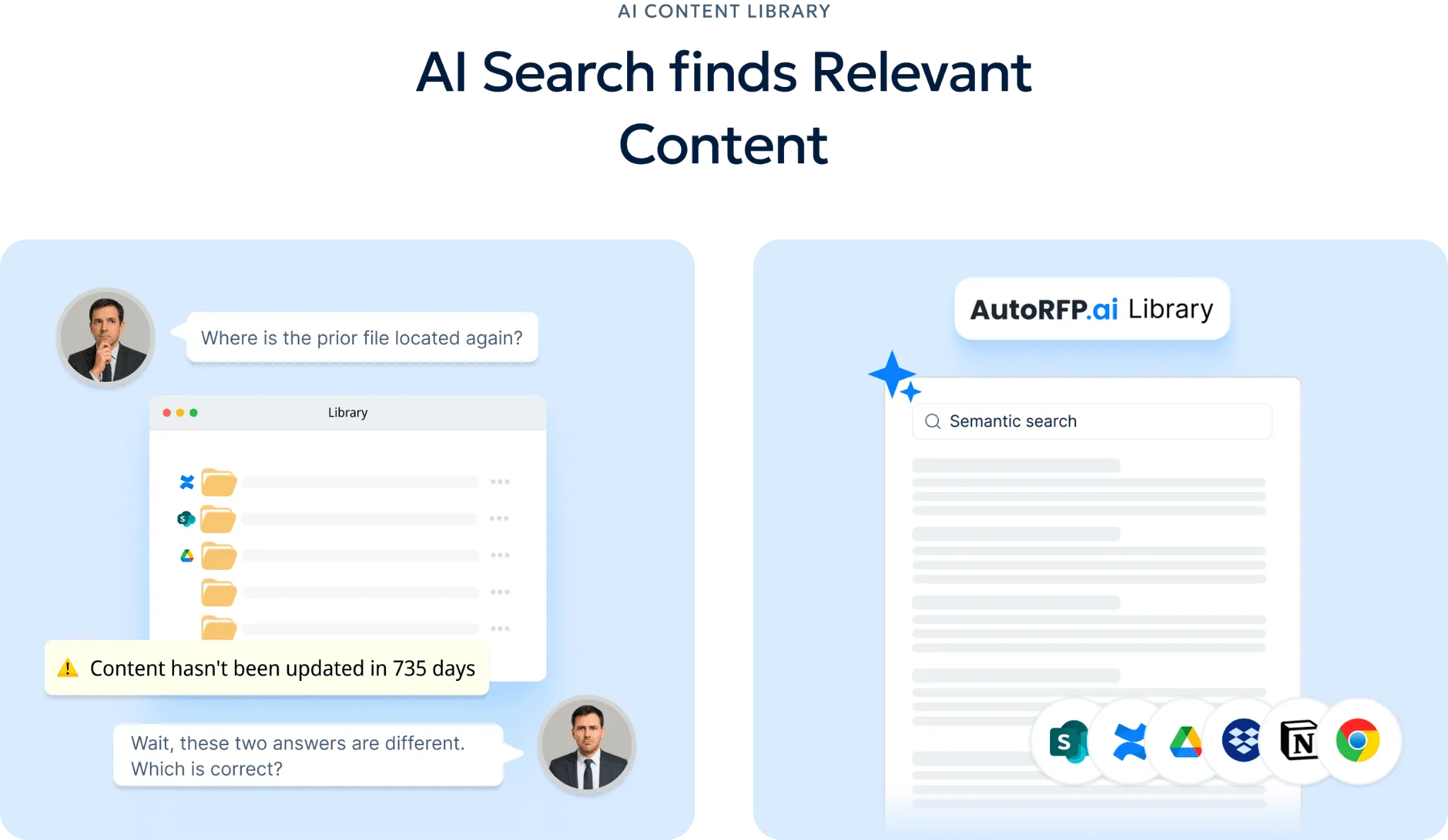
3. Keep Approved Answers And Evidence In One Place
A strong DDQ process depends on having reliable answers that are easy to find, reuse, and verify. Teams should not rely on old emails, random folders, or outdated spreadsheets when responding to investor questions.
Store approved answers by category, such as risk management, compliance, cybersecurity, valuation, service providers, liquidity, ESG, and business continuity.
Keep supporting evidence attached to each answer, such as policies, audit reports, certifications, fund documents, committee records, or security documents.
Add answer owners, review dates, sources, and approval status so teams know which content is current and safe to use.
Retire outdated answers instead of letting old responses stay in circulation.
Update key answers when policies, systems, service providers, fund terms, or regulatory requirements change.
Pro tip: Use AutoRFP.ai’s content library to centralize approved responses, connect answers with supporting evidence, and make reusable DDQ content easier to find during future questionnaires.
4. Review Every Response For Accuracy, Consistency, And Risk
The final review should not only check grammar. It should confirm that every answer is accurate, consistent, supported by evidence, and safe to submit.
Check whether product, fund, compliance, and security claims are still current.
Make sure answers do not contradict each other across the questionnaire.
Confirm that attachments match the claims made in the response.
Review caveats, exceptions, and commitments carefully.
Keep a record of the final submitted version for future DDQs.
Ask SMEs to validate sensitive answers before submission.
Pro tip: Before submitting, read the DDQ from the investor’s point of view and ask: “Would this answer reduce concern or create more follow-up questions?”
Respond to AIMA DDQs Faster With AutoRFP.ai
AIMA DDQs are easier to complete when your team can reuse approved answers, find evidence quickly, and route sensitive questions to the right reviewers.
AutoRFP.ai helps investment managers extract DDQ questions, generate first drafts from approved content, surface supporting documents, and keep responses consistent across teams and investors.
Instead of rebuilding every answer manually, your team can focus on review, accuracy, and risk.
Book Demo with AutoRFP.ai to complete your next AIMA DDQ faster.
About the author

Technical Account Manager
Technical Account Manager at AutoRFP.ai. Writes about DDQs and security questionnaire response.
LinkedInFrequently asked questions
How Long Does It Take To Complete An AIMA DDQ?
The timeline depends on the fund’s complexity, available documentation, and how prepared the team is. A simple DDQ may take a few days, while a detailed institutional DDQ can take longer because it requires input from compliance, operations, risk, investment, legal, finance, and service provider teams.
Who Should Review An AIMA DDQ Before Submission?
An AIMA DDQ should be reviewed by the teams responsible for the answers provided. This often includes compliance, legal, operations, risk management, investment, finance, cybersecurity, and senior management. Each team should confirm that the response is accurate, current, and supported by the right evidence before submission.
How Should Firms Handle AIMA DDQ Questions They Cannot Fully Answer?
If a firm cannot fully answer a DDQ question, it should avoid vague or misleading responses. The better approach is to explain the current position clearly, provide available supporting context, and mention any planned improvements where relevant. Institutional investors usually prefer transparent, well-supported answers over generic claims.
How Can AutoRFP.ai Help Teams Manage Approved DDQ Answers And Evidence?
AutoRFP.ai helps teams keep approved DDQ answers, policies, certifications, fund documents, audit reports, and supporting evidence in one structured content library. This makes it easier to reuse accurate answers, attach the right evidence, and avoid relying on outdated spreadsheets, old emails, or scattered folders.
How Can AutoRFP.ai Help Teams Respond To AIMA DDQs Faster?
AutoRFP.ai can generate first-draft responses using approved content, past answers, and company documentation. For recurring AIMA DDQ questions, this helps teams reduce repetitive writing while keeping responses more consistent. Reviewers can then refine the draft, check accuracy, and make sure the final answer fits the investor’s request.
